








The Promise on Paper
Free Trade Agreements are, in theory, a straightforward tool for economic growth. By reducing or eliminating tariffs, they make it cheaper for countries to trade with each other. For a nation like India, with its expanding manufacturing base and a goal
of boosting exports, FTAs with key markets like the UAE, Australia, and the UK are a cornerstone of economic strategy. The logic is simple: lower tariffs should lead to Indian goods being more competitive abroad, driving export growth, creating jobs, and boosting the economy. These agreements are designed to open doors, giving Indian exporters preferential access to markets and integrating the domestic economy more deeply into global value chains. This has been a key reason for India's recent push, signing several major deals after a decade-long pause.
Why the Benefits Aren't Automatic
Despite the flurry of new agreements, experience shows that the benefits of FTAs are not guaranteed. In fact, studies have shown that India’s trade deficit with some partner blocs has widened post-FTA. Exporters often face challenges that a trade deal alone cannot solve. One major issue is that many Indian exporters do not fully utilize the benefits of FTAs due to complex rules of origin, heavy documentation, and other compliance costs that can outweigh the tariff savings. An FTA reduces taxes on paper, but it doesn't pave the road, modernise the port, or guarantee the quality of a component. This is where the real-world constraints of infrastructure and supplier networks come into play, turning a promising trade deal into a missed opportunity.
The Infrastructure Bottleneck
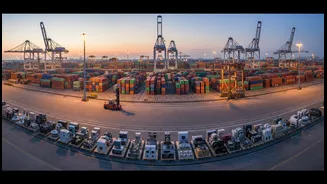
An FTA might eliminate a 10% tariff, but what if it takes an extra week for a container to travel from a factory to a port due to congested roads and inefficient logistics? That delay adds costs and uncertainty, eroding the competitive advantage the FTA was supposed to create. India's logistics costs have historically been high compared to global benchmarks, hovering between 12-14% of GDP, though recent efforts have aimed to lower this. This 'cost of doing business' acts like a domestic tariff that no trade deal can remove. Recognizing this, the government has launched ambitious programs like the PM Gati Shakti National Master Plan. This initiative aims to create an integrated, multi-modal connectivity network, linking economic zones and streamlining the movement of goods through better-planned roads, railways, and ports. The goal is to reduce these internal bottlenecks so that Indian products can reach global markets faster and more cheaply, making the tariff reductions from FTAs truly meaningful.
The Strength of the Supplier Chain
The second critical factor is the supplier ecosystem. To export a finished product, say a car, a manufacturer relies on a complex network of smaller companies providing everything from microchips to seats. If this domestic supply chain is weak, fragmented, or unable to meet international quality standards, manufacturers may have to import components. Sometimes, an 'inverted duty structure' arises where raw materials are taxed higher than the finished goods being imported under an FTA. This makes it cheaper to import the final product than to build it in India, undermining the entire 'Make in India' initiative. Policies like the Production Linked Incentive (PLI) scheme are designed to tackle this head-on. By providing financial incentives for domestic manufacturing in key sectors, the PLI scheme aims to build robust local supplier ecosystems, reduce import dependence for components, and ensure that Indian factories can produce world-class goods at competitive prices. A strong domestic supply chain is essential to prevent FTAs from simply becoming highways for imports.
Turning Agreements into Real Growth
Ultimately, a Free Trade Agreement is an opportunity, not a guarantee. It opens a door to a new market, but it is up to the country's domestic capabilities to walk through it. While negotiators work to secure favourable terms and reduce tariffs, the real work of realizing growth happens at home. It happens in the planning rooms of the National Highway Authority, in the investment decisions of a component manufacturer participating in a PLI scheme, and in the digitisation of logistics paperwork at a port. The success of India's ambitious trade agenda will be decided not just at the negotiating table, but in the quality of its concrete, the efficiency of its railways, and the competitiveness of its local suppliers. These foundational elements are what will ultimately determine whether FTAs lift the entire economy or simply benefit a few.