





A World Forever Changed
To understand this unique material, we have to go back to before 1945. The process of making steel involves forcing air through molten iron. Before the Trinity nuclear test in July 1945, and the subsequent bombings of Hiroshima and Nagasaki, the Earth's
atmosphere was free of man-made radioactive isotopes. However, these events and the thousands of atmospheric nuclear tests that followed during the Cold War changed that permanently, contaminating the air with radionuclides like Cobalt-60. As a result, any steel produced since 1945 has been created using this contaminated air, embedding trace amounts of radiation into the metal itself. While perfectly safe for everyday use in cars or buildings, this modern steel creates too much 'background noise' for highly sensitive scientific and medical instruments.
The Scale of Scarcity
This created a demand for what is now known as low-background steel: metal produced before the nuclear age. The problem is that it’s incredibly rare. You can’t simply make more of it, because the atmosphere needed to produce it no longer exists. The primary source for this precious metal is a finite and dwindling supply of steel artifacts from the pre-nuclear era. The most famous sources are sunken warships. In particular, the German High Seas Fleet, scuttled by its own crews at Scapa Flow in Scotland at the end of World War I, has been a major provider. These vessels, resting under water, were shielded from the atmospheric fallout that contaminated the rest of the world. Over the decades, salvage operations have raised many of these ships to reclaim their valuable, uncontaminated steel. However, this salvage work is difficult, expensive, and sometimes controversial, especially when it involves war graves.
The Status and Critical Use
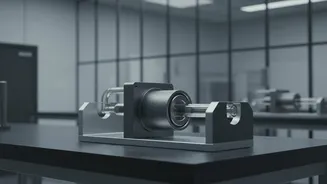
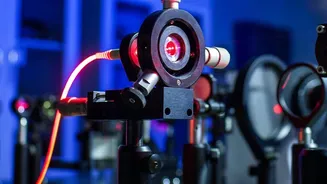
The reason this old metal is so sought after lies in its status as an essential component for cutting-edge technology. Low-background steel is vital for constructing devices that need to detect the faintest traces of radiation. If the device itself is even slightly radioactive, it can't perform its job accurately. This includes whole-body scanners in hospitals, which measure radiation in patients. Using low-background steel allows these machines to be far more sensitive. It is also used to build Geiger counters, equipment for particle physics experiments searching for things like dark matter, and sensors for satellites and space probes where precision is paramount. The steel from a single World War I battleship can provide the shielding for numerous hospital scanning systems around the world.
The 'News' and the Future
While the existence of low-background steel isn't new, its story is one of continuing relevance. The 'news' is the ongoing, quiet hunt for this finite resource and the fact that a historical relic remains indispensable to future innovation. Interestingly, since the Partial Nuclear Test Ban Treaty of 1963, atmospheric radiation levels have been steadily falling. This means that newly produced steel is becoming cleaner, though for the most sensitive applications, the pre-1945 steel is still superior. In a modern twist, the term 'low-background steel' has recently been adopted as a metaphor in the tech world to describe digital data created by humans before the explosion of generative AI content. It signifies a pure, uncontaminated source material, valuable for its authenticity in a world of artificial noise.