




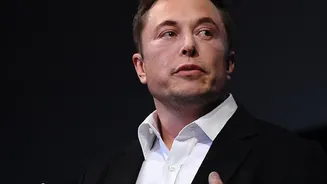
The Core of Musk's Advice
In a world increasingly shaped by artificial intelligence, Elon Musk’s guidance for early-career professionals seems counter-intuitive. Instead of advising young people to double down on coding or data science, he suggests the opposite. His recommendation
is to pursue a broad-based education that spans the arts, sciences, and engineering. In a late 2026 interview, he argued that as AI becomes more capable of executing specific tasks, the truly valuable human skill will be knowing what to ask of it. This requires a wide-ranging understanding of the world. Someone who can connect ideas from psychology, history, and technology will be better equipped to identify new problems and frame meaningful questions than someone who only understands a single, narrow domain. His point is not that specialized skills are becoming useless, but that the advantage is shifting from pure execution to curiosity, judgement, and cross-disciplinary thinking.
The Expert-Generalist Philosophy
Musk’s advice is a reflection of his own approach, often described as that of an 'expert-generalist'. This term, coined by business strategist Orit Gadiesh, refers to someone who develops significant expertise across multiple different fields. Musk himself is a prime example, having mastered the fundamentals of rocket science, automotive engineering, artificial intelligence, and physics, despite his formal degrees being in economics and physics. The power of the expert-generalist lies in their ability to see connections that specialists, who operate deep within one field, might miss. By understanding the core principles of different domains, they can transfer knowledge from one area to another, leading to breakthrough innovations. This challenges the old saying, “jack of all trades, master of none,” suggesting instead that a broad foundation is the key to a different kind of mastery.
Learn Like a Semantic Tree
So how does one build this broad base of knowledge effectively? Musk advocates for a method he calls 'first principles thinking', using the analogy of a semantic tree. He advises learners to first understand the fundamental principles of a subject—the trunk and the main branches—before delving into the details, or the leaves. Without a strong grasp of the core concepts, there is nothing for the finer points to hang onto. This method is about deconstructing knowledge into its most basic truths and building up from there. It forces a deeper level of understanding rather than just memorizing facts or processes. By focusing on these foundational pillars of knowledge across various fields, it becomes possible to reconstruct and combine them in new and innovative ways, which is the essence of his problem-solving approach.
Applying the Philosophy in India
For many young Indians, this advice may seem at odds with a culture that places a high value on securing professional degrees in fields like engineering and medicine from a young age. The pressure to specialize early is immense. However, Musk’s perspective suggests a new form of career security. As automation and AI begin to handle routine specialized tasks, adaptability becomes paramount. A professional who understands both technology and human behaviour, or finance and environmental science, will be uniquely positioned to solve complex future problems. This is also reflected in Musk's own hiring practices, where he has consistently stated that he values “evidence of exceptional ability” over formal degrees. For a young person starting their career, the lesson is not to abandon their specialisation, but to supplement it. It means cultivating a habit of reading widely, learning about different industries, and staying curious about how the world works beyond the confines of a job description.