

The Death of a Giant
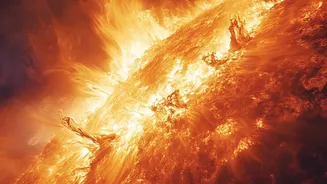
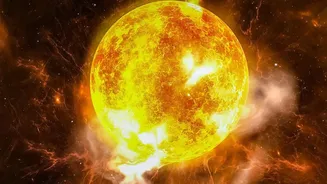
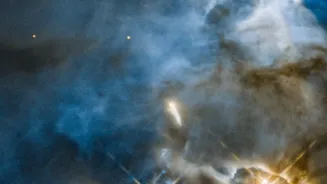
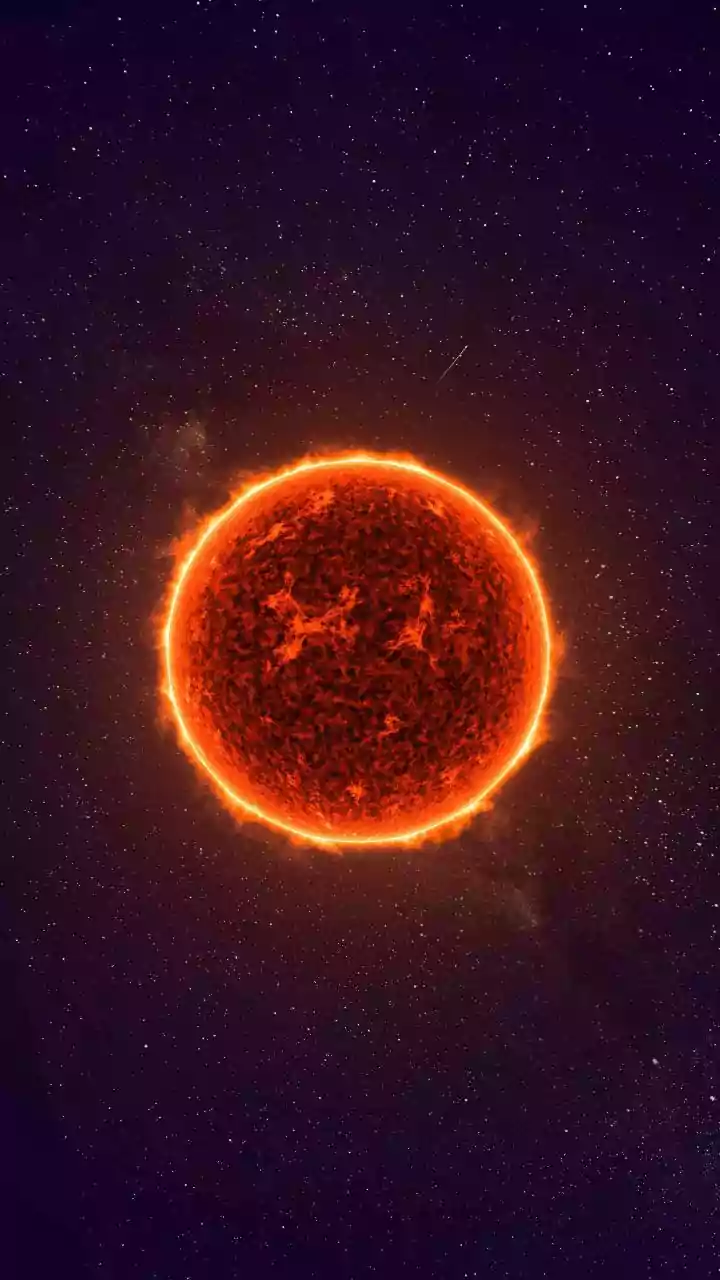
Imagine a star many times more massive than our sun reaching the end of its life. Having burned through its nuclear fuel, the outward pressure that held it up for millions of years vanishes. Gravity takes over, and the star’s core collapses in on itself
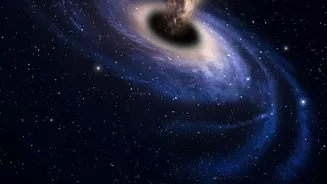
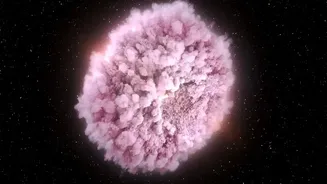
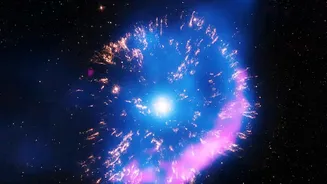
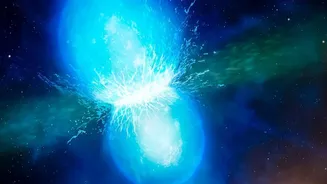
in a fraction of a second. This cataclysmic event, known as a core-collapse supernova, is one of the most violent processes in the universe. In the ensuing chaos, the star either tears itself apart in a dazzling explosion that can outshine an entire galaxy, or the collapse is absolute, and it forms a black hole. For decades, astrophysicists have used complex computer simulations to understand what tips the scale between these two outcomes. The answer, it seems, might lie with the universe’s most ghostly particle.
Enter the Ghost Particle
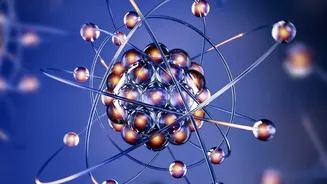
During a star's collapse, the core becomes so dense that protons and electrons are crushed together to form neutrons, releasing a staggering flood of particles called neutrinos. Neutrinos are fundamental particles with almost no mass and no electric charge. They interact so weakly with other matter that trillions of them pass through your body every second without you ever noticing. Yet, in the heart of a dying star, they are anything but insignificant. They carry away about 99% of the colossal energy released during the core's collapse. A tiny fraction of this neutrino energy is deposited into the material just outside the core, and this heating is what scientists believe can power the subsequent supernova explosion. If the heating is sufficient, the shockwave rebounds and the star explodes. If not, the material keeps falling inward, and a black hole is born.
A Cosmic Identity Crisis
The plot thickens with a quantum mechanical trick called neutrino oscillation, or flavor change. Neutrinos come in three “flavors”: electron, muon, and tau. The crucial discovery, which earned the 2015 Nobel Prize in Physics, was that neutrinos can spontaneously change from one flavor to another as they travel. This is important because different flavors interact with matter differently. Electron neutrinos are much more likely to interact with the star's material than muon or tau neutrinos. For a long time, it was assumed this flavor-swapping would have a negligible effect on the supernova. However, recent studies suggest something more profound is at play. In the incredibly dense environment of a collapsing core, the neutrinos are so numerous that they start interacting with each other, triggering rapid, collective oscillations that change their flavors deep within the star.
Rewriting the Explosion
New simulations that incorporate this collective flavor conversion are yielding surprising results. A study from the University of Copenhagen, for instance, found that these oscillations can significantly change the outcome for many stars. When more electron neutrinos change into the less-interactive muon and tau flavors, less energy is deposited into the stellar material. The heating process falters, making an explosion less likely. The research suggests that for a range of stars—particularly those between 16 and 30 times the mass of the sun—many that were expected to explode as supernovae in older models might actually fail to do so and collapse directly into black holes when neutrino oscillations are included. This could help explain a long-standing cosmic mystery: why astronomers have observed fewer supernovae than theoretical models predict.
Why This Matters for Us
Understanding the fate of massive stars is fundamental to understanding the universe itself. Supernova explosions are the cosmic forges that create and distribute heavy elements like oxygen, iron, and gold across the cosmos. These are the very elements that make up planets, and life as we know it. Whether a star explodes or forms a black hole determines what materials it seeds into the next generation of stars and planets. If more stars are collapsing into black holes than previously thought, it changes our models of galactic chemical evolution. By refining our understanding of the role these tiny ghost particles play, scientists can build a more accurate picture of how the universe builds complexity, from the first stars to us.