





A New Eye in the Sky
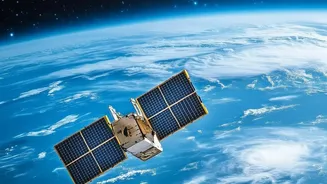
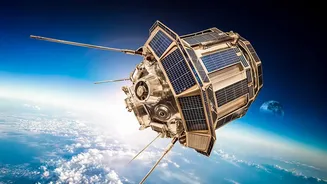
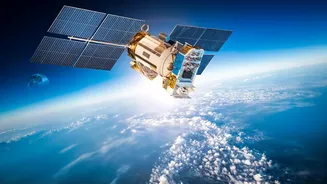
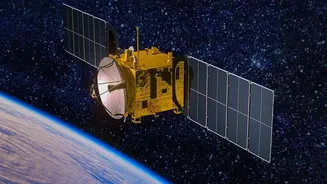
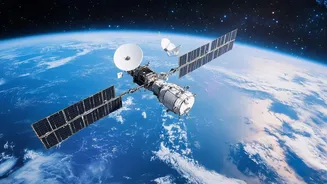
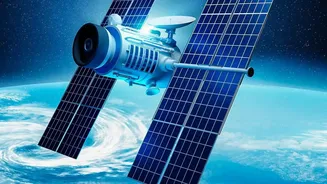
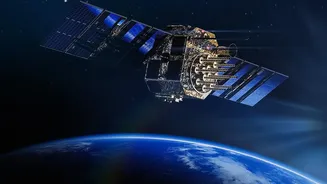
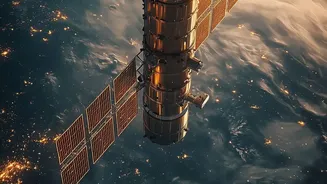
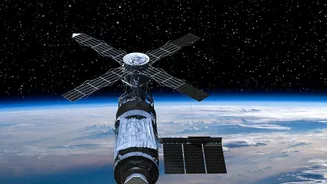
Not long ago, high-resolution Earth observation (EO) was the exclusive domain of government spy agencies. Today, a booming private sector has launched hundreds of sophisticated satellites into orbit. Companies like Maxar, Planet, and others now operate
vast constellations capable of imaging the same spot on Earth multiple times a day. The resolution of this imagery has become incredibly detailed, with some commercial providers offering images sharp enough to capture features as small as 16-30 centimetres. This explosion in data is driven by falling launch costs and the miniaturisation of powerful sensors, effectively creating a near-real-time, high-definition view of our planet that is commercially available.
AI: Making Sense of the Data Flood
The sheer volume of data being beamed down from these satellites is too much for human analysts to handle. This is where artificial intelligence becomes essential. AI, machine learning, and computer vision algorithms can sift through petabytes of imagery almost instantly, automating tasks like object detection, change monitoring, and pattern recognition. Instead of a person searching for a change, AI can automatically flag a new construction project, track deforestation as it happens, or monitor activity at a port. This allows for insights at a speed and scale previously unimaginable, turning raw pixels into actionable intelligence for industries ranging from agriculture to finance and logistics.
The Promise of Global Transparency
The benefits of this technology are immense. AI-powered satellite analysis is a powerful tool for good. It helps scientists track climate change indicators like glacial melt and greenhouse gas concentrations with greater accuracy. In disaster zones, it allows first responders to assess damage from floods or earthquakes in near real-time, directing resources more effectively to save lives. It also provides a new layer of accountability, enabling journalists and human rights groups to monitor conflicts, document destruction, and track illegal activities like fishing or mining from space.
A Governance Vacuum in Orbit
While the technology has leaped into the 21st century, the laws governing it are stuck in the Cold War era. The foundational Outer Space Treaty of 1967 was written for nations, not for a world with hundreds of private satellite operators. It prohibits claims of sovereignty but is silent on modern commercial activities. This has created a governance vacuum, leaving critical questions unanswered: Who is liable for misinterpreted data? How can national security be protected when commercial imagery is available on the open market? And how do we prevent the spread of fake or intentionally misrepresented satellite images designed to create disinformation?
Security, Privacy and Sovereignty at Risk
The dual-use nature of Earth observation is the central challenge. The same satellite that tracks crop health can also be used to monitor troop movements. When high-resolution imagery of sensitive military sites or critical infrastructure is commercially available, it creates new risks for national security. There are also profound privacy implications, as the technology gets closer to monitoring individual activities without consent. For nations, it raises questions of sovereignty, as foreign companies can now gather detailed intelligence within their borders, a capability once reserved for state-level actors.
The Search for 21st-Century Rules
Governments and international bodies are scrambling to catch up. Nations are developing their own licensing frameworks, like the tiered approach in the United States that tries to balance commercial competition with security concerns. However, national laws alone are not enough for a global industry. There is a growing consensus on the need for updated international cooperation on issues like space traffic management, data sharing protocols, and establishing clear 'rules of the road'. This process is complex and slow, as it involves balancing the powerful economic interests of the commercial space industry with the security and ethical duties of governments worldwide.