




The Planet's Natural Pacemaker
Planet Earth has a slow, steady pulse. Driven by predictable wobbles in its orbit around the sun, known as Milankovitch Cycles, our world has historically drifted between long glacial periods (ice ages) and shorter, warmer interglacial spells. For the last
several thousand years, following a warm peak in the early Holocene, the planet was on a gradual cooling trajectory. This downward trend in summer temperatures, particularly in the Northern Hemisphere, was the subtle, long-term precursor to a new ice age. Scientists have long understood this cycle, expecting that, without any other major influences, Earth would eventually see glaciers and ice sheets begin to expand once more. It was a process that had played out repeatedly over the planet's recent geological history.
An Ice Age in Its Infancy
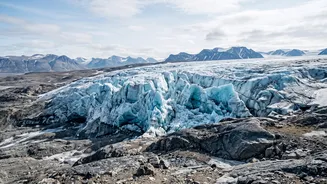
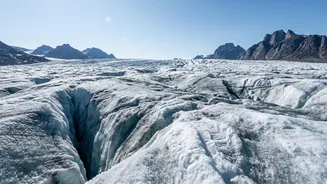
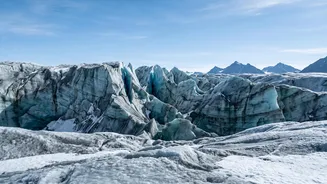
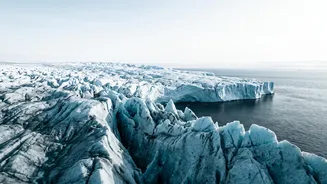
Recent findings published in the journal 'Science' provide physical evidence that this next glacial period wasn't just a future probability—it had already begun. Researchers studying the Barnes Ice Cap on Baffin Island in the Canadian Arctic found that it had started to slowly expand again about 2,000 years ago. This Delaware-sized ice cap is the last surviving remnant of the massive Laurentide Ice Sheet, which once covered much of North America. By analyzing ancient moss and plants exposed by the now-retreating ice, scientists could determine when the ice advanced over them. This technique, known as radiocarbon dating, provided a 'kill date' for the vegetation, creating a timeline of the ice margin's movement. The evidence was clear: the ice was growing, marking the very beginning of what should have been a new phase of glaciation.
A Sudden Halt in the 1960s
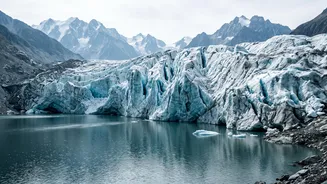
That slow, 2,000-year-long expansion came to an abrupt end. According to the research team, led by geochemist Nicolás Young of Columbia University's Lamont-Doherty Earth Observatory, the reversal point came around the 1960s. At that time, the growing impact of human-caused global warming became powerful enough to overwhelm the natural cooling trend. The rising concentrations of greenhouse gases in the atmosphere trapped enough heat to raise summer temperatures in the Arctic, tipping the delicate balance. Instead of accumulating more ice in winter than it lost in summer, the Barnes Ice Cap began to lose more mass than it gained. The nascent ice age fizzled out before it could truly begin. This finding gives new weight to controversial suggestions from some climate scientists in the 1970s that an ice age might be imminent; it turns out they were observing the tail end of a natural process that was already underway.
The Power of Human Influence
The story of the Barnes Ice Cap provides a stark illustration of the scale of humanity's impact on the planet. We didn't just start warming the Earth; we actively reversed a multi-millennial global cooling trend. “It was just getting started, everything was normal, the next glaciation was about to happen—and yet it stopped,” noted Young. This research effectively draws a clear line between natural climate variability and the potent force of anthropogenic warming. While Earth's orbital cycles continue to gently push for cooler conditions, the effect is now dwarfed by the heat-trapping blanket of our emissions. The research shows that even by the mid-20th century, before the most dramatic spike in global temperatures, we had already done enough to alter a geological cycle. The Barnes Ice Cap, once the seed of a future continental ice sheet, is now projected to melt completely within a few centuries if current warming trends continue.