





Understanding the SMOPS-2026 Focus
Set to take place in Bengaluru, India, SMOPS-2026 is a major conference organized by the Indian Space Research Organisation (ISRO) and the International Academy of Astronautics (IAA). Its theme, "Innovative Operations for Smart and Sustainable Space Mission
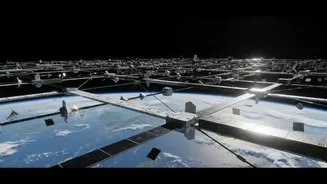
Management – Next Generation," signals a forward-looking perspective. The agenda is packed with sessions on large constellation management, advanced mission design, AI and robotics, and cybersecurity. These topics are not just technical talking points; they represent the core challenges facing the space industry today. As thousands of new satellites are launched, the complexity of managing them in a congested orbital environment is pushing traditional, human-led operational models to their limits. The conference aims to unite space agencies, startups, and industry leaders to address these very issues.
The Inevitable Rise of Automation
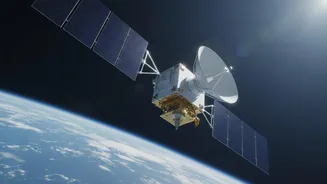
Automated mission control refers to the use of artificial intelligence and machine learning to manage spacecraft and satellite fleets with minimal human intervention. Instead of ground crews manually monitoring telemetry and executing commands, AI-driven systems can perform tasks like collision avoidance, health monitoring, and mission replanning autonomously. This shift is driven by necessity. The sheer scale of modern satellite mega-constellations makes manual operation impractical and slow. Furthermore, for deep-space missions where communication delays can be significant, onboard autonomy is essential for the spacecraft to make time-critical decisions independently. Agencies like NASA and the European Space Agency, along with commercial players, are already integrating AI to optimize satellite positioning, filter data, and enhance mission reliability.
Connecting the Agenda to a Hands-Off Future
The key themes of SMOPS-2026 directly map onto the capabilities of automated systems. For example, the focus on "large constellations management" is an area where AI is indispensable for coordinating thousands of satellites and ensuring they don't collide. Similarly, discussions on "advanced mission design" and "cybersecurity" are deeply intertwined with automation. AI can model complex mission scenarios that would be too difficult for humans to map out, and it can also detect and respond to cyber threats much faster than a human operator. Even topics like space robotics and in-orbit servicing rely heavily on autonomous systems that can perform delicate maneuvers without the lag of ground control. The entire agenda reflects a consensus that the future of space operations involves handing more control over to intelligent, autonomous systems.
What This Means for the Space Industry
The industry-wide pivot toward automated mission control has profound implications. It represents a fundamental shift from a "human-in-the-loop" model to a "human-on-the-loop" model, where people oversee and manage autonomous systems rather than controlling every action directly. This change impacts everything from workforce development—requiring more AI specialists and data scientists—to the commercial viability of new space ventures. Companies that successfully develop and deploy robust autonomous technologies will gain a significant competitive edge, able to operate larger fleets more efficiently and with greater resilience. Recent demonstrations, such as the US Air Force using a neural network to control a satellite's orientation, show this technology is no longer theoretical but is actively being operationalized. The market for space autonomous solutions is projected to grow significantly as these systems become standard.