






A New Southern Gateway
For decades, India’s space story has been launched from one location: the Satish Dhawan Space Centre in Sriharikota. But as the nation's ambitions grow, so does the need for new infrastructure. The Kulasekarapattinam spaceport, a sprawling 2,233-acre
complex in Thoothukudi district, is the answer. With a budget of nearly ₹986 crore, this facility is purpose-built not for the giant rockets of ISRO’s past, but for a new, nimbler era of space exploration. Recent developments show a clear commercial path forward, with space regulator IN-SPACe inviting private companies to manage and operate the complex, a significant step in privatising key space infrastructure.
The Small Satellite Revolution
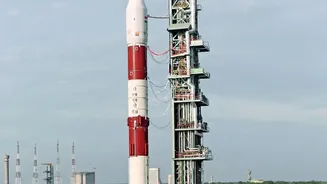
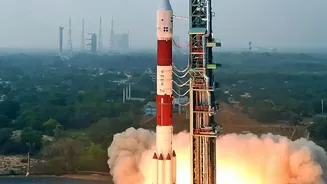
The primary mission of Kulasekarapattinam is to serve the booming global market for small satellites. These are compact satellites, often weighing under 500 kg, used for everything from Earth observation to communications and IoT services. The new spaceport is designed to launch ISRO’s own Small Satellite Launch Vehicle (SSLV) and similar rockets developed by India's burgeoning private space companies like Skyroot Aerospace and Agnikul Cosmos. The facility is engineered for a high launch tempo, with quicker turnaround times between missions, perfectly aligning with the on-demand nature of the commercial small satellite industry.
The Geographic Advantage
Kulasekarapattinam’s most significant asset is its location. Unlike Sriharikota, from where rockets must perform a 'dogleg' manoeuvre to fly around Sri Lanka for polar launches, the new spaceport offers a direct, fuel-saving southward trajectory over the Indian Ocean. This straight path is a game-changer; it avoids burning precious fuel on course corrections, directly translating to a higher payload capacity. A rocket that might struggle to carry a useful payload to a polar orbit from Sriharikota can carry around 300 kg from Kulasekarapattinam, a massive improvement in efficiency. This makes launches cheaper and more attractive to international customers. The proximity to ISRO's Propulsion Research Complex at Mahendragiri also simplifies logistics, further reducing costs.
Fueling Private Ambition
This spaceport is a clear signal that India is opening its space sector to private enterprise. IN-SPACe, the national space regulator, has formally invited expressions of interest from Indian companies to take over the complete operations and management of the launch complex. The selected private entity will handle everything from launch campaigns and facility maintenance to mission readiness and customer coordination. ISRO will provide initial technical guidance and training to ensure a smooth transition. This move is part of a broader strategy to create a vibrant ecosystem where private firms can not only build and launch rockets but also manage critical national infrastructure, a model similar to commercial airports.
The Road to Commercial Liftoff
With the foundation stone laid in February 2024 and construction underway since March 2025, the project is moving at a steady pace. The target for construction completion is December 2026, with the first launches potentially happening in 2027. Beyond the launchpad, the Tamil Nadu government is planning to develop a Space Industrial and Propellant Park nearby. This will create a holistic ecosystem, attracting ancillary industries like component fabrication and satellite manufacturing, which could transform the regional economy and create thousands of jobs. The goal is to capture a larger slice of the global space launch market, which is projected to grow significantly in the coming years.