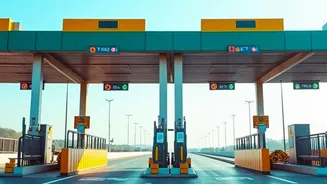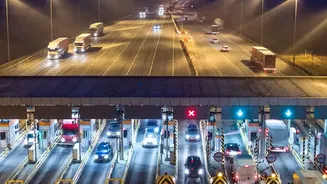









The Previous Toll System
Until this change, the National Highways Fee Rules of 2008 allowed for a special calculation for highway sections that included costly structures like bridges, tunnels, and elevated corridors. To recover the high construction and maintenance expenses
associated with these complex projects, the toll was often calculated by treating the length of the structure as ten times its actual physical length. This meant that a 2-kilometre-long bridge could be charged as if it were a 20-kilometre stretch of road. This formula, while intended to fund infrastructure, often led to disproportionately high toll charges on certain routes, creating a financial burden for daily commuters and commercial transport operators. There was no upper limit, which could lead to extreme toll fees on stretches dominated by such structures.
What the New Rule Changes
The Ministry of Road Transport and Highways amended the rules in early July 2026, and the NHAI has now directed its field offices to implement the new formula. The new system introduces a cap on how much the tollable length can be inflated. Now, toll authorities must calculate the fee using two different methods and apply whichever one results in a lower amount. The two methods are: 1) Ten times the length of the structure (bridge, tunnel, etc.) plus the length of the regular road section, or 2) Five times the total length of the entire highway section, including the structure. By forcing the use of the lower of these two calculations, the new rule effectively creates a ceiling on toll charges. For instance, on a 40-km highway that is entirely a bridge, the old rule could charge it as 400 km (40 x 10). The new rule caps it at 200 km (40 x 5), halving the cost.
Why the Change Was Implemented
The revision is designed to rationalize the tolling system and make it fairer for road users. Officials have stated that the goal is to strike a better balance between recovering infrastructure costs and ensuring affordability for the public. The previous system was a source of frequent complaints from motorists who felt they were being subjected to a form of double charging, paying a high toll that didn't seem proportional to the distance travelled. The amendment is part of a broader push to create a more uniform and transparent tolling policy across the country, which also includes the widespread adoption of FASTag and exploring GPS-based toll collection in the future. This policy shift acknowledges that while infrastructure costs must be met, excessive user fees can discourage highway usage and hurt the logistics sector.
Who Stands to Benefit?
The primary beneficiaries are daily commuters and commercial vehicle operators who frequently use highways with significant structural elements. Routes like the Delhi-Meerut Expressway or highways with long tunnels and sea links will likely see noticeable reductions in toll fees. For the logistics industry, where tolls are a significant operational expense, this change could lead to lower transportation costs and improved profit margins. While the new rule applies to all national highways with such structures, it excludes smaller ones measuring 60 metres or less from the special calculation. The financial relief for individual motorists and trucking companies is expected to make long-distance road travel more affordable and economically efficient, potentially boosting traffic on these key arteries.