







Understanding the Quantum Leap
Quantum computing is often described as a revolutionary leap beyond today's computers. While current devices store information in bits (either a 0 or a 1), quantum computers use 'qubits'. Thanks to the principles of quantum mechanics, a qubit can be a 0,
a 1, or both at the same time. This seemingly small difference unlocks massive computational power, allowing quantum machines to solve complex problems that would take classical computers millennia to crack. This capability has profound implications for everything from drug discovery and materials science to financial modeling and cryptography, making it a technology of immense strategic importance for any nation.
India's New Quantum Proving Grounds
To translate this theoretical promise into reality, India has been actively establishing dedicated facilities under its National Quantum Mission. A prime example is the country's first open-access quantum testbeds launched in Andhra Pradesh in April 2026. These facilities, with hubs at Medha Towers and SRM University, Amaravati, are not closed-door labs. Instead, they are designed as open platforms where researchers, startups, and academic institutions from across the country can test, validate, and benchmark their quantum hardware and software. This open-access model is crucial for democratizing the technology and accelerating the innovation cycle.
From Theory to Tangible Products
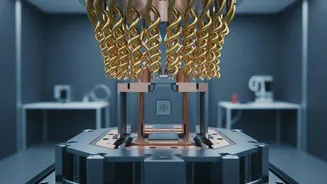
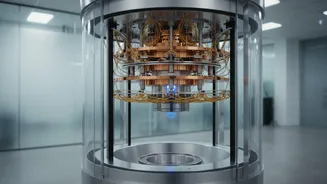
The phrase 'practise, test, and build' captures the essence of these new centres. They provide the physical infrastructure needed to move beyond academic theory. For instance, these facilities are equipped with India-made dilution refrigerators that cool processors to temperatures colder than outer space (near -273°C), a necessary condition for many quantum systems to operate. This allows talent to work with real hardware, not just simulations. The goal is to foster an ecosystem for 'Make in India' quantum devices, creating a self-reliant supply chain for everything from processors and amplifiers to the cryogenic systems themselves. The Andhra Pradesh facilities, for example, will serve as certification centres, anchoring a national network for quantum hardware.
Cultivating a Quantum Workforce
Hardware is only one part of the equation; human talent is the other. Recognizing a global shortage of quantum-skilled professionals, various Indian states and institutions are launching ambitious training initiatives. In Maharashtra, the I-HUB Quantum Technology Foundation at IISER Pune is leading the charge to train thousands of people, starting with faculty members who will then scale this education across universities. Similarly, Tamil Nadu has partnered with software leader Q-CTRL to make quantum education a mandatory module for engineering students. These programmes, alongside new labs and academies launched by private firms like QNu Labs, are designed to create a pipeline of industry-ready quantum experts who can staff these new facilities and the startups that will emerge from them.
The Strategic Imperative
These efforts are backed by the National Quantum Mission, a government initiative with a budget of over ₹6,000 crore approved in 2023. The mission aims to develop everything from quantum computers with 50-1000 qubits to secure communication networks. In late 2025, the government announced four major quantum fabrication hubs at IITs in Bombay, Kanpur, and Delhi, and at IISc Bengaluru, with an investment of ₹720 crore to create a foundational hardware ecosystem. This coordinated strategy is about more than just scientific research; it is about economic competitiveness and national security. By building both the physical infrastructure and the human capital, India aims to secure its place as a leader in one of the 21st century's most defining technologies.