




Falling vs. Flying Down
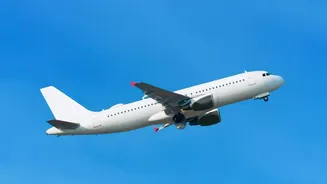
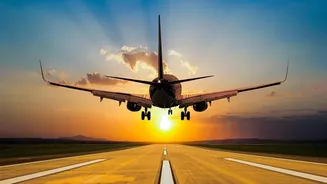
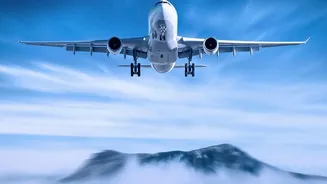
First, let's clear up the most common fear: a plane in a rapid descent is not 'falling' out of the sky. It is flying, just with a steep, nose-down attitude. An uncontrolled fall is a chaotic loss of control, whereas an emergency or rapid descent is a precise
procedure. Pilots intentionally initiate this maneuver, remaining in full command of the aircraft's speed, direction, and descent rate. The goal is to get the aircraft to a lower, safer altitude as quickly and efficiently as possible, all while staying within the plane's structural limits.
The Primary Trigger: Depressurization
The most common reason for a rapid descent is a loss of cabin pressure, known as depressurization. At cruising altitudes of 35,000 feet or more, the outside air is too thin for humans to breathe. Aircraft cabins are sealed and pressurized to an equivalent altitude of about 8,000 feet, where the air is comfortable. If the cabin loses this pressure — either slowly or, in rare cases, rapidly due to a structural issue — the air inside becomes dangerously low in oxygen. This condition, called hypoxia, can cause dizziness and loss of consciousness within seconds.
The Race to Breathable Air
When depressurization occurs, the pilots' top priority is to get the plane down to a 'safe' altitude, typically below 10,000 feet, where the air is dense enough to breathe without supplemental oxygen. This is the whole purpose of the rapid descent. The moment a pressure issue is detected, oxygen masks will automatically drop for passengers and crew. While passengers put on their masks, the pilots are already initiating the descent, a procedure they practice regularly in simulators. It’s a swift, decisive action designed to protect everyone on board.
Inside the Cockpit: A Controlled Procedure
An emergency descent is a well-rehearsed checklist procedure. Pilots will immediately don their own oxygen masks, reduce engine power to idle, and often deploy speed brakes or landing gear to increase drag and help the aircraft descend faster without gaining too much speed. They will also make a turn, which helps the plane descend more rapidly and allows them to scan for other air traffic below. Throughout the process, they are in communication with air traffic control, declaring an emergency and coordinating their path to a lower altitude and often, the nearest suitable airport for landing.
The Passenger Experience
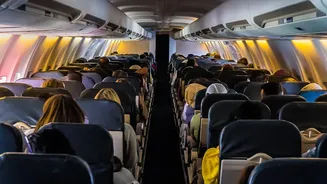
For passengers, the experience can be alarming. You might hear a loud noise or a rush of wind. A mist or fog can form in the cabin as the temperature and pressure drop suddenly. Your ears will pop. And then, the oxygen masks will appear, coupled with the strong nose-down sensation of the descent. It's natural to feel frightened, but these are all expected signs of a depressurization and the subsequent safety maneuver. The most important thing you can do is put on your own oxygen mask immediately before helping others. The crew is in control, and the aircraft is responding exactly as it's designed to.
Other Reasons for a Rapid Descent
While depressurization is the most frequent cause, it's not the only one. Pilots may also initiate a rapid descent to deal with an uncontrollable on-board fire or smoke in the cabin. In these situations, descending quickly can help starve a fire of oxygen or get to an airport for an emergency landing faster. A critical medical emergency on board could also prompt a pilot to descend and divert to get a passenger urgent medical attention. In all cases, it is a tool used to resolve a serious problem by getting the plane safely on the ground.