





A Survivor with a Shadow
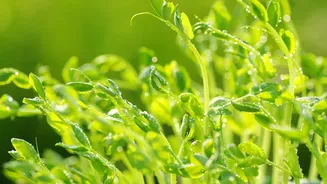
The grass pea, or Lathyrus sativus, is one of the oldest domesticated crops, with a history stretching back thousands of years. It's known by many names, including khesari dal in India and Nepal. Valued for its high protein content—often greater than
that of chickpeas or field peas—it has long been a source of nutrition. But its most defining feature is its sheer toughness. The grass pea is an 'insurance crop', thriving in extreme conditions like drought and floods where other crops fail. This resilience, however, is linked to its dark side. The very properties that help it survive stress also lead to the production of a neurotoxin. For decades, this shadow has defined its story.
The Poison in the Pulse
The controversy surrounding grass pea centres on a neurotoxin called ODAP (β-N-oxalyl-L-α,β-diaminopropionic acid). When consumed in large quantities over a prolonged period, typically during times of famine when it becomes the only food source, ODAP can cause a crippling neurological disorder called neurolathyrism. This condition leads to irreversible paralysis of the lower limbs. In 1961, concerned about its health effects, the Indian government banned the sale and storage of khesari dal for human consumption. The ban cast a long shadow, turning a vital survival food into a feared and forgotten legume, even though its cultivation as animal fodder continued.
From Ban to Breakthrough
For years, the story seemed to end there. But science has been quietly working on a comeback for the grass pea. Researchers have made significant strides in understanding how and why the plant produces ODAP. This has led to the development of new, low-toxin varieties through selective breeding, crossing cultivated types with wild relatives that naturally have lower levels of the neurotoxin. Recently, the complete mapping of the grass pea's complex genome has opened the door for modern techniques like gene-editing to create safe and productive varieties. These breakthroughs have prompted a re-evaluation of the old ban, with a panel at the Indian Council of Medical Research (ICMR) eventually clearing the way for its reintroduction.
A Climate-Proof Crop for the Future
The grass pea's revival couldn't come at a better time. In an era of climate change, its natural resilience is more valuable than ever. It tolerates drought, flooding, and poor soil, requires minimal fertilizer, and even fixes nitrogen, improving soil health for subsequent crops. These traits make it an ideal crop for sustainable agriculture in marginal lands, where more popular pulses struggle to grow. As weather patterns become more unpredictable, a crop that can guarantee a yield when others fail is not just useful—it's essential for ensuring food security for vulnerable communities.
The Future on Your Plate
The rehabilitation of the grass pea is a story of scientific progress overcoming a historical problem. With new, safe varieties becoming available, this nutrient-dense legume is poised to rejoin diets as a valuable source of protein. Its journey from a 'famine food' to a 'climate-smart crop' is remarkable. By embracing these developments, we can reclaim a forgotten part of our agricultural heritage and add a powerful tool to our arsenal in the fight for global food and nutritional security. The grass pea is not just a legume; it's a symbol of resilience, a testament to scientific innovation, and a promise of a more sustainable future.