




An Optimistic New Outlook
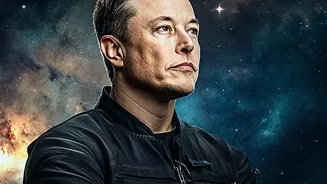
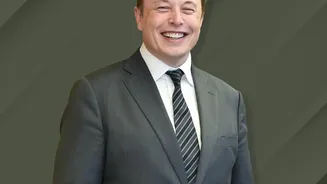
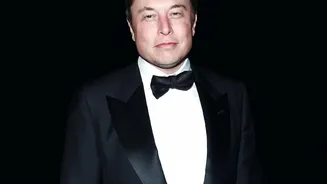
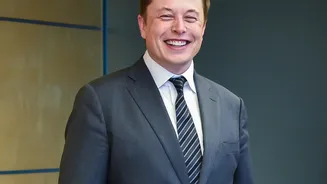
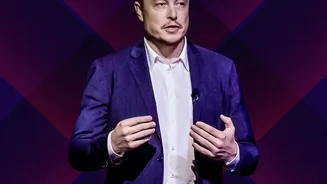
In a recent high-profile interview, Elon Musk articulated a surprisingly sunny view of our automated future. He stated that while the risk of AI causing a catastrophe is “not zero,” the more probable scenario is a future of “incredible abundance for all.”
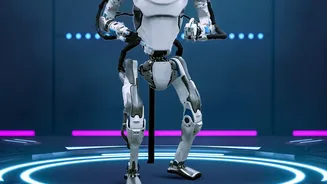
This marks a significant change in his public messaging. His philosophical conclusion, he explained, is to “look on the bright side.” He believes the momentum behind AI is now unstoppable, and that even if there were a stop button, we probably shouldn't press it. This is the core of his new stance: the potential for a utopian age of abundance, where AI and robots make goods and services plentiful, outweighs the existential dread. He predicts AI could exceed the sum of all human intelligence in as little as five years, leading to a world where work becomes optional and money itself could become irrelevant within a decade.
A History of Dire Warnings
This newfound optimism is striking because it seems to contradict more than a decade of his own dire warnings. In 2014, Musk famously compared AI development to “summoning the demon.” In 2018, he argued it was “far more dangerous than nukes.” As recently as March 2025, he maintained that there was a 10% to 20% chance of AI leading to human annihilation. During his recent interview, he did not formally retract that 10-20% risk assessment, but he framed it as a risk worth taking. When asked if he would board one of his own rockets with that chance of it blowing up, he said yes. His reasoning appears to be one of pragmatic acceptance; since the progress cannot be stopped, the only path forward is to steer it toward a positive outcome and simply “enjoy the ride.”
The xAI Factor
Skeptics might point out that Musk’s evolving perspective aligns conveniently with his business interests. He is no longer just a critic; he is a key player in the AI race with his company, xAI. Founded in 2023, xAI is positioned to compete directly with giants like OpenAI and Google DeepMind. The company's first major product, the chatbot Grok, is already integrated with X (formerly Twitter) for paying users. For xAI to attract top talent and massive investment, its leader cannot solely be a prophet of doom. Projecting a vision of abundance and groundbreaking discovery is a far more effective recruiting tool. His goal for xAI is ambitious: to understand the “true nature of the universe” by building a “maximally curious, truth-seeking” AI. This mission requires building, not just warning.
The Bigger Picture: Doomers vs. Builders
Musk's personal evolution mirrors a broader debate splitting the tech world. On one side are the “doomers,” or AI safety proponents, who worry that an out-of-control superintelligence could pose an existential threat. On the other are the “builders” or “boosters,” who argue that the potential for AI to solve humanity's greatest problems, from disease to poverty, is so immense that we must accelerate its development. Musk, once the most famous doomer, now sounds much more like a builder. He still talks about risk, but his focus has shifted. He has proposed that rival AI labs should have a peer-review system to inspect each other’s models for safety issues before release, suggesting a framework for managing, rather than halting, the technology's advance. This nuanced position—acknowledging the danger while championing the benefits—places him at the complex heart of the most important technological debate of our time.