




The Vision of a High-Speed Nation
The Mumbai-Ahmedabad High-Speed Rail (MAHSR) Corridor is not just an infrastructure project; it's a statement. Launched in 2017, the 508-kilometre line aims to connect India's financial capital with the economic hub of Gujarat, slashing travel time from
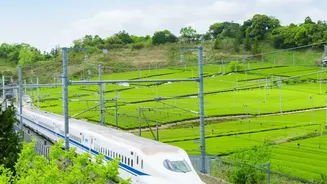
over seven hours to just about two. Modelled on Japan's iconic Shinkansen system, the project was envisioned as the first step in a nationwide network of high-speed corridors that would revolutionise travel and supercharge economic growth. The plan involves 12 stations across Maharashtra, Gujarat, and Dadra and Nagar Haveli, with trains operating at a speed of 320 kmph. It promises not only a drastic reduction in travel time but also enhanced safety, comfort, and reliability compared to the existing, often overburdened, rail network.
Progress Amidst Headwinds
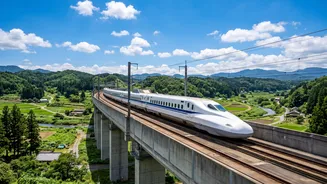
After years of sluggish progress, primarily due to hurdles in land acquisition and pandemic-related disruptions, construction has gathered significant pace. According to recent updates from Railway Minister Ashwini Vaishnaw in September 2026, the project is advancing rapidly, especially across the Gujarat portion. As of late 2026, significant stretches of the elevated viaduct are complete, major river bridges are in place, and station construction is in full swing. A key milestone is the readiness of the first test coach, signalling progress in the manufacturing domain. The government has set a target to commission the first section, a 50 km stretch between Surat and Bilimora in Gujarat, in 2027. Civil construction on the Vapi-Surat section is also targeted for completion by December 2026, showing tangible on-ground progress.
The Challenge of Land and Costs
The core story of the bullet train is also one of significant challenges. The project's original completion target of 2023 was missed by a wide margin. The biggest stumbling block has been land acquisition, particularly in Maharashtra, which faced legal and political delays. These delays have had a cascading effect on the project's finances. The initial estimated cost of around ₹1.1 lakh crore has reportedly almost doubled, with projections now hovering closer to ₹2 lakh crore. This sharp escalation has fueled debate about the project's financial viability and priorities. Furthermore, the technical complexity, including the construction of India's first undersea rail tunnel near Mumbai, has added layers of difficulty to the execution.
The 'Make in India' Ambition
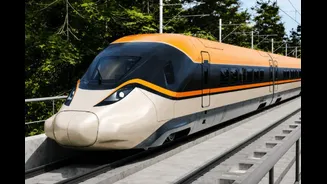
While the project is being built with Japanese technology and significant financial assistance from the Japan International Cooperation Agency (JICA), it has also become a catalyst for domestic manufacturing. A major push under the 'Atmanirbhar Bharat' initiative is the development of an indigenous high-speed trainset. In September 2026, officials confirmed that the first body frame of this India-made train is ready for testing. This Indian version is being designed for speeds of up to 280 kmph. While the first few trains will be Japanese Shinkansen models, the long-term goal is to build a domestic ecosystem for manufacturing, testing, and maintaining high-speed rail components, reducing future reliance on imports.
The Final Stretch: What Lies Ahead?
The focus now is on a phased commissioning. While the initial Surat-Bilimora section is slated for a 2027 launch, the timeline for the entire 508 km corridor remains a moving target. Official statements point towards a full opening by 2028 or 2029. The completion of the final, more complex sections in Maharashtra, including the underground station at Bandra Kurla Complex and the undersea tunnel, will be critical. The project is more than just track and concrete; it's a test of India's execution capabilities on a global scale. Its success is seen as a template for seven other high-speed corridors planned across the country, from Delhi to Varanasi and Mumbai to Hyderabad.