





The Limits of Ground Control
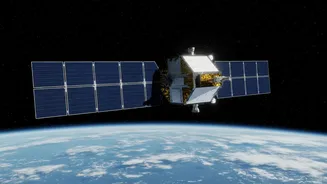
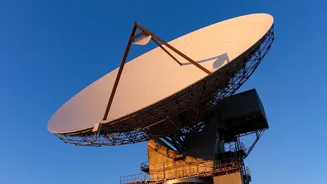
Traditionally, operating a satellite has been a hands-on affair. Teams of engineers on Earth meticulously plan every command, from adjusting an orbit to capturing an image. This model works, but it has significant limitations. Communication delays, known
as latency, can range from seconds to minutes, making real-time control impossible for deep-space missions and inefficient for those closer to home. Furthermore, the cost and manpower required to manage even a single satellite are substantial. This ground-based approach is becoming increasingly impractical in the face of two major shifts: the sheer volume of data being collected and the massive growth of satellite constellations.
The Mega-Constellation Problem
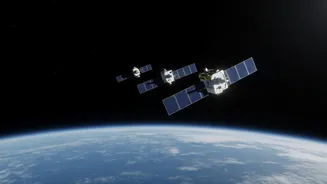
Companies are now deploying mega-constellations consisting of hundreds or even thousands of satellites to provide services like global internet. Managing such a vast network manually is not just difficult; it's impossible. The sheer number of variables—orbital positions, collision avoidance, bandwidth allocation, and power management—creates a level of complexity that is beyond human capacity to handle in real-time. Imagine being an air traffic controller for thousands of planes moving at 17,000 miles per hour. That's the challenge facing constellation operators, making automation an absolute necessity, not a luxury.
What Makes a Satellite 'Smart'?
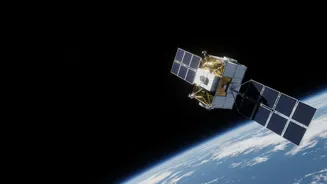
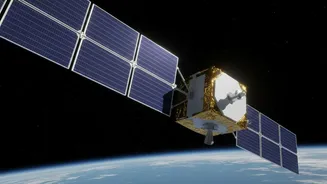
A 'smart' satellite is one that has been given the tools to operate with a high degree of autonomy. The key ingredient is onboard artificial intelligence (AI) and machine learning (ML). Instead of simply executing pre-programmed commands, these systems can process data, learn from experience, and make independent decisions. This allows them to perform complex tasks without direct human intervention, such as optimizing their own power usage, prioritizing data collection, and navigating safely through crowded orbits. This shift is similar to the evolution from basic cruise control to fully autonomous driving in cars. The satellite can perceive its environment, analyze the situation, and act accordingly.
New Jobs in Orbit
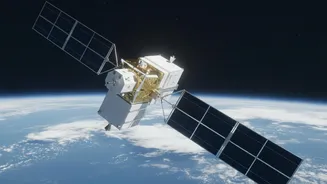
Autonomy doesn't just solve problems; it creates new opportunities. A major emerging field is on-orbit servicing, assembly, and manufacturing (ISAM). Autonomous spacecraft are being developed to act as orbital mechanics, capable of inspecting, refueling, repairing, and upgrading other satellites. This could dramatically extend the lifespan of expensive space assets, reducing costs and mitigating the growing problem of space debris. The market for on-orbit services is projected to be worth billions by the early 2030s. This opens up a new commercial frontier where satellites are no longer disposable but are maintainable, long-term pieces of infrastructure.
Overcoming the Challenges of Trust
Handing over control to an AI is a significant leap of faith, and the space industry is understandably cautious. One of the primary challenges is verification and validation—how can we be certain an autonomous system will always make the right decision, especially in a life-or-death scenario? These systems must operate in the harsh, radiation-filled environment of space with limited computing power. There are also complex legal and ethical questions. If an autonomous satellite makes a mistake that causes a collision, who is responsible? Before autonomous operations become widespread, the industry must develop robust testing protocols and clear international guidelines to ensure these smart systems are both reliable and safe.