



What's Fuelling the EV Fire?
The primary driver behind the EV surge is simple economics. Rising and volatile petrol prices have made the lower running costs of electric vehicles incredibly attractive to Indian consumers. This financial incentive, combined with a growing environmental
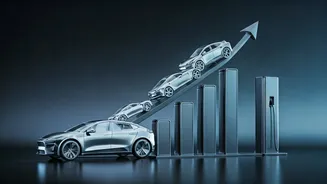
consciousness and a wider array of available models, has created a groundswell of demand. The two- and three-wheeler segments, in particular, are leading the charge, accounting for the majority of EV sales due to their clear cost benefits for daily commutes and last-mile logistics. In the passenger car segment, sales in fiscal year 2026 grew by approximately 86% compared to the previous year, with projections indicating the market will cross 3 lakh units for the first time this year. Automakers are reporting that demand is outstripping their production capacity, sometimes by more than double.
Government in the Driver's Seat
Government policy has been a critical accelerator. Schemes like FAME (Faster Adoption and Manufacturing of Electric Vehicles) have provided subsidies that reduce the high upfront cost of EVs, a major barrier in a price-sensitive market. While FAME-II concluded in March 2024, the industry is keenly awaiting FAME-III, which is expected to continue supporting electric two-wheelers, three-wheelers, and public transport buses. Beyond direct subsidies, Production-Linked Incentive (PLI) schemes are encouraging domestic manufacturing of vehicles and their components. The government has an ambitious vision to have EVs make up 30% of all vehicle sales by 2030, a goal that guides these policy pushes and signals a long-term commitment to electrification.
The Bottleneck on the Production Line
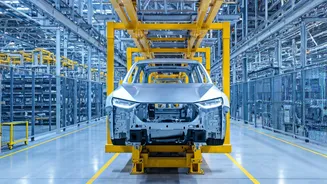
Despite the roaring demand, the path to getting an EV is not always smooth. The industry is grappling with significant supply-side constraints that are leading to long waiting periods for popular models, sometimes stretching for months. A primary culprit has been the semiconductor shortage. The global crunch that began during the pandemic continues to evolve, with the recent AI boom now redirecting chip manufacturing capacity away from the automotive sector, creating new supply risks. This forces automakers to make tough decisions, often prioritising high-demand models and delaying the launch of new variants.
India's Achilles' Heel: The Battery
The single biggest challenge is the battery supply chain. India is heavily dependent on imports, particularly from China, for lithium-ion cells, the heart of every EV. This reliance creates a strategic vulnerability to global supply disruptions and price volatility. While India has built capacity for assembling battery packs, domestic manufacturing of the actual cells is still in its infancy. The government's PLI scheme for Advanced Chemistry Cell (ACC) manufacturing, launched in 2021, has seen slow progress, with only a fraction of its targeted capacity commissioned so far. Establishing a robust domestic cell manufacturing ecosystem, from refining raw materials like lithium to producing finished cells, is seen as critical for the long-term health and security of India's EV ambitions.
Navigating the Road Ahead
The Indian EV market is in a transitional phase, moving from early adoption to mass commercialisation. The challenges are significant but not insurmountable. Automakers are innovating with strategies like offering a 'Battery-as-a-Service' model to reduce upfront costs. Meanwhile, the government is expected to focus FAME-III on strengthening charging infrastructure, which remains a key concern for potential buyers, especially outside of major urban centres. The consensus among experts is that while the growth curve may see some bumps, the fundamental shift towards electric mobility is irreversible. The focus is now shifting from just creating demand to building a resilient and self-reliant manufacturing ecosystem to meet it.