




The Legend It Must Live Up To
To understand the hype surrounding the P50, you first have to understand the monumental legacy of the McLaren F1. Launched in the 1990s, the F1 wasn't just a car; it was a paradigm shift. With its central driving seat, naturally aspirated V12 engine,
and a top speed that remained unbeaten for years, it became the definitive analogue supercar. Every McLaren flagship since, from the hybrid P1 to the new W1, has been measured against it. The F1 remains the most recent road-going McLaren to feature a manual gearbox, a detail that has become central to the P50 legend. Gordon Murray, the F1's original designer, has since created his own spiritual successors with the T.50 and T.33, proving a fervent market still exists for purist, high-performance machines. This is the context into which the phantom P50 has emerged.
Anatomy of a Rumour
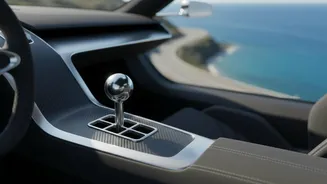
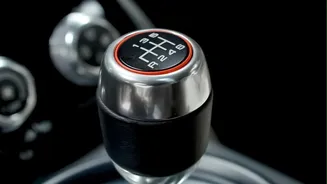
Recent reports, originating from industry blogs, suggest McLaren is developing an ultra-exclusive model internally known as the P50. The rumoured debut is set for The Quail, A Motorsports Gathering, during Monterey Car Week in August. The core of the speculation centres on features that directly appeal to driving purists: a manual transmission and a focus on analogue engagement over sheer lap times. This would be McLaren's first three-pedal road car since the F1's production run ended in 1998. Powertrain details are entirely speculative, with enthusiasts debating everything from a new V12 to a repurposed V10, but the consistent theme is a departure from the hybrid and dual-clutch automatic systems that define modern McLarens.
What We Know for Sure
In a word: nothing. McLaren has not officially confirmed the existence of the P50, its specifications, or any plans for a reveal at Monterey Car Week. The company has offered no confirmation, no denial, and no teasers. Everything currently associated with the P50 project is based on unconfirmed reports and industry chatter. This complete lack of official information is precisely what makes the story so compelling. It has allowed the P50 to become a vessel for the hopes and desires of enthusiasts who crave a return to a more tactile form of high performance. Until the company speaks, the P50 remains firmly in the realm of speculation, albeit a very exciting and plausible form of it.
The Business of Analogue
If the P50 is real, it signifies a savvy strategic move by McLaren. The top end of the automotive market is experiencing a renaissance of analogue supercars. Brands have found that collectors are willing to pay a significant premium for the engagement and nostalgia of a manual gearbox. Ferrari recently introduced a 'Manuale By-Wire' version of its 12Cilindri, while boutique manufacturers like Pagani, Koenigsegg, and Gordon Murray Automotive have seen huge success with their own three-pedal creations. A manual P50 would position McLaren to capture this demand, offering a product focused on the driving experience itself, rather than just the relentless pursuit of speed through technology. It would be an acknowledgement that for some clients, feeling connected to the machine is the ultimate luxury.
Rarity as the Ultimate Feature
Beyond the manual gearbox, the other defining characteristic of the P50 rumour is its extreme exclusivity. Reports suggest production could be limited to fewer than 100 units. This would make it rarer than the brand's new W1 flagship (399 units) and even the iconic F1 (106 units). The price is expected to be well north of the W1's $2.1 million starting price. In the hypercar market, scarcity is a powerful currency. It guarantees collectability, underpins value, and creates an aura of desirability that no performance statistic can match. By floating the possibility of such a limited run, the P50 rumour leverages this dynamic perfectly. The car's value proposition becomes less about its technical specifications and more about its status as an exceptionally rare object.