


The Missing Super-Earth
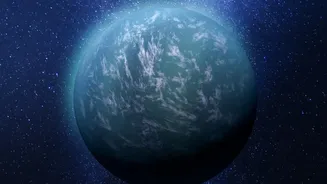
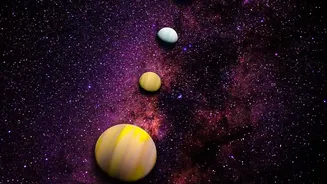
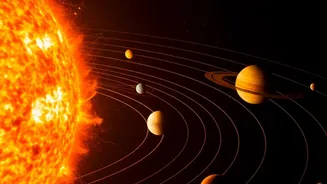
When we look at other star systems, astronomers have found that one of the most common types of planets is the ‘super-Earth’—a world with a mass somewhere between that of Earth and Neptune. Yet, in our own solar system, there’s a conspicuous gap; we have small
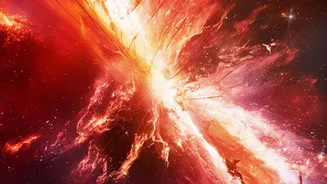
rocky planets and giant gas planets, but nothing in between. This absence is a major puzzle for planetary scientists. It suggests that our solar system’s history might be more complex than we thought. The headline-making theory, explored by researchers like astrophysicist Stephen Kane, is that our system may have indeed formed a super-Earth, but its existence was short-lived and ended violently, leaving behind only subtle clues that we are just now beginning to piece together.
The Emptiness Close to the Sun
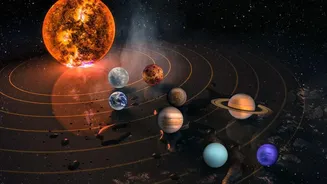
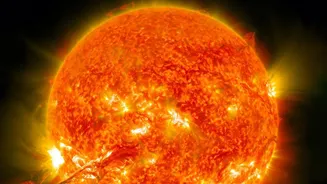
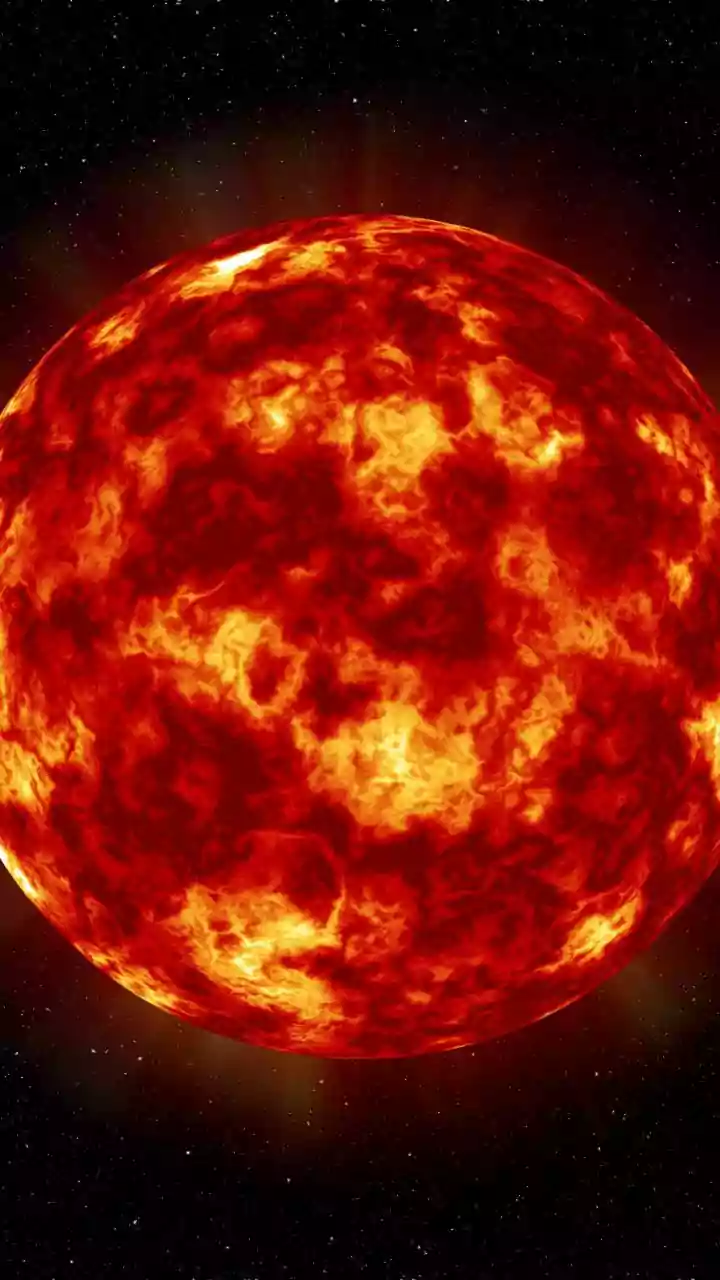
One of the most compelling pieces of evidence is the strange void between the Sun and Mercury. While Mercury is the closest planet to our star, there is a vast, empty space where another planet could theoretically orbit. Many other solar systems discovered across the galaxy feature planets in extremely tight orbits, much closer to their stars than Mercury. So, why is our innermost region so barren? Some scientists believe this area wasn't always empty. A hypothetical planet in this zone could have been gravitationally unstable. Over millions of years, its chaotic orbit could have ended in one of two dramatic ways: either by being flung out of the solar system entirely or by spiralling into the Sun. The planet would be gone, but its past presence would explain the void we see today.
A Gravitational Wrecking Ball
A planet five to ten times the mass of Earth would have been a gravitational bully. Computer simulations have become a crucial tool for understanding what might have happened. Researchers can add a hypothetical planet to a model of our solar system and watch the chaos unfold. Studies led by Stephen Kane at the University of California, Riverside, showed that adding a super-Earth between Mars and Jupiter could destabilize the entire system, potentially ejecting Mercury, Venus, and even Earth from their orbits. While this simulation placed the planet farther out, the principle holds true for a world closer in. A massive planet orbiting near the Sun would have profoundly altered the orbits of the inner planets, and its eventual, violent removal is one potential explanation for some of the unusual characteristics of Mercury and Mars.
Clues from a Violent Past
The early solar system was a cosmic shooting gallery, far more chaotic than the orderly system we see now. Evidence for this violent history can be found in meteorites that fall to Earth. Some of these space rocks contain minerals that could only have formed under immense pressures found deep inside a large planetary body. For example, the analysis of certain rare meteorites has suggested they are fragments of a long-lost protoplanet, perhaps the size of the Moon or even Mars, that was shattered in a cataclysmic collision billions of years ago. While not a super-Earth, these findings provide tangible proof that entire worlds existed and were destroyed in our solar system's youth. They show that planets were not just formed, but also lost, leaving behind a trail of cosmic debris and intriguing puzzles for astronomers to solve.