




Shinjuku Gyoen, Tokyo: A Tale of Three Gardens
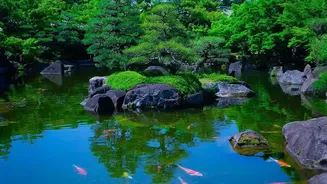
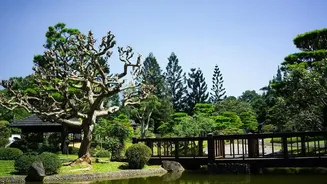
Once a private estate for a feudal lord in the Edo Period, Shinjuku Gyoen became an imperial garden in 1906 before opening to the public after World War II. Today, it stands as a masterpiece of landscape design, uniquely blending three distinct styles:
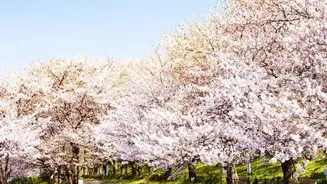
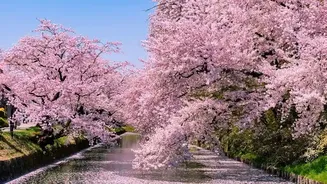
a traditional Japanese garden with serene ponds and teahouses, a formal French garden with symmetrical flowerbeds, and a sweeping English landscape garden with wide, open lawns. The park is a year-round floral destination. Spring brings a staggered bloom of over 1,000 cherry trees of 65 different varieties, from the early blossoms of February to the late bloomers of April. Summer is a lush sea of green, while autumn is famed for its stunning chrysanthemum exhibition, a tradition dating back to the Meiji era, alongside vibrant foliage. Despite its location just minutes from the world's busiest train station, the 144-acre park provides a genuine sense of peace and escape.
Imperial Palace East Garden, Tokyo: Walking on Castle Grounds
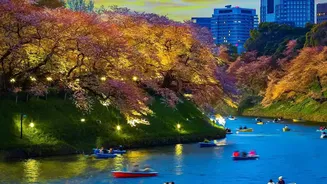
For a direct encounter with history, there is no better place than the Imperial Palace East Garden. This park occupies the former site of Edo Castle's innermost circles of defense, the residence of the Tokugawa shoguns who ruled Japan for over 250 years. While the main castle buildings are long gone, the original moats, imposing stone walls, entrance gates, and several guardhouses remain, offering a tangible connection to Japan's feudal past. The most poignant ruin is the massive stone foundation of the main castle keep, or Tenshukaku. This tower, once the tallest in Japan, was destroyed by fire in 1657 and never rebuilt. Climbing the foundation provides a commanding view that contrasts the ancient fortifications with the modern skyscrapers of Tokyo. The Ninomaru Garden within the grounds features seasonal flowers and a pond, offering a softer, more cultivated experience amid the stark, historical power of the castle ruins. Admission is free, making it an accessible and profound journey into the heart of Japanese history.
Ueno Park, Tokyo: Culture, Nature, and History Combined
Established in 1873, Ueno Park is one of Japan's first public parks and remains its most popular. It was founded on the former grounds of the powerful Kan'ei-ji Temple, which was largely destroyed during the Boshin War in 1868 that marked the end of the shogunate. Today, the park is a sprawling cultural hub, home to major institutions like the Tokyo National Museum, the National Museum of Nature and Science, and the Tokyo Metropolitan Art Museum. But it is most famous for its spectacular display of cherry blossoms. The first cherry trees were planted by the shogun Tokugawa Iemitsu in the 17th century, and the tradition of hanami (flower viewing) parties continues today, drawing millions of visitors each spring. Beyond the blossoms, you can find historic landmarks like the Ueno Toshogu Shrine, dedicated to shogun Tokugawa Ieyasu, and the Bentendo hall, which sits on an island in Shinobazu Pond.
Arashiyama Bamboo Grove & Tenryu-ji, Kyoto: A Zen Escape
While not a conventional park, the Arashiyama district on Kyoto's western edge offers an immersive green space steeped in history. Its main attraction is the famed Bamboo Grove, a walking path that transports you to another world as you move between towering stalks of bamboo. Adjacent to the grove is the Tenryu-ji Temple, a UNESCO World Heritage site founded in 1339. The temple's Sogenchi Teien (garden) is a masterpiece of landscape design that has remained in its original 14th-century form. Designed by the famed Zen master Muso Soseki, it uses the surrounding Arashiyama mountains as 'borrowed scenery,' seamlessly blending the man-made garden with the natural landscape. The garden is stunning in every season, from spring cherry blossoms to the fiery maple leaves of autumn. A visit here is a dual experience: the wild, natural cathedral of the bamboo grove paired with the serene, contemplative beauty of one of Japan's most important Zen temple gardens.