

Our Cosmic Neighbourhood
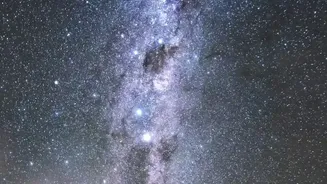
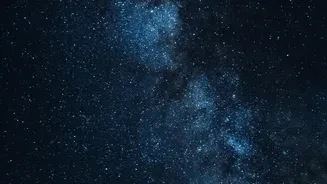
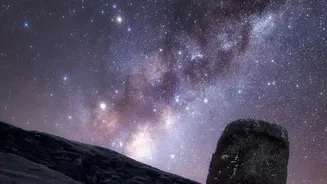
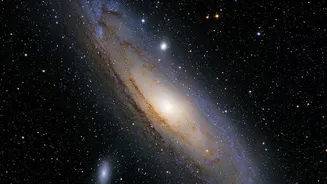
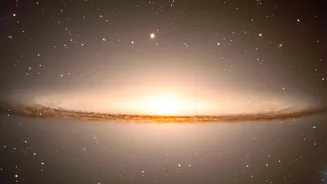
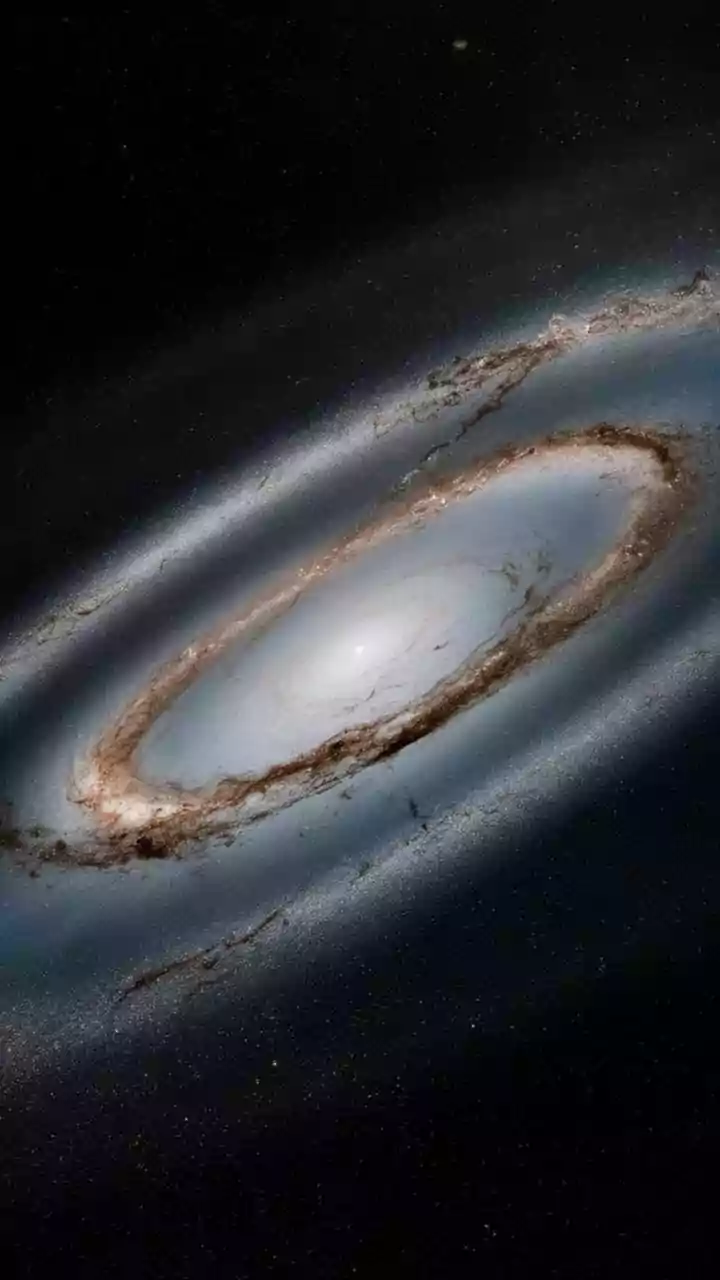
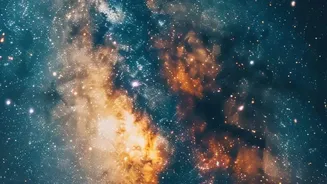
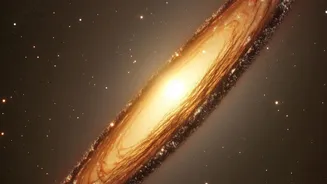
When we picture the Milky Way, we typically imagine a vast, flat, spinning disc of stars, gas, and dust. This is where our Sun and Solar System reside. But this disc is not the whole story. Surrounding this dense plane is a much larger, sparser sphere
of ancient stars known as the stellar halo. Think of it like a city's bustling downtown (the disc) surrounded by a vast, sparsely populated countryside (the halo). Many stars in this halo were not born in the Milky Way but were captured from smaller galaxies that our own consumed over billions of years. For years, astronomers have been puzzled by a key observation from the European Space Agency's Gaia mission: the Milky Way's stellar halo rotates incredibly slowly. This sluggishness didn't fit with existing models of how galaxies form, prompting a new investigation into our galaxy's turbulent youth.
Rewinding the Clock with Supercomputers
To solve this mystery, astronomers from Durham University turned to the Auriga Project, a suite of powerful supercomputer simulations designed to model the formation of galaxies just like our own. These simulations act like a cosmic time machine, allowing scientists to follow the evolution of virtual galaxies from just after the Big Bang to the present day. By analysing 25 different Milky Way-like galaxies, the researchers discovered a fascinating pattern. The virtual galaxies that ended up with slowly rotating stellar halos, just like our own, shared two key events in their past: they had experienced a massive, head-on collision with another galaxy, and their stellar disc had undergone a dramatic flip.
The Mechanics of a Galactic Flip
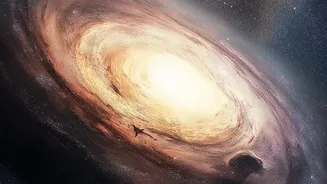
A 'disc flip' sounds like science fiction, but the simulations show how it can happen. It doesn't mean the entire galaxy tumbles through space like a coin. Instead, a powerful, head-on collision with a sufficiently large dwarf galaxy can exert a massive gravitational torque. This force can gradually tilt the orientation of the spinning stellar disc within its larger, surrounding halo of dark matter. Over billions of years, this tilting can exceed 90 degrees, effectively turning the galaxy on its side relative to its original orientation. Most of the galaxy's stars, including potentially our own Sun, would end up on vastly different orbits than where they started. This violent re-shuffling of momentum from the collision is what the simulations suggest is responsible for slowing the rotation of the surrounding stellar halo.
A Collision Called 'The Sausage'
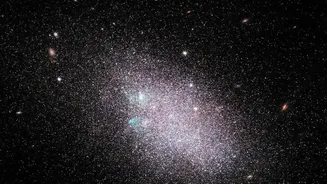
This simulation isn't just a theoretical exercise; it connects directly to the Milky Way's known history. We have strong evidence that our galaxy experienced a massive head-on collision about 10 to 11 billion years ago with a dwarf galaxy now nicknamed Gaia-Sausage-Enceladus. It gets its name from the sausage-like shape of the orbital paths its stars were thrown into after the merger. This was the largest known merger in the Milky Way's early history and fundamentally reshaped it. The fact that this known major collision aligns perfectly with the conditions required for a disc flip in the simulations makes a compelling case. Researchers now believe it is likely that the Milky Way's disc did indeed flip in the past as a result of this ancient cosmic crash.