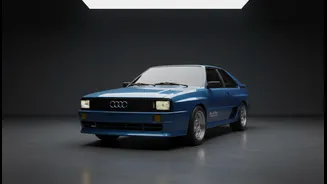







The Fire-Breathing Monster of Group B
To understand the gravity of the Audi Sport Quattro, you have to go back to the 1980s and the insane world of Group B rally racing. This was a period of motorsport with few restrictions, leading to some of the fastest, most powerful, and most dangerous
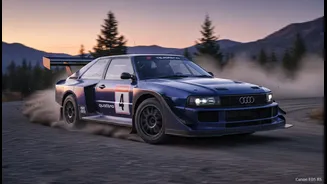
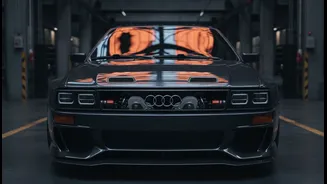
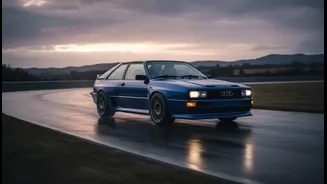
rally cars ever built. Audi's entry, the Sport Quattro S1, was a monster. It was a shortened, more agile version of the original Quattro, designed specifically for the extreme demands of Group B. With its aggressive aerodynamics, Kevlar body panels, and a howling engine that eventually produced close to 600 horsepower, the S1 became a legend, carving its name into history on rally stages and at the Pikes Peak International Hill Climb. It wasn't just a car; it was a revolution on four wheels.
A Revolution in Grip and Sound
What made the Quattro a game-changer was its technology. It was the first performance car to successfully pair a turbocharged engine with a permanent all-wheel-drive system. This combination, which Audi dubbed 'Quattro', was revolutionary. While other cars struggled for grip on loose surfaces, the Quattro could put its immense power down with astonishing efficiency. The heart of the beast was its unique turbocharged inline five-cylinder engine. This powerplant not only delivered incredible performance but also produced a distinctive, warbling soundtrack that is still beloved by enthusiasts today. The combination of all-wheel drive and five-cylinder turbo power was so effective that it fundamentally changed rallying and performance cars forever.
Modern Ghosts of the Quattro
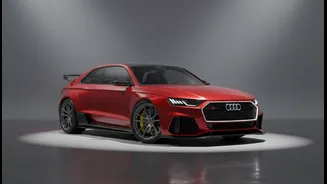
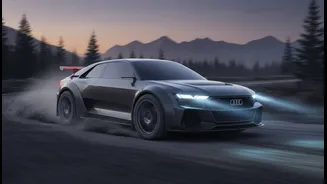
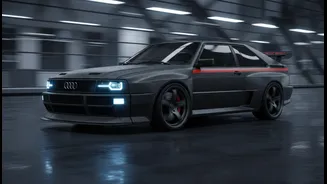
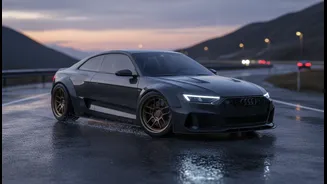
While Audi has not officially revived the Sport Quattro, its soul lives on in several 'new avatars'. One of the most talked-about is the HSR Manufaktur Type 859, a high-end restomod that takes a period-correct Audi Coupe chassis and transforms it into a modern interpretation of the rally legend. It uses a modern Audi 2.5-litre five-cylinder engine tuned to over 500 horsepower, wrapped in lightweight carbon fibre bodywork that mimics the iconic Group B shape. In the electric realm, two key tributes stand out. The E-Legend EL1 is a German-built electric supercar with over 800 horsepower, its design a clear homage to the Quattro's form. Then there's the Audi S1 Hoonitron, a one-off all-electric prototype built by Audi itself for the late Ken Block, which took direct inspiration from the legendary Pikes Peak-winning S1. These machines, though different in their propulsion, all carry the original's DNA.
Why Heritage Is the New Horsepower
The continued fascination with the Sport Quattro—and the high price tags and intense interest surrounding its modern tributes—highlights a crucial trend in the automotive world: the immense value of heritage. In an era of increasingly homogenised electric cars, a strong, authentic history provides something that technology alone cannot buy: an emotional connection. Brands are realising that their most iconic models are more than just museum pieces; they are a blueprint for what made them great. This isn't just about retro styling. It's about reviving a performance philosophy, a commitment to innovation, and a winning spirit. The Sport Quattro's legacy is so powerful because it represents a time when Audi took a massive risk that paid off, changing the game in the process. That story, of engineering bravery and motorsport dominance, is a currency that holds immense value today.