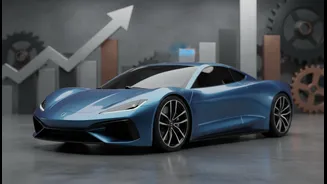









The Engine of Growth: Record-Breaking Sales
The latest figures paint a very positive picture for the Indian auto sector. The first quarter of the 2026-27 financial year (April-June 2026) saw the highest-ever dispatches for passenger vehicles, two-wheelers, and commercial vehicles. Passenger vehicle sales
alone surged to a record 1.27 million units, a nearly 26% jump compared to the same period last year. This remarkable performance comes despite global headwinds, pointing towards strong domestic demand. According to SIAM, this growth isn't accidental but is fuelled by a combination of favourable government policy, improved consumer access to credit, and a fresh lineup of vehicles captivating buyers. This trifecta has created a perfect storm for growth, making vehicles more affordable and desirable for a wider range of customers.
The GST Factor: A Lighter Tax Burden
One of the most significant catalysts has been the recalibration of the Goods and Services Tax (GST). A recent reform, often dubbed GST 2.0, has directly reduced the cost of vehicle ownership, especially for the mass market. For small cars—defined as petrol models with engines under 1200cc and diesel models under 1500cc—the GST rate was slashed from a hefty 28% plus an additional cess, to a more manageable flat 18%. This move has provided a substantial price drop for entry-level and compact cars, making them more accessible to first-time buyers and reigniting a crucial segment of the market. For larger cars and the ever-popular SUVs, the new rate is 40%. While this seems high, the removal of the complex and often confusing additional cess has simplified the overall tax structure, leading to more transparent pricing. This tax relief has been a key demand stimulus, directly translating into more affordable showroom prices.
Financing Fuel: The Era of Easier Loans
A more affordable price tag is only part of the equation; buyers also need the means to pay for it. This is where the second pillar of growth comes in: softer financing costs. The current lending environment is incredibly favourable for car buyers, with some analysts noting that interest rates are at their lowest in a decade. Top-tier public sector and private banks are offering car loans with interest rates starting as low as 7.45% to 8.5% for applicants with strong credit scores. Lenders have also become more accommodating with loan terms. Many banks now offer financing for up to 100% of a vehicle's on-road price, a significant perk that reduces the burden of a large down payment. Furthermore, repayment tenures have been extended to as long as eight years, which helps lower the equated monthly instalment (EMI), making a new car purchase fit more comfortably into a household's budget. This increased availability and affordability of credit has been a crucial factor in converting market interest into actual sales.
Fresh Faces: The Allure of New Models
The third key driver is a constant stream of new and updated models from manufacturers. The Indian consumer's appetite for Sports Utility Vehicles (SUVs) continues to be insatiable, and carmakers have responded with a flurry of launches across all price points, from compact to premium. These new vehicles are not just about fresh designs; they come packed with features like advanced driver-assistance systems (ADAS), connected car technology, and improved fuel efficiency, which are increasingly important to modern buyers. Beyond the dominant SUV segment, there has also been a heartening revival in the entry-level small car market. This indicates that product refreshes and new launches in this foundational category are successfully attracting first-time buyers back into showrooms, ensuring a broad-based and sustainable growth trajectory for the entire industry. The excitement and novelty generated by these new products keep the market vibrant and give customers compelling reasons to upgrade or make their first purchase.