




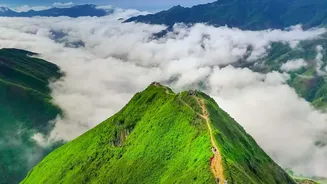
The King of All Trails: Kungsleden
The conversation about Swedish trekking begins with the Kungsleden, or "The King's Trail". Stretching for more than 440 kilometers through Swedish Lapland, this world-renowned route traverses some of Europe's most spectacular and varied landscapes. The trail
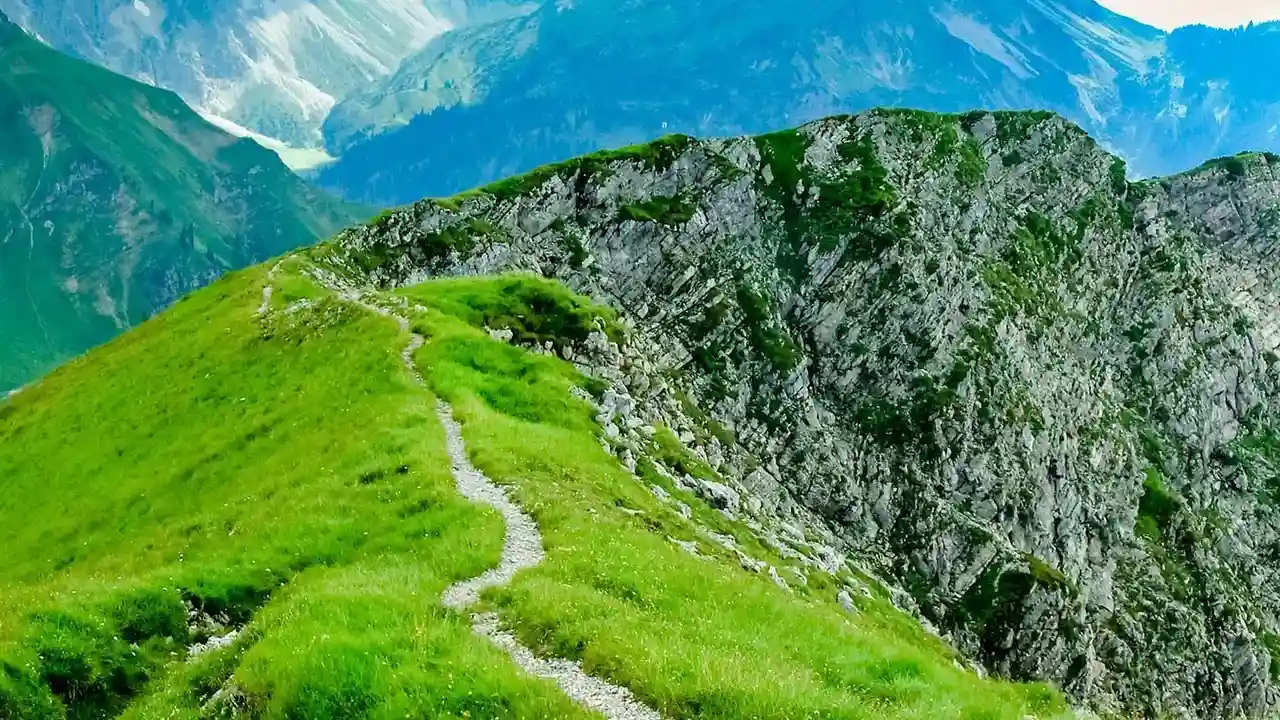
leads hikers through four national parks, including Abisko and Sarek, offering a journey through vast alpine tundra, lush birch forests, and past glacier-fed lakes. What makes the Kungsleden so universally appealing is its accessibility. While the full trek is a multi-week commitment, it is easily broken into shorter, week-long sections. Well-marked paths and a network of mountain huts spaced a day's hike apart mean you can experience this profound wilderness without needing to be a hardcore survivalist. It’s an epic yet manageable adventure that delivers grand-scale scenery from the Arctic Circle.
The Right to Roam: Allemansrätten
One of the most compelling reasons to trek in Sweden has nothing to do with a specific trail, but with a unique cultural principle: Allemansrätten, or the Right of Public Access. Enshrined in the Swedish constitution, this right allows everyone—locals and tourists alike—the freedom to roam, hike, and camp almost anywhere in the countryside, even on privately owned land, as long as you show respect and do not disturb or destroy. This concept transforms the entire country into a potential trekking ground. You can pitch a tent for a night or two, pick wild berries and mushrooms, and swim in countless lakes, all free of charge. This freedom fosters a deep connection to the landscape and offers a level of spontaneity and immersion rarely found elsewhere. It is a philosophy of shared access built on mutual respect between people and nature.
For the Purist: Sarek National Park
If the Kungsleden is the accessible epic, Sarek National Park is its wild, untamed counterpart—often called Europe's last true wilderness. Located in the mountainous north, Sarek is a land of extremes with over 100 glaciers, dramatic peaks, and powerful rivers. There are almost no marked trails, no cabins for overnight stays, and no amenities. Trekking here is a serious undertaking reserved for experienced, self-sufficient adventurers who are proficient with a map and compass and prepared for unpredictable weather, even in summer. The reward for this effort is unparalleled solitude and the thrill of navigating a truly primeval landscape. For the global adventurer seeking a genuine challenge far from any crowds, Sarek offers an experience that is raw, profound, and increasingly rare in the modern world.
A Trail for Every Terrain
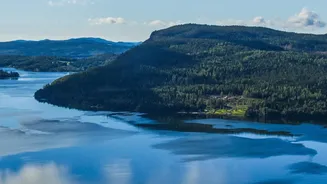
Sweden's trekking appeal extends far beyond its Arctic Circle crown jewels. The country's length and varied geography mean there is a trail for every taste and season. In the south, the Skåneleden Trail winds through the gentler landscapes of Skåne, taking in coastal cliffs, serene forests, and picturesque villages. The High Coast Trail, a UNESCO World Heritage site, offers dramatic views of a unique coastline that is still rising from the sea. Near the capital, the Stockholm Archipelago Trail connects roughly 20 islands via public ferries, blending natural beauty with island culture. From the deep forests of Sörmlandsleden to the lakeside paths of the Jämtland Triangle, Sweden provides a remarkable diversity of experiences, proving that world-class hiking isn't confined to a single region or type of terrain.
A System Built for Hikers
Supporting this vast network of trails is an infrastructure that makes trekking in Sweden both safe and enjoyable. The Swedish Tourist Association (STF) has operated for over a century to make the country's natural beauty accessible. Along the Kungsleden and other popular routes, the STF maintains a system of mountain cabins and stations. These cabins, typically spaced 10-20 kilometers apart, offer simple, rustic accommodation. While many lack electricity or running water, they provide beds, kitchens, and often a sauna—a welcome reward after a long day's hike. This hut system allows for longer treks with a lighter pack, as hikers don't always need to carry a tent and can restock basic supplies at some locations. It's a pragmatic and quintessentially Swedish approach that prioritizes the experience of being in nature.