







The City of Joy in Lights
Weeks before the main festivities, an electric anticipation buzzes through the air. Then, almost overnight, the city is reborn in light. Streets and flyovers are draped in millions of dazzling LED bulbs, creating a canopy of colour that turns night into
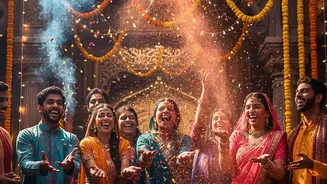
a perpetual twilight festival. The soundscape changes, too. The usual city hum is replaced by the resonant beats of the 'dhaak', the traditional Bengali drum, its rhythm echoing from every neighbourhood, calling the faithful and the curious alike. It’s a time when social barriers seem to dissolve in the shared excitement, as millions of people, dressed in their festive best, pour onto the streets. The city doesn't sleep; it becomes a grand, walkable carnival that lasts until dawn.
Pandal Hopping: A Tour of Temporary Masterpieces
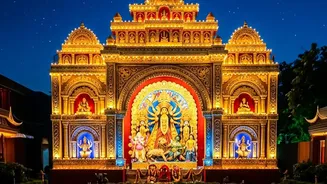
At the heart of the celebration are the pandals: elaborate, temporary pavilions built to house the idols of Goddess Durga. But calling them mere structures is an understatement. Each pandal is a large-scale art installation, a masterpiece of imagination and craftsmanship that is often months in the making. The themes are boundless, ranging from replicas of historical monuments to abstract concepts based on social issues or traditional crafts. The activity of visiting these installations is known as 'pandal hopping'. It’s an immersive cultural pilgrimage where you walk through streets-turned-galleries, marvelling at the creativity before paying respects to the intricately sculpted clay idols of the goddess.
A Feast on Every Corner
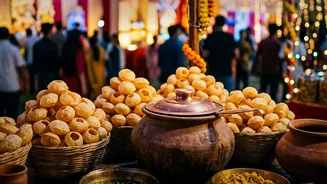
Durga Puja is as much a feast for the stomach as it is for the eyes, a phenomenon lovingly called 'Petpujo' or worship of the belly. The air is thick with the aroma of food wafting from countless stalls that spring up near every pandal. This is where you find the soul of Kolkata's street food. You can join the queue for phuchka, the city's iconic version of pani puri, where crispy spheres explode with tangy, spicy water. Another essential is the kathi roll, a flaky paratha wrapped around succulent kebabs, onions, and sauces. For a quick, savoury bite, there's ghugni, a hearty yellow pea curry, or the various deep-fried 'chops' and 'cutlets' that are a local obsession.
The Taste of Tradition: Bhog and Mishti
Beyond the thrilling chaos of street food, there is the soulful tradition of 'bhog'. This is the consecrated vegetarian meal offered to the goddess and then distributed freely to all devotees at community pandals. The quintessential bhog includes khichuri, a comforting mix of rice and roasted moong dal; labra, a medley of seasonal vegetables; and some form of fried vegetable like beguni (brinjal fritters). This meal is prepared without onion or garlic, yet it’s incredibly flavourful and represents the spirit of community sharing. Of course, no Bengali celebration is complete without sweets, or 'mishti'. Shops do brisk business selling classics like sandesh, creamy mishti doi (sweet yogurt), and spongy rasgulla, providing a sweet end to the culinary journey.