




A Lost Capital on the Riverbank
About 80 kilometres from Raipur, the quiet village of Sirpur holds the secrets of a once-thriving metropolis. Known in ancient times as Sripura, or the 'City of Abundance', this was the capital of the Dakshina Kosala kingdom, ruled by the Sarabhapuriya
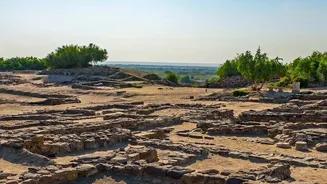
and later the Panduvamshi kings from roughly the 5th to the 12th century. For centuries, the city lay buried and largely forgotten, a secret kept by the jungle. It wasn't until major excavations in the 21st century that the true scale of this incredible urban centre began to re-emerge, revealing a sophisticated city that was a hub of politics, religion, and commerce.
The Crossroads of Faith and Commerce
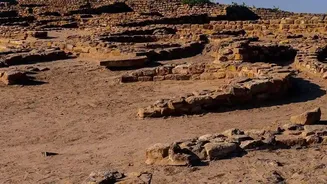
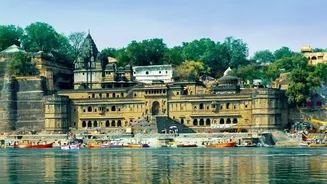
Sirpur's strategic location on the Mahanadi made it a vital node on ancient trade routes, connecting it to other major centres across India. The river was a highway for goods, people, and ideas. Excavations have unearthed a sixth-century marketplace, underground granaries, and even an ancient bathhouse, painting a picture of a bustling commercial town with advanced urban planning. More than just a place of trade, Sirpur was a remarkable example of religious harmony. Shaivite and Vaishnava temples, dozens of Buddhist viharas (monasteries), and Jain temples all coexisted. This blend is visible everywhere, with different religious motifs sometimes appearing on the same structure, showcasing a culture of profound tolerance.
Walking Through a City of Ruins
A visit to Sirpur is a journey through an open-air museum spread over several kilometres. The most iconic structure is the 7th-century Lakshmana Temple, one of India's best-preserved brick temples, renowned for its intricate carvings and detailed construction. Nearby, the ruins of the Teevardev Vihara hint at the site's importance as a Buddhist centre; the Chinese traveller Xuanzang is believed to have visited in the 7th century, noting the presence of 100 monasteries. Another breathtaking site is the Surang Tila, a large temple complex on a high stone platform with multiple shrines, which was only unearthed in the mid-2000s. Wandering between these excavated mounds, you'll also find monolithic statues of Buddha, remains of other temples, and the Gandheshwar Temple on the riverbank, which incorporates older architectural fragments.
Adding a New Dimension to Chhattisgarh
Understanding Sirpur fundamentally changes one's perception of Chhattisgarh. It adds a rich, classical layer to the state's identity, revealing a history of powerful kingdoms, artistic excellence, and cosmopolitan life that predates its modern story by over a millennium. The discovery of high-quality bronze sculptures suggests Sirpur was a major artistic workshop, with styles possibly influencing art in far-off places like the Ellora Caves. The site, which is on UNESCO's Tentative List for World Heritage status, is not just a collection of monuments but the footprint of an entire city. Exploring these ruins provides a tangible link to a sophisticated past where commerce, diverse faiths, and urban living flourished in the heart of India.