







A Monumental Discovery
In a breakthrough for astronomy, scientists have detected an atmosphere around LHS 1140 b, a rocky 'super-Earth' located just 48 light-years away. Published in mid-July 2026, the research provides the strongest evidence to date that planets orbiting the most
common type of star in our galaxy can retain their air. Using the Magellan Observatory in Chile, astronomers detected a faint signal of helium gas escaping from the planet. While helium slowly leaks from Earth’s own atmosphere, its presence around LHS 1140 b is definitive proof that a substantial atmosphere has survived for billions of years, a milestone that transforms the planet from a point of interest into a prime target for follow-up studies.
The Red Dwarf Problem
For decades, the search for habitable exoplanets has been complicated by the 'red dwarf conundrum'. Red dwarfs are smaller, cooler, and far more numerous than stars like our Sun, making up about 80 percent of the stars in the Milky Way. This abundance means that billions of rocky planets orbit them. However, these stars, especially in their youth, are notoriously violent. They erupt with powerful flares of high-energy radiation and strong stellar winds that were long believed to be capable of stripping the atmosphere from any closely orbiting planet. Many scientists theorized that planets in the habitable zones of red dwarfs would be barren, airless rocks, making them dead ends in the search for life.
A World of Possibility
LHS 1140 b has proven to be a stunning exception. It orbits its star within the “Goldilocks zone,” a region where temperatures are just right for liquid water to potentially exist on its surface. Crucially, its host star is about 6 billion years old, meaning it has passed its most violent, flare-heavy youth. This has likely given the planet’s atmosphere the stability needed to persist over cosmic timescales. Before this discovery, scientists had found other promising candidates, like Gliese 12 b—another temperate world around a quiet red dwarf announced in 2024—that suggested atmospheres could be possible. But the confirmed detection on LHS 1140 b moves the conversation from theory to fact. It shows that at least some red dwarf systems can be hospitable.
The Search for What’s Inside
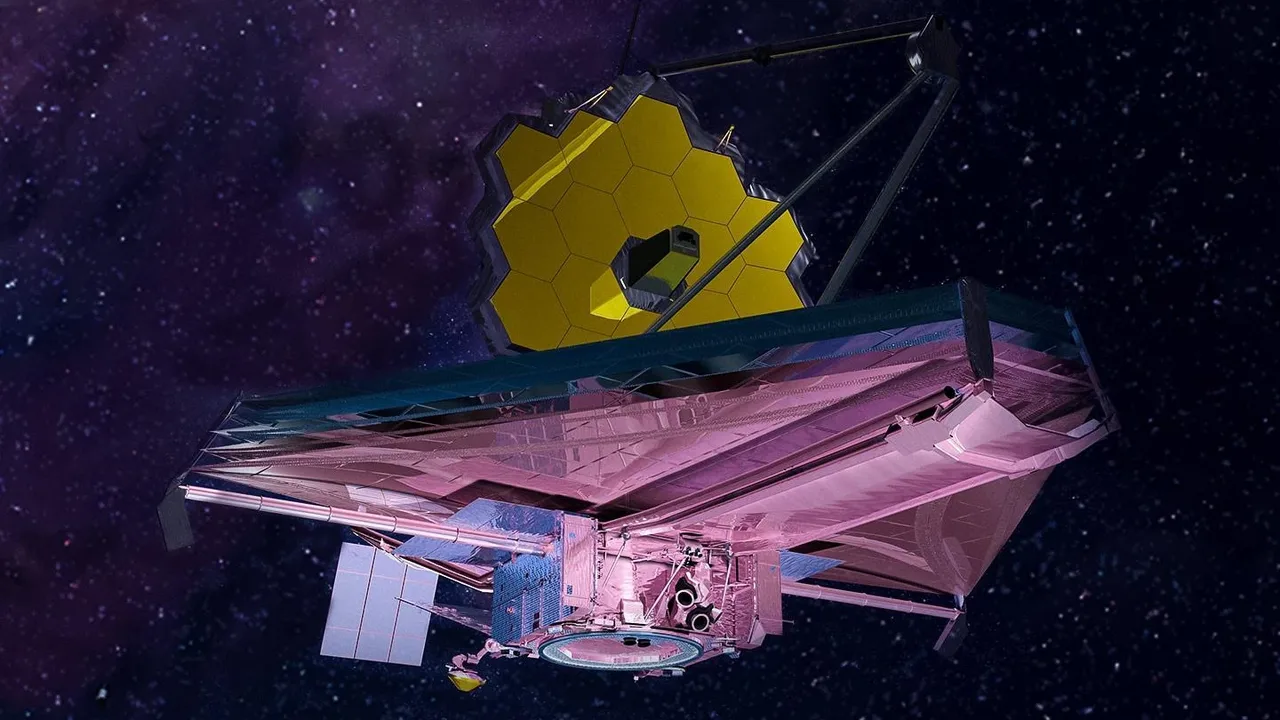
Detecting the presence of an atmosphere is only the first step. The next, more challenging question is determining its composition. The helium signal tells scientists that air is there, but it doesn't reveal what other, heavier gases might make up the bulk of the atmosphere. Does it contain water vapor, carbon dioxide, or methane—the building blocks for life as we know it? Answering this will require powerful instruments like the James Webb Space Telescope (JWST). By analyzing the starlight that filters through the planet's atmosphere, JWST can identify the chemical fingerprints of different molecules. These future observations will paint a clearer picture of whether LHS 1140 b is a water world, a volcanic planet, or something else entirely.
A New Chapter in Astronomy
This discovery opens up a vast new frontier. For years, the TRAPPIST-1 system, with its seven Earth-sized planets, captured the public imagination, but subsequent observations with JWST suggested its inner planets were likely airless. This led to some pessimism about the habitability of red dwarf systems. The confirmation of an atmosphere on LHS 1140 b has revitalized the field. It validates that planets around these ubiquitous stars are not just common, but can also be viable candidates for hosting life. It tells astronomers that they are looking in the right place and that the universe may be teeming with more potentially habitable worlds than previously imagined.