





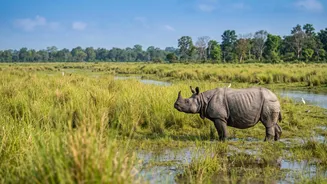
A Homecoming Decades in the Making
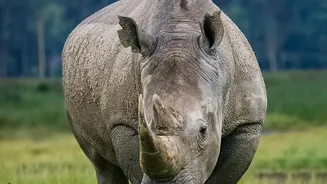
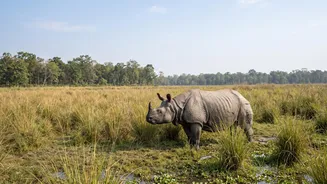
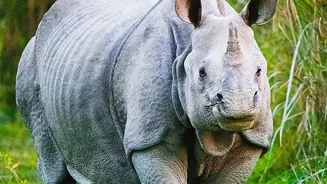
There was a time when the great one-horned rhinoceros roamed freely across the vast Terai grasslands of northern India. However, due to rampant hunting and habitat loss, they were wiped out from the region, with the last one reportedly shot in Uttar Pradesh
in 1878. For over a century, their absence was a stark reminder of what had been lost. That began to change in 1984, when a bold and ambitious Rhino Reintroduction Programme was launched. In a landmark effort, six rhinos were captured in Assam's Pobitora Wildlife Sanctuary and translocated to Dudhwa. The following year, four more female rhinos arrived from Nepal. This founding group of seven surviving animals became the seed population for one of India's most challenging and inspiring conservation experiments.
From a Handful to a Healthy Herd
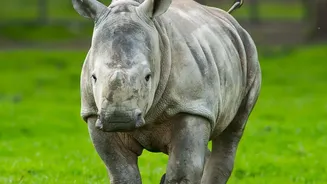
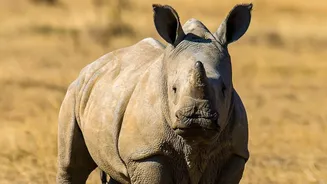
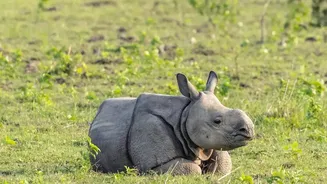
The journey from seven rhinos to a thriving community was slow but steady. The latest census, conducted in June 2026, revealed that the population has now grown to 53 individuals. This count includes 17 adult males, 25 adult females, and 11 calves and sub-adults, indicating a healthy, breeding population. The growth is particularly encouraging as it represents a net increase of five rhinos since the 2025 count, even after accounting for three recent deaths from natural causes like territorial fights and predation by tigers. This sustained growth, from just a handful of individuals in 1984 to over 50 today, is hailed by officials as a major conservation milestone and a significant success story.
The Blueprint for Success
Dudhwa's success wasn't left to chance. A core strategy involved establishing two large, fenced Rhino Rehabilitation Areas (RRAs) to provide a secure environment for the initial population to breed and grow. These enclosures, spanning over 27 and 13 square kilometres respectively, offered protection from poaching and minimized human-wildlife conflict. The program is a collaborative effort between the Uttar Pradesh Forest Department and organizations like WWF-India, involving round-the-clock monitoring by trained teams. A crucial recent development has been the phased release of rhinos from these enclosures into the wilder, unfenced core of the reserve. As of mid-2026, eleven rhinos now roam freely, fitted with radio collars that allow a dedicated control room to track their movements and ensure their safety.
Ecological Engineers and Future Challenges
The return of the rhino is about more than just one species; it's about restoring an entire ecosystem. Rhinos are considered 'ecological engineers'. Their grazing habits prevent tall, tough grasses from taking over, which helps maintain the open grasslands that countless other species depend on. Their presence fundamentally reshapes and revitalizes the landscape. However, the work is far from over. Ongoing threats include the ever-present risk of poaching, natural predation on calves, and the need to manage genetic diversity to prevent inbreeding. The successful release of rhinos into the open is a major step, but it also requires intense monitoring to prevent them from straying into human-dominated areas. Experts believe Dudhwa’s habitat could potentially support a population of 80-100 rhinos, a goal that now seems well within reach.