




The Problem with Spheres
For years, simulating how to defend Earth from a potentially hazardous asteroid involved a convenient simplification: modeling the asteroid as a perfect sphere. Physicists and engineers relied on this assumption because the calculations for modeling irregularly
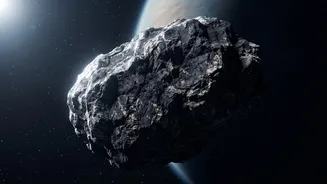
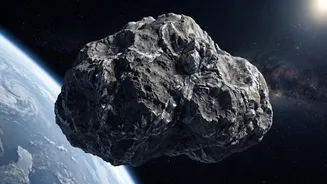
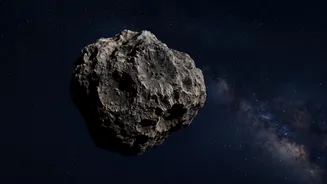
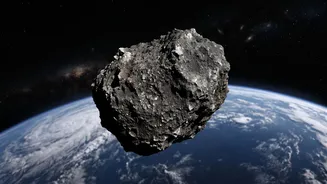
shaped objects were overwhelmingly complex and slow. However, as Sandia physicist Nathan Moore noted, 'spherical asteroids don’t exist'. In reality, many asteroids are not single, solid bodies but are instead 'rubble piles'—loose collections of boulders, rocks, and dust held together by their own weak gravity. Others are monolithic but have lumpy, potato-like shapes with uneven ridges, slopes, and hollows. This distinction is critical. Treating a lumpy rubble pile like a solid billiard ball is a flawed approach, especially when planning a mission to deflect it.
A Breakthrough in Realism
The new study from Sandia, published in the journal Icarus, marks a significant leap forward by creating a model that embraces these complexities. Instead of choosing between realistic shapes or high-fidelity math, Moore's team developed a method that incorporates both. They achieved this by combining two powerful, existing simulation codes: one typically used for modeling high-energy events (ALEGRA) and another for weaker, slowly evolving forces (SPARTA). This new, combined approach runs over 1,600 times faster than previous methods, finally giving scientists the computational power to model lumpy asteroids accurately. This allows them to simulate how an irregularly shaped object would react to a deflection attempt, providing a much clearer picture of the potential outcomes.
Why Shape Matters So Much
The Sandia simulations focused on a specific planetary defense scenario: using the X-rays from a nearby nuclear detonation to vaporize part of an asteroid's surface. This vaporization creates a powerful 'outgassing' that acts like a thruster, pushing the asteroid and altering its trajectory. The results were startling. The simulations showed that for an irregularly shaped asteroid, the effectiveness of this push depended dramatically on where it was targeted. Hitting one side of a simulated asteroid produced a deflection velocity nearly five times greater than hitting another side. The effect on the asteroid's spin was even more pronounced, varying by a factor of 17 depending on the angle of the blast. 'We expected aim to matter', Moore stated. 'What surprised us was how much'. These findings prove that knowing an asteroid's precise shape is essential for a successful deflection mission.
Implications for Planetary Defense
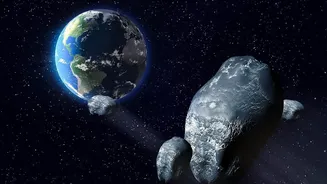
This new level of detail has profound implications for planetary defense strategies. Missions like NASA's Double Asteroid Redirection Test (DART), which successfully altered the orbit of a small moonlet, rely on accurate predictions. The DART mission used a 'kinetic impactor'—essentially ramming a spacecraft into an asteroid—to change its momentum. Sandia's research focuses on nuclear deflection, but the core lesson is the same: the target's composition and shape are paramount. Hitting a loose rubble pile might cause it to break apart into multiple dangerous fragments rather than deflecting it as a single object. Conversely, a targeted blast on a solid, lumpy asteroid could be highly effective if aimed at the right spot. With these new models, mission planners could theoretically upload 3D imagery of a threatening asteroid and calculate the optimal strategy to nudge it away from Earth safely.