







Malaysia is set to receive a monumental push in its ambition to become a regional technology leader. SoftBank Group's visionary founder, Masayoshi Son, has reportedly planned a massive investment, signaling a new era for AI in Southeast Asia.
The Landmark Proposal
SoftBank's
chairman and CEO, Masayoshi Son, is reportedly planning a staggering US$50 billion investment into Malaysia's technology sector. According to Malaysian Prime Minister Anwar Ibrahim, the plan was communicated during a video conference and represents one of the largest single investment intentions in the region's history. The focus is squarely on building out the critical infrastructure for the next wave of technological advancement: artificial intelligence, emerging technologies, and state-of-the-art data centers. While SoftBank itself has been more measured, confirming it is exploring opportunities, the announcement has ignited conversations about Malaysia's tech future.
Why Malaysia is the Chosen Hub
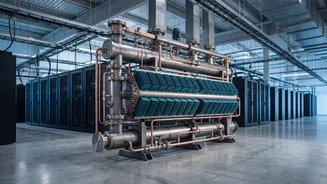
This massive potential investment isn't happening in a vacuum. Malaysia has been methodically laying the groundwork to become a major player in the global digital economy. The nation has emerged as a key destination for data center investment, thanks to its strategic location in Southeast Asia, relatively lower energy costs, and a supportive government pushing a clear national AI strategy. Tech giants like Google, Microsoft, and Amazon have already committed billions to building cloud and AI infrastructure in the country, validating its potential. This new proposal from SoftBank would dramatically accelerate Malaysia's goal to be among the top 20 AI nations in the world.
The Key Players and Strategic Sites
The plan involves more than just SoftBank. An earlier agreement this month pointed to a collaboration between SoftBank, ride-hailing giant Grab, and Petroleum Sarawak (PETROS), the state-owned energy company, to explore AI infrastructure in the state of Sarawak. Prime Minister Anwar has mentioned that potential sites have been identified in Kuching, Sarawak, as well as elsewhere in Peninsular Malaysia. The involvement of local energy firms like PETROS highlights a critical component of the strategy: powering these energy-hungry data centers. Separately, Malaysian conglomerate YTL Power International has also partnered with AI chip leader NVIDIA on a multi-billion dollar project to develop AI data centers powered by green energy, further cementing the country's infrastructure credentials.
Building a 'Sovereign AI'
A core goal of this expansion is to develop 'sovereign AI'—the capability for Malaysia to build and train its own AI models that understand local context, languages, and culture. This prevents over-reliance on foreign-built models that may not align with national priorities. A recent project between YTL and NVIDIA, for example, involved creating a dataset of 1.35 million synthetic Malaysian 'personas' based on demographic data to train AI. This initiative will allow developers to create AI that is uniquely Malaysian. The plan also includes building a center of excellence for AI research and learning, aiming to cultivate local talent and move the country's workforce from backnd assembly to frontnd innovation.
Challenges and the Road Ahead
An investment of this magnitude presents both immense opportunities and significant challenges. One of the biggest hurdles is the enormous energy demand of AI data centers. While Sarawak's hydropower is a major draw, ensuring a sustainable and sufficient power supply will be paramount. There is also the risk of becoming a 'compute enclave', where Malaysia hosts the physical infrastructure and its environmental costs but sees most of the economic value flow to international parent companies. Developing a highly skilled local workforce capable of managing and innovating within this new ecosystem is another critical task. The government is actively working to address these issues, launching the National AI Action Plan 2026–2030 and establishing a Malaysia AI Safety Institute to ensure responsible and ethical development.