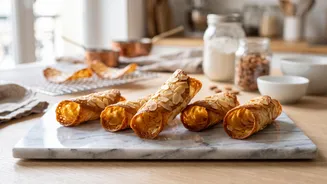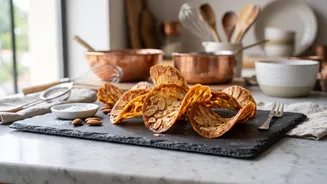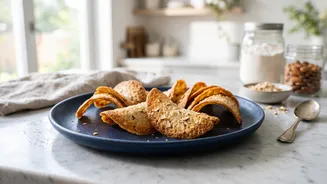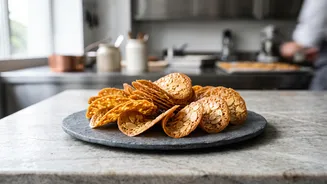


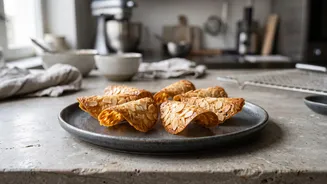
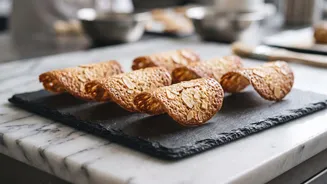
There is a special kind of magic in a perfect French almond tuile. Impossibly thin, with a delicate, shattering crispness, it is a cookie that feels both elegant and elemental. This guide will walk you through mastering this classic treat.
The Elegance of the Tuile
A tuile, which
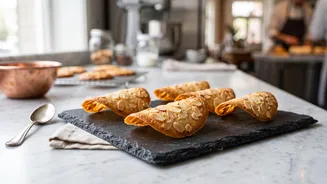
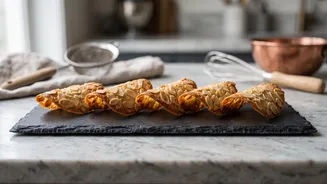
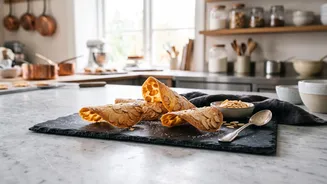
means 'tile' in French, is a thin, crisp cookie traditionally curved like the terracotta roof tiles of Provence. The beauty of the almond tuile lies in its simplicity and its texture. Made with just a handful of ingredients like egg whites, sugar, flour, butter, and sliced almonds, its success is all in the technique. The goal is a wafer-thin, buttery, and nutty cookie that is light and delicate. While beautiful on their own, they become truly spectacular when used as a crunchy counterpart to softer textures, like mousse, ice cream, or a simple bowl of fresh berries.
Crafting the Perfect Batter
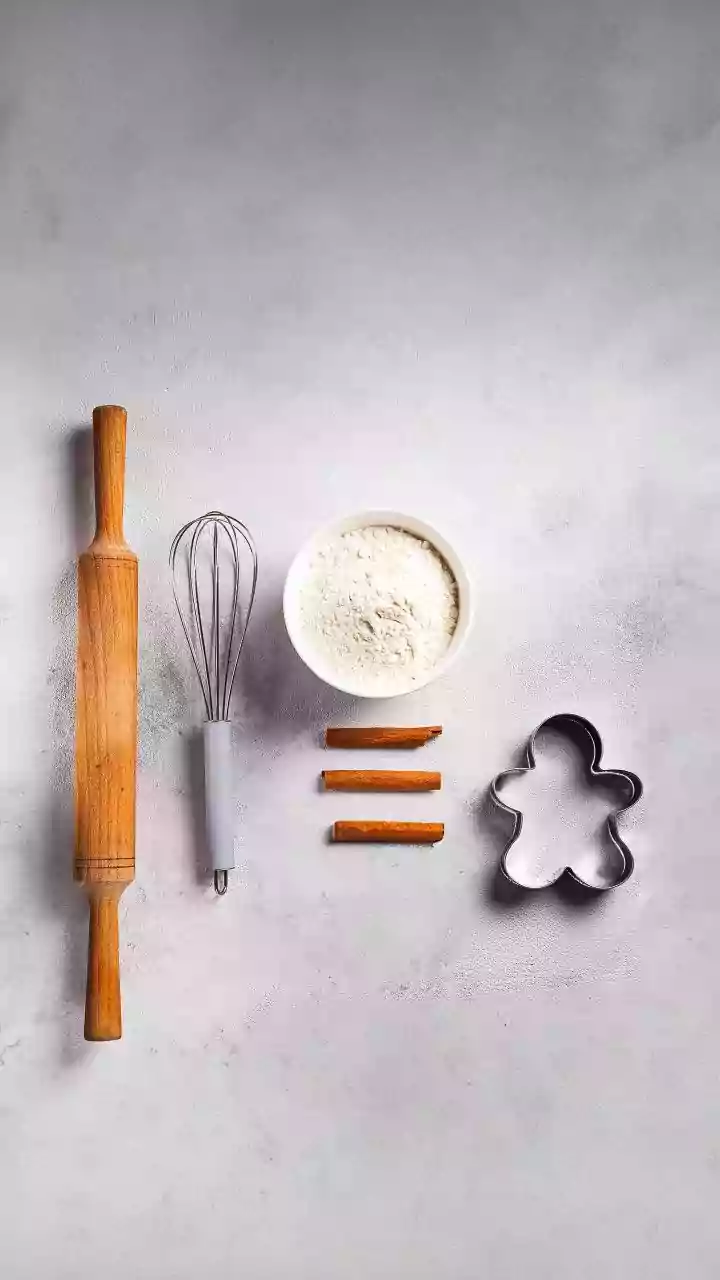
The foundation of a great tuile is a smooth, consistent batter. Most classic recipes call for egg whites, sugar, all-purpose flour, melted unsalted butter, and of course, thinly sliced almonds. To begin, gently whisk the egg whites and sugar until just foamy; you are not looking to create a meringue. Gently stir in the flour and salt, followed by the cooled, melted butter and a splash of vanilla or almond extract. Finally, fold in the sliced almonds. For an even deeper nutty flavor, you can lightly toast the almonds before adding them to the batter. The resulting batter should be smooth and spreadable. If it seems too thick, let it rest for a few minutes. The batter can often be made ahead and refrigerated for several days.
The Secret to Wafer-Thin Results
The most crucial step—and the one that most often trips up home bakers—is spreading the batter. The key to that signature crispness is to spread it incredibly thinly, almost so you can see the baking mat through it. A common method is to drop small teaspoonfuls of batter onto a baking sheet lined with a silicone mat or parchment paper, leaving plenty of space between each one as they will spread significantly. Then, use the back of a spoon, dipped occasionally in water or melted butter, to spread the batter into a thin, even circle about three inches in diameter. For perfect uniformity, you can also use a stencil. Only bake a few at a time, especially on your first attempt, as the next step requires you to work very quickly.
Baking, Shaping, and Cooling
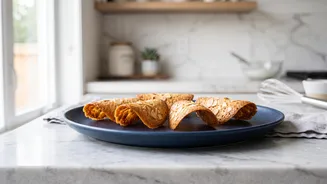
Bake the tuiles in a preheated oven until the edges are a deep golden brown but the center is still pale. This usually takes just 6–10 minutes, so watch them closely as they can burn in an instant. Here comes the time–sensitive part: you must shape the cookies while they are hot. The moment they come out of the oven, let them cool for just a few seconds until you can lift them with a thin spatula, then immediately drape them over a rolling pin, a wine bottle, or the side of a glass to create that classic curved shape. If they harden before you can shape them, simply return the baking sheet to the oven for a minute to make them pliable again. Once shaped, transfer them to a wire rack to cool completely, where they will become firm and crisp.
The Art of the Berry Pairing
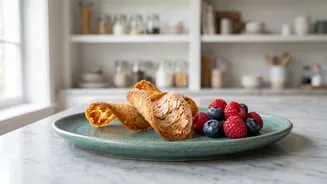
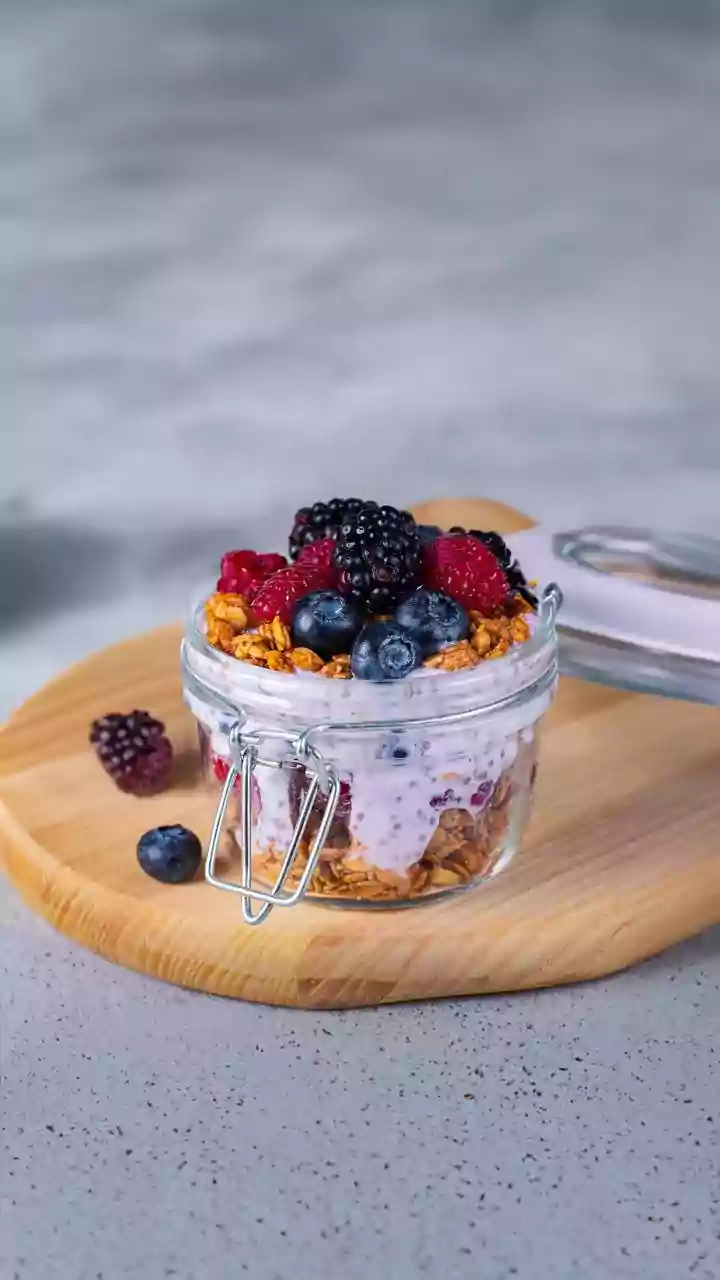
The nutty, caramelized flavor of almond tuiles is a perfect canvas for the bright acidity and juicy sweetness of fresh berries. For a simple and elegant pairing, a mix of fresh raspberries, blueberries, and blackberries offers a beautiful contrast in both color and flavor. Raspberries provide a tart counterpoint to the cookie's sweetness, while blueberries add a gentle burst of fruitiness. Sliced strawberries also work wonderfully. For a slightly more involved preparation, consider macerating the berries by tossing them with a tablespoon of sugar and a squeeze of lemon juice and letting them sit for about 20 minutes. This draws out their natural juices, creating a light syrup that is delicious spooned alongside the tuiles.
Serving and Storing Your Creations
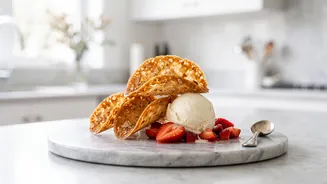
To serve, you can arrange a few tuiles alongside a bowl of berries, or get creative by breaking them into shards to sprinkle over a berry–topped dessert. They are a wonderful garnish for panna cotta, custards, or a simple scoop of vanilla ice cream with a berry coulis. Tuiles are notoriously susceptible to humidity and will lose their signature crispness if left out. To store them than wait until they are completely cool and then place them in an airtight container. They are best enjoyed the day they are made but can last for a couple of days if stored properly. If they do go soft than you can often revive them with a few minutes in a low–temperature oven to crisp them up again.