






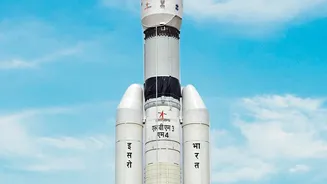
Setting the Record Straight
In response to concerns raised by employee associations and media reports, ISRO leadership has moved to quell fears about the agency's future. ISRO Chairman V. Narayanan and other officials have clarified that reports of privatisation are "baseless and incorrect."
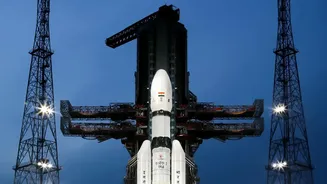
The core message is that ISRO will continue to be the nation's principal institution for advanced space research, strategic national missions, and frontier technology development. The assurance was delivered directly to employees in a video conference, where the chairman outlined a roadmap of upcoming projects, including the much-anticipated Gaganyaan human spaceflight mission, to underscore the agency's continuing central role. This communication was vital to address worries that emerged after statements about private companies eventually taking over manufacturing and launch operations.
Participation, Not Privatisation
The confusion stems from a fundamental policy shift, which ISRO describes not as privatisation, but as "ecosystem expansion." The goal is to distinguish between selling off the national space agency and strategically inviting private companies to participate in and scale up routine operations. For years, ISRO has been the researcher, developer, manufacturer, and operator of India's space missions. The new model, outlined in the Indian Space Policy 2023, encourages private firms to take over mature technologies and commercial activities, such as building operational launch vehicles like the PSLV and SSLV. ISRO has already begun transferring the technology for these rockets to industry consortiums. This frees up ISRO's scientists and resources to concentrate on high-risk, high-reward projects like deep-space exploration, next-generation launch systems, and establishing the Bharatiya Antariksh Station.
The Role of IN-SPACe
At the heart of this new ecosystem is the Indian National Space Promotion and Authorisation Centre (IN-SPACe), established in 2020. IN-SPACe acts as a single-window, autonomous agency to regulate and facilitate the activities of non-governmental entities (NGEs) in the space sector. Its job is to bridge the gap between ISRO and private players, assessing how to best utilise India's space resources and infrastructure. Rather than private companies competing with ISRO, IN-SPACe helps them complement the agency's capabilities. This regulatory body is crucial for creating a structured framework where private innovation can flourish without compromising national strategic interests, a model designed to integrate private capital and agility with ISRO's decades of expertise.
Fueling India's Space Economy
The strategic logic behind this push is economic. While India is a formidable space power, its share of the global space economy is currently less than two percent. By opening the sector, the government aims to grow India's space economy from around $9 billion today to as much as $45 billion within the next decade. This has already sparked a boom, with the number of space startups soaring from just one in 2014 to over 400 today. This influx of private energy is expected to drive large-scale production, commercialisation, and innovation. The goal, as articulated by former ISRO chairman S. Somanath, is to dramatically increase India's launch cadence and satellite fleet to meet both national and international demand, something that cannot be done by ISRO alone.
ISRO's Evolving Mission
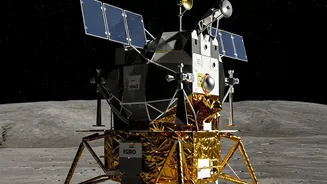
Freed from the demands of routine manufacturing and commercial launches, ISRO is being repositioned to dream bigger. The agency's future focus lies firmly in the realm of science and exploration. Major upcoming projects include Chandrayaan-4, which will attempt a lunar sample return, the Gaganyaan human spaceflight programme, and joint missions like LUPEX with Japan and NISAR with NASA. The ultimate ambition is to establish a permanent human presence in space with the Bharatiya Antariksh Station by 2035. By handing over operational tasks to the private sector, ISRO is not shrinking; it is evolving into a more agile, research-focused organisation dedicated to pushing the boundaries of what is possible in space, ensuring India remains at the forefront of cosmic exploration and discovery.