



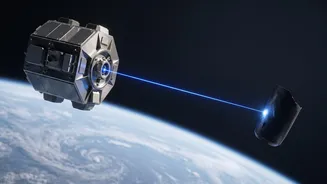
The Junkyard Above Our Heads
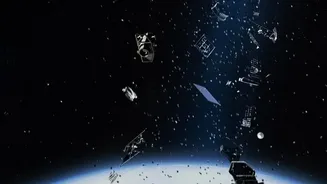
Low Earth Orbit (LEO), the invisible highway where thousands of satellites operate, is increasingly cluttered. Decades of space activity have left a trail of more than 100 million pieces of human-made debris, from defunct satellites and spent rocket stages
to tiny paint flecks. While only around 31,000 of the largest objects are actively tracked, even a centimetre-sized fragment can be lethal. Travelling at speeds over 17,000 miles per hour, a collision with one can disable or destroy a multimillion-dollar satellite. This problem is accelerating dramatically with the deployment of satellite mega-constellations for global internet, which has led to a 361% increase in operational satellites over the last five years alone. More traffic means more potential for accidents, turning a remote environmental issue into a pressing economic threat.
From Nuisance to Ticking Clock
The greatest fear among space operators is a chain reaction known as the Kessler Syndrome. This is a scenario where the density of objects in orbit becomes so high that collisions create more debris, which in turn causes more collisions, leading to a cascade that could render entire orbits unusable for generations. While this is a slow-motion disaster unfolding over decades, experts warn the tipping point may have already been reached in some orbital regions. The 2009 collision between an active Iridium communications satellite and a defunct Russian Cosmos satellite generated thousands of new pieces of trackable debris, highlighting the real-world danger. Today, the International Space Station must conduct manoeuvres to dodge debris, and satellite operators are facing rising costs for collision avoidance and higher insurance premiums.
The New Space Janitors
This growing risk has given rise to a new industry focused on active debris removal (ADR). The market for monitoring and removing space debris was valued at over $1.1 billion in 2025 and is projected to grow steadily, potentially reaching over $2 billion by the early 2030s. A host of startups and established aerospace firms are developing technologies to tackle the problem. Japan's Astroscale has conducted successful demonstrations of its ability to inspect and dock with orbital debris. Swiss company ClearSpace holds a contract with the European Space Agency (ESA) for the world's first mission to remove a piece of debris, with a launch planned for 2028. Other innovative approaches include harpoons, nets, robotic arms, and even lasers designed to nudge junk into a decaying orbit. These companies represent the first wave of what could become a routine service for maintaining the orbital environment.
Who Pays for the Cleanup?
Despite the clear need, the business case for debris removal remains challenging. The core issue is a classic "tragedy of the commons" problem: orbit belongs to everyone and no one, so there is little incentive for a single actor to pay for a cleanup that benefits all. A single dedicated removal mission can cost between $10 million and $100 million today, making it prohibitively expensive to tackle the thousands of large, defunct objects that pose the biggest threat. Potential customers include satellite operators looking to protect their assets, insurance companies wanting to reduce risk, and governments concerned with national security and the long-term sustainability of space. However, without a clear mandate or a robust commercial market, the demand remains uncertain. The bulk of the market revenue today comes from tracking and situational awareness services, not yet from active removal.
A Frontier in Need of Rules
The biggest hurdle to a thriving debris removal market is the lack of clear, binding international law. The 1967 Outer Space Treaty holds that space objects remain the property of the launching state in perpetuity, meaning one country cannot legally remove another's defunct satellite without permission. While voluntary guidelines from bodies like the United Nations exist, they are not enforceable. National regulators are stepping in to fill the void. The U.S. Federal Communications Commission (FCC) recently implemented a landmark "5-year rule," requiring new satellites licensed in the US to deorbit within five years of their mission's end, a significant tightening from the previous 25-year guideline. Europe and Japan are also pushing for stricter standards and funding technology demonstrators. This patchwork of national regulations, while helpful, creates a complex compliance landscape and doesn't solve the problem of existing legacy debris.