


Decoding the ZTL: A Tourist's Guide
The most important acronym for any driver in Italy is ZTL, or 'Zona a Traffico Limitato'. These are limited traffic zones designed to protect historic city centres from congestion and pollution. Most major Tuscan towns, including Florence, Siena, and Pisa,
have a ZTL covering their core. These zones are monitored by cameras that automatically photograph the license plates of cars entering without a permit. Crossing into a ZTL, even for a minute, will trigger a fine that can range from €80 to over €300. These fines are sent to the rental car company, which will then charge your credit card, often with an added administrative fee. Look for the circular white sign with a red border that marks a ZTL entrance. Often, an electronic sign will state 'Varco Attivo' (active gate), meaning the restriction is currently enforced, or 'Varco Non Attivo' (inactive gate), meaning you can enter.
The Golden Rule: Park Outside the Walls
The simplest and most effective strategy is to never drive into the historic centre of a Tuscan town. Assume any area inside the old city walls is a ZTL. Instead of trying to navigate narrow, confusing streets, plan to park on the outskirts and walk or take a short bus or tram ride in. Before you even set off, use a map to identify a specific car park outside the ZTL and set your GPS for that location, not the town centre. This proactive planning prevents you from accidentally following a GPS route into a restricted zone, a common and costly mistake. Most towns have large, well-signed paid parking lots just outside the main gates, offering a stress-free start to your visit.
Parking Strategies for Florence and Siena
In Florence, the entire historic centre is a large ZTL. A brilliant option for drivers is the Villa Costanza car park, located directly at a stop on the A1 motorway. From here, you can take the T1 tram directly to the Santa Maria Novella station in the city centre in about 20 minutes. Other lots like Parcheggio Parterre offer affordable daily rates and are a 15-minute walk or a short bus ride away. Siena’s ZTL is also permanent and extensive, covering almost the entire walled city. Look for large car parks like Parcheggio Santa Caterina or Parcheggio Stazione (at the train station), which are located outside the ZTL and provide easy access to the city centre. If your hotel is inside a ZTL, contact them in advance. They can often register your license plate with the authorities for temporary access to drop off luggage.
The Reward: Embracing the Rural Drives
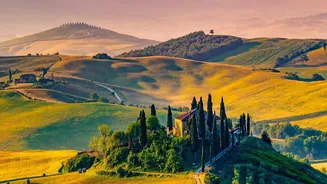
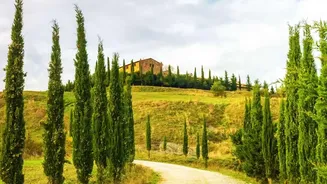
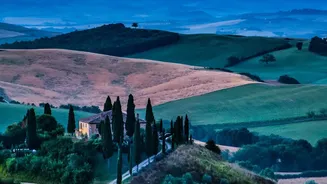
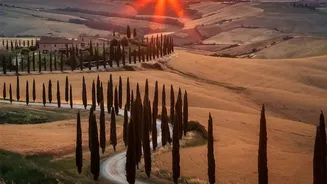
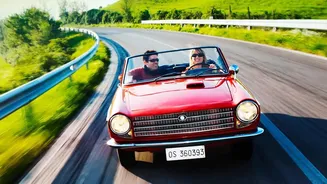
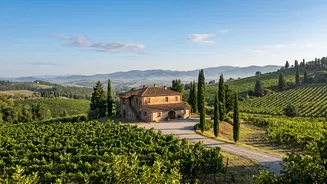
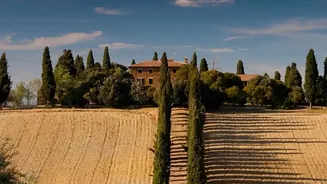
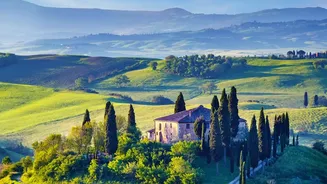
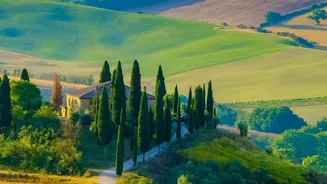
The payoff for careful city planning is the freedom to explore Tuscany’s breathtaking countryside. Balancing visits to busy towns with leisurely rural drives is the secret to a perfect itinerary. The SR222, or 'Via Chiantigiana', is the quintessential Tuscan route, winding from Florence to Siena through the heart of Chianti wine country. This road offers rolling vineyards, olive groves, and stops in charming medieval villages like Greve and Castellina in Chianti. Equally stunning is the Val d'Orcia, a UNESCO World Heritage site south of Siena. This is the Tuscany of postcards, with cypress-lined roads, golden hills, and iconic towns such as Pienza and Montalcino. Driving these scenic routes, like the SP438 near Asciano, is where the magic of a road trip truly unfolds.
Tips for a Smoother Journey
When renting a car, opt for a compact model. Smaller cars are much easier to handle on narrow village streets and in tight Italian parking spots. While an International Driving Permit (IDP) is legally required in Italy, ensure you also have your valid home country driver's license and a credit card for the rental. Be prepared for a different driving style; Italian drivers can be assertive, and roundabouts are more common than traffic lights. Finally, don't rely solely on your GPS. While useful, it can sometimes lead you into a ZTL. Always prioritize road signs, especially those marked with a 'P' for parking.