









A Decade of Explosive Growth
The transformation of India's solar sector has been nothing short of staggering. In just over a decade, the country's installed solar capacity has skyrocketed. From a mere 3 gigawatts (GW) in 2014, capacity surged to over 164 GW by mid-2026. This phenomenal
expansion has made solar the single largest contributor to India's renewable energy portfolio. The momentum continues to build, with a record-breaking 27 GW of new solar capacity added in just the first half of 2026, a nearly 50% increase compared to the same period in the previous year. This growth isn't just about large-scale projects; rooftop solar has also seen a dramatic 131% year-on-year surge in the first half of 2026, driven by new residential subsidy programs. This rapid build-out underscores a deliberate national strategy to pivot towards a low-carbon, self-reliant energy future.
Government Policy as a Supercharger
This remarkable growth is not an accident. It is the result of a concerted push from the Indian government through ambitious policies and incentives. A cornerstone of this strategy is the target to achieve 500 GW of non-fossil fuel energy capacity by 2030, with solar power expected to contribute a massive share of around 280 GW. To get there, the government has implemented several key initiatives. The development of sprawling solar parks across the country provides a plug-and-play environment for producers, with 59 such parks sanctioned with a combined capacity of 40 GW. Perhaps most critically, the Production-Linked Incentive (PLI) scheme is designed to boost domestic manufacturing of high-efficiency solar modules. With a total outlay of ₹24,000 crore, the scheme aims to reduce India's reliance on imports, create jobs, and build a self-sufficient solar ecosystem.
The Economics of Sunlight
Alongside policy support, a powerful economic shift has made solar power intensely competitive. The cost of solar photovoltaic (PV) technology has plummeted globally, and India has been a major beneficiary. This has driven down the tariffs for solar power to levels that are often cheaper than electricity generated from traditional fossil fuels like coal. This cost-competitiveness has unlocked a flood of private and foreign investment. India's clean energy sector attracted significant foreign direct investment (FDI), and supportive rules now permit 100% FDI in renewable energy generation and transmission. This influx of capital is critical for funding everything from multi-billion-dollar solar parks to the expanding domestic manufacturing base, turning climate goals into tangible, economically viable projects.
Landmark Projects and the Road Ahead
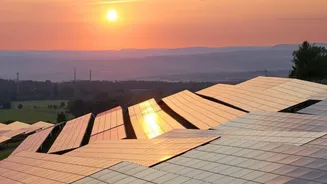
The scale of India's solar ambition is visible on the ground. The country is now home to some of the world's largest solar power plants. The Bhadla Solar Park in Rajasthan, for instance, sprawls across 14,000 acres and has a capacity of 2,245 MW, enough to power over a million homes. Other massive installations include the Pavagada Solar Park in Karnataka (2,050 MW) and the Kurnool Ultra Mega Solar Park in Andhra Pradesh (1,000 MW). While utility-scale projects have been the primary growth engine, the sector is diversifying. Rooftop solar is rapidly gaining ground, particularly in the residential sector. However, challenges remain. Integrating this massive, intermittent power source into the national grid, securing land for future projects, and scaling up energy storage solutions are key hurdles to overcome. Successfully navigating these challenges will be crucial for India to meet its 2030 targets and solidify its position as a global solar superpower.