

A Fortunate Cosmic Alignment
In a remarkable instance of cosmic alignment, a new image has captured three separate pairs of galaxies stacked vertically within a single field of view. All of these galactic systems are likely members of the vast Centaurus Galaxy Cluster. While capturing
multiple galaxies in one shot is common for today’s powerful telescopes, seeing three distinct pairs, each with its own unique story of gravitational interaction, is an extraordinary opportunity for astronomers and space enthusiasts alike. It provides a natural laboratory for comparing the different ways galaxies can influence one another over cosmic timescales.
A Story in Three Parts
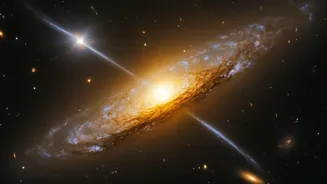
The significance of this image lies in the different narratives presented by each pair. The top duo features a galaxy, NGC 4650A, that is what’s known as a polar ring galaxy. This unusual structure, with a ring of gas and stars orbiting over its poles, is thought to be the remnant of a past galactic collision, offering a glimpse into cosmic history. The middle pair presents a visual illusion; while the two galaxies appear to be interacting, their different speeds suggest they are likely just passing ships in the cosmic night. The bottom pair, however, tells a story of the future. These two galaxies, named NGC 4622A and NGC 4622B, are actively engaged in a gravitational dance and are on a path to merge into a single, larger galaxy over the next billion years or so.
The Grandeur of Galactic Mergers
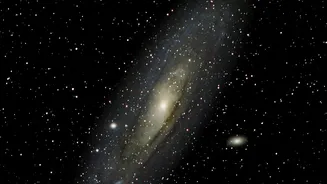
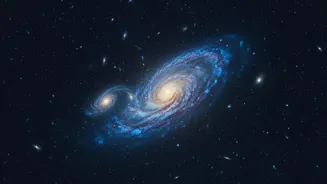
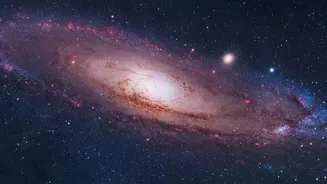
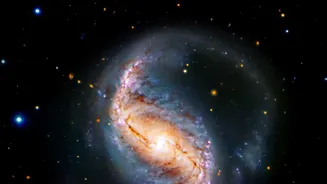
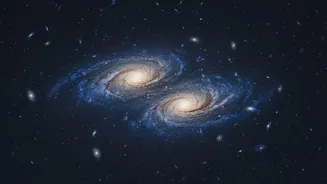
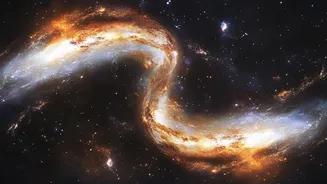
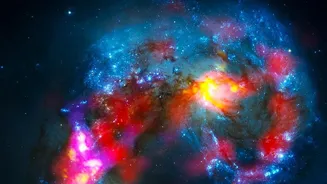
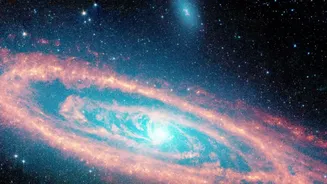
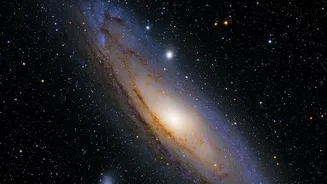
Galactic collisions and mergers are a fundamental aspect of the universe's evolution. Far from being simple demolition derbies, these events are powerful creative forces. When galaxies collide, their immense gravitational forces trigger furious bursts of new star formation, known as starbursts. The collision contorts their elegant spiral arms and, over hundreds of millions of years, blends them into new, often larger and more elliptical galaxies. This process is not a rare spectacle; it is how most large galaxies, including our own Milky Way, have grown to their current size. In fact, astronomers predict our own galaxy is on a collision course with the neighboring Andromeda galaxy, with the two expected to merge in about 4.5 billion years.
A Snapshot of Cosmic Dynamics
Observing a past collision, a non-interaction, and a future merger all in one frame provides an invaluable comparative snapshot. Instead of studying these phenomena in isolation, astronomers can see them in context. It highlights the dynamic and varied nature of the universe, where some galaxies bear the scars of ancient battles while others are in the midst of a slow-motion embrace that will define their future for eons. The image serves as a powerful visual aid, illustrating key theories of galaxy evolution in a single, compelling view. It's a cosmic lesson in cause and effect, showing the past, present, and future of galactic life playing out on one celestial stage.