

A New Window on the Universe
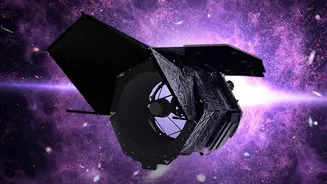
PRIMA is designed to see the universe in a way that other telescopes, like the James Webb Space Telescope (JWST), cannot. It will observe the cosmos in far-infrared light, a range of the electromagnetic spectrum that is invisible to the human eye. This
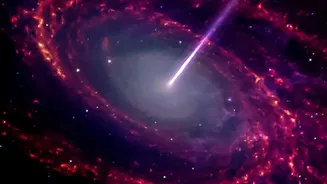
allows it to peer through dense clouds of cosmic dust that obscure the view of telescopes observing in visible or near-infrared light. By studying this hidden universe, PRIMA will tackle fundamental questions about our origins. Its primary goals include investigating how planets form, how galaxies and their central supermassive black holes grow together over billions of years, and how the dust and heavy elements that make up planets and stars were created and dispersed throughout cosmic history. Nicky Fox, associate administrator for NASA's Science Mission Directorate, described PRIMA as "humanity's next window into the deep universe."
The First 'Probe Explorer'
The mission marks the beginning of a new category for NASA: the Probe Explorers. Recommended by the National Academies' 2020 Decadal Survey, this class of mission is designed to fill a crucial gap. For years, NASA has operated small, focused Explorer-class missions and enormous, multi-billion-dollar "flagship" observatories like JWST. Probe-class missions, with a cost cap of around $1.2 billion, provide a medium-sized option to address high-priority science goals without the massive budget of a flagship. This new approach allows NASA to pursue ambitious science more frequently. PRIMA was selected for this first slot after a detailed evaluation of its scientific merit and the feasibility of its design and budget.
The Path to a 2033 Launch
While NASA is targeting a 2033 launch for a five-year primary mission, there are important milestones to clear first. PRIMA has officially entered what NASA calls 'Phase B' of its development. This stage is dedicated to refining the preliminary design and ensuring all the necessary technology is ready for flight. The most critical step ahead is the confirmation review. During this formal process, NASA will conduct a thorough assessment of the mission's technical plans, schedule, and cost performance to ensure it's ready to move into 'Phase C'—the full implementation and fabrication stage. Passing this review is essential; it is the final gate before the project receives official confirmation and its budget and schedule are baselined, locking in the path to launch.
Advanced Technology for Cosmic Questions
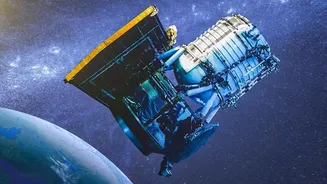
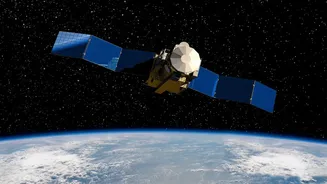
To achieve its ambitious goals, PRIMA will utilize a 1.8-meter (5.9-foot) telescope that is cryogenically cooled. This extreme cooling is vital for a far-infrared telescope, as it dramatically reduces the instrument's own heat, which would otherwise create noise and obscure the faint cosmic signals it is trying to detect. The observatory will host two main instruments: an imager capable of mapping large areas of the sky and a high-resolution spectrometer to analyze the chemical composition of distant objects. These instruments will be orders of magnitude more sensitive than previous far-infrared space missions like the Herschel and Spitzer space telescopes, allowing for unprecedented discoveries. The mission will be managed by NASA's Jet Propulsion Laboratory and will feature contributions from a host of international partners, including the space agencies of Canada, Germany, Italy, Japan, and the United Kingdom.