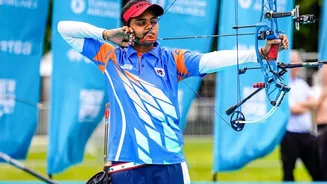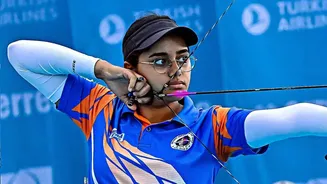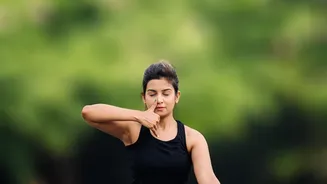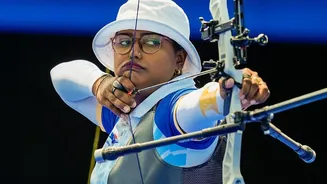







At first glance, yoga and archery seem worlds apart. One is a practice of internal union, the other a sport of external precision. Yet, both are deeply rooted in mindfulness, discipline, and, most critically, the conscious use of breath.
The Breath: Anchor vs. Stabilizer
In yoga, the breath
is the central focus. The practice of pranayama, or breath control, is considered the bridge between the body and mind. Yogic breathing techniques are varied and intentional—designed to calm the nervous system, generate heat, or clear energy channels. The goal is to make the breath a constant, conscious anchor for your awareness, allowing thoughts to come and go without attachment. It is the object of meditation itself. In archery, breath control serves a far more mechanical, albeit equally crucial, purpose: stability. An archer's breath is a tool to minimise physical movement. The most common technique involves a controlled exhale just before the final aim, followed by a brief 'respiratory pause' where the body is at its most still. The release of the arrow happens in this quiet window. Here, the breath isn't the focus of meditation, but a deliberate action to create a stable platform for a precise, external task.
The Target: Internal vs. External
The concept of a 'target' reveals the core philosophical divide. In archery, the goal is unambiguous: a physical bullseye. Success is measurable in points. This external target demands 'Dharana', or one-pointed concentration, as described in yogic texts. The epic tale of Arjuna, who saw only the eye of the bird he was tasked to shoot, is a perfect illustration of an archer's ideal focus. Yoga’s target is entirely internal and far more abstract. The 'goal' might be maintaining balance in a challenging pose, noticing the quality of the breath, or simply staying present on the mat. There is no external scoreboard. In this context, a wandering mind isn't a failure but an opportunity. The practice is not about never losing focus, but about gently returning your awareness to the internal anchor—be it breath or bodily sensation—every time it strays.
The Process: Journey vs. Destination
Archery is profoundly outcome-oriented. While the process—the stance, the draw, the release—is meticulously practiced, it is all in service of hitting the mark. A flawed process leads to a missed arrow. This direct feedback loop makes archery a powerful tool for developing mental resilience under pressure. The famous book 'Zen in the Art of Archery' delves into this, teaching that true mastery comes when the archer stops consciously 'aiming' and trusts the process so completely that the arrow finds the target on its own. However, the hit remains the validation of that process. Yoga is almost entirely process-oriented. While achieving a certain pose can be a goal, the true practice lies in the journey toward it. It is about the quality of attention and self-compassion you bring to your efforts, not whether you achieve a perfect 'Warrior Pose'. In yoga, there is no 'miss'. Each moment on the mat, regardless of physical outcome, is considered part of the practice. The focus is on cultivating internal awareness, not on achieving an external result.
Mindfulness: Awareness vs. Application
Both disciplines cultivate a profound state of presence, but they approach it from different directions. Yoga cultivates a broad, open awareness. You are taught to notice everything—the feeling of the floor, the sound of your breath, the tension in your shoulder—without judgment. This is an internally focused mindfulness, where the goal is to become more aware of your inner landscape. Archery cultivates a sharp, narrow focus. The archer must filter out all distractions—the crowd, the weather, their own heartbeat—to concentrate solely on the target and the shot sequence. This is externally focused mindfulness, where awareness is applied as a laser beam to achieve a specific task. While a yogi might combine yoga with archery to bring a state of calm to the shooting line, the mental states required at any peak of each practice are distinct. One expands awareness inward, while the other channels it outward.