

What is World Space Week?
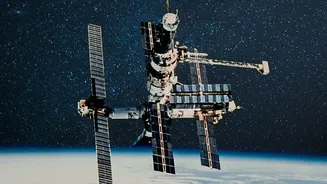
Declared by the United Nations in 1999, World Space Week is the largest annual space event on Earth. It is held every year from October 4 to 10 to commemorate two key milestones in space history: the launch of Sputnik 1, the first artificial satellite,
on October 4, 1957, and the signing of the Outer Space Treaty on October 10, 1967. The week aims to celebrate the contributions of space science and technology to humanity, educate the public, and inspire the next generation of scientists, engineers, and explorers. Events are held worldwide by space agencies, companies, schools, and museums.
A Global 'Rocket Revolution'
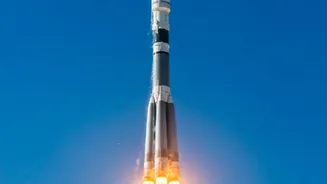
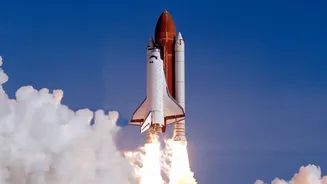
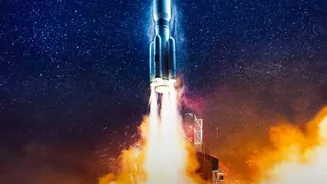
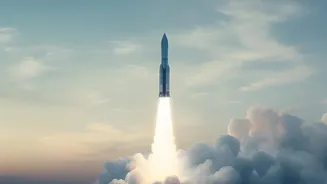
The 2026 theme, 'Rocket Revolution,' focuses on the dramatic transformation in how we reach orbit. For decades, space access was the exclusive domain of a few government agencies. Now, that is rapidly changing. The revolution is defined by the rise of commercial launch providers, the development of reusable rockets that drastically lower costs, and advanced manufacturing techniques making rockets easier to build. This shift is not just about bigger rockets; it's about making space more accessible for a wider range of countries, companies, and universities, unlocking new possibilities in communications, Earth observation, and scientific research.
India's Accelerating Rocket Story
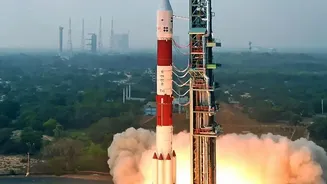
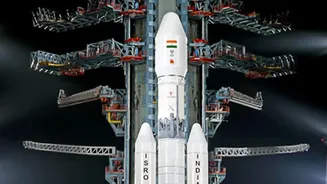
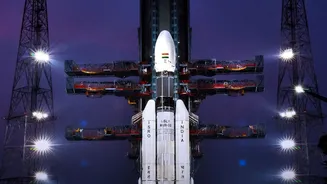
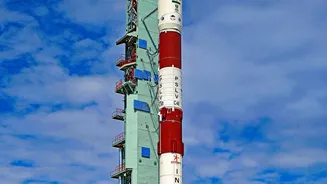
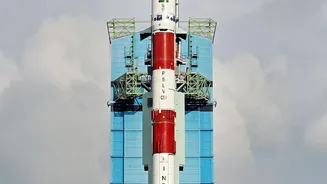
The 'Rocket Revolution' theme is especially relevant for India, which is in the midst of its own launch vehicle transformation. The Indian Space Research Organisation (ISRO) is building on the legacy of its legendary rockets—the reliable Polar Satellite Launch Vehicle (PSLV) and the powerful Geosynchronous Satellite Launch Vehicle (GSLV). In a major policy shift, ISRO is now transferring the manufacturing of these operational rockets to private industry partners like Hindustan Aeronautics Limited (HAL) and Larsen & Toubro (L&T). This allows ISRO to focus its resources on more advanced research and development, including the ambitious Next Generation Launch Vehicle (NGLV). The NGLV is envisioned as a heavy-lift, partially reusable rocket that will be the backbone for future missions, including India's own space station and crewed voyages.
Private Startups Join the Launch Party
A crucial part of India's rocket revolution is the rise of a vibrant private space sector. Since opening the sector in 2020, India has seen the number of registered space startups grow to over 440. These companies are developing their own launch vehicles, satellites, and components. A major milestone was achieved in July 2026, when Hyderabad-based Skyroot Aerospace became the first private Indian company to launch a rocket into orbit with its Vikram-1 vehicle. This success, along with the work of other startups, is critical to achieving India's goal of growing its space economy to $44 billion by 2033. The government is actively supporting this growth through the Indian National Space Promotion and Authorisation Centre (IN-SPACe), which acts as a single-window regulator for the private industry.
Inspiring a New Generation
Across the country, World Space Week is being marked with a host of events designed to engage the public, especially students. ISRO centres in Thiruvananthapuram, including the Vikram Sarabhai Space Centre (VSSC), are organising lectures, competitions, and outreach programmes. A sounding rocket launch is even planned at VSSC. Universities and colleges, such as the Sethu Institute of Technology and SRM Institute of Science and Technology, are hosting workshops, design competitions, and talks by ISRO scientists. These events provide a platform for students to interact with experts, learn about India's space achievements, and get inspired to pursue careers in science, technology, engineering, and mathematics (STEM).