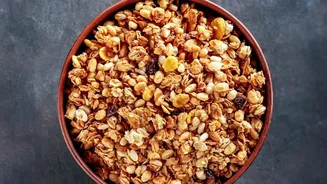








The 'Whole Grain' Health Halo
Marketers know that shoppers are looking for healthier options. Highlighting benefits like “whole grain” or “added vitamins” creates a “health halo,” making a product seem healthier than it is. Whole grains are indeed beneficial, providing essential fibre,
vitamins, and minerals that support digestion and can reduce the risk of chronic disease. However, the presence of whole grains doesn't cancel out other, less desirable ingredients. Many popular cereals that boast whole grains on the front of the box are also loaded with added sugar, turning a potentially nutritious start to the day into something closer to a dessert. This creates confusion for consumers who are trying to make a healthy choice but are guided by prominent, and sometimes deceptive, marketing claims.
How Much Sugar Is Too Much?
So, what counts as “high sugar” in a cereal? Health experts suggest a simple rule of thumb: look for cereals with 5 grams of sugar or less per serving. Many cereals, particularly those targeted at children, can contain well over 10 grams of sugar per serving, with some reaching as high as 15 or 17 grams. To put that in perspective, the World Health Organization and other health bodies recommend that adults limit their daily intake of added sugars to about 25-36 grams. A single bowl of a sugary cereal can therefore account for more than half of your recommended daily limit before your day has even truly begun. This kind of high-sugar start can lead to a blood sugar spike and subsequent crash, affecting energy levels and concentration.
How to Read the Label Like a Pro
The only way to know for sure what's in your cereal is to ignore the front of the box and turn it over to the Nutrition Facts label and ingredients list. First, check the serving size. Cereal serving sizes are often surprisingly small, and if you pour a larger bowl, you need to multiply all the values accordingly. Next, find the “Sugars” line. Modern labels now often separate “Added Sugars,” making it even easier to see how much is being put in during processing versus what occurs naturally. As a general guide, 5% Daily Value (DV) or less of added sugars is low, while 20% DV or more is high. Finally, scan the ingredients list. Ingredients are listed by weight, so if a form of sugar is one of the first few ingredients, the cereal is likely very high in sugar.
Spotting Sugar in Disguise
Food manufacturers use many different names for sugar, which can make it difficult to spot on an ingredients list. There are over 50 names for added sugar, but some common ones to look out for include high-fructose corn syrup, cane sugar, dextrose, fructose, glucose, maltose, sucrose, and syrups like rice syrup, maple syrup, or agave nectar. Often, words ending in “-ose” are a giveaway for a type of sugar. Don't be fooled by seemingly “natural” sweeteners like honey, fruit juice concentrate, or evaporated cane juice. While they may sound healthier, your body processes them as sugar, and they contribute to the total added sugar content and its associated health risks, like weight gain and an increased risk of type 2 diabetes and heart disease.
Making a Genuinely Healthy Choice
When you're next in the cereal aisle, your best strategy is to become a label detective. Compare different brands and aim for a cereal that is low in sugar (ideally under 5g per serving) and high in fibre (at least 3-5g per serving). Plain, unsweetened options like traditional oats, shredded wheat, or some muesli varieties are often the safest bet. You can then add your own flavour and nutrients with fresh fruit, nuts, and seeds. This puts you in control of the sugar content. If you do opt for a packaged cereal, use the 5-gram sugar rule as your guide and remember that the whole grain claim is only one part of the nutritional picture.