


Iceland: The Land of Fire and Ice
It’s not just a clever nickname; Iceland owes its entire existence to volcanic activity. Situated on the Mid-Atlantic Ridge, where the North American and Eurasian tectonic plates are pulling apart, the country is a hotbed of geological wonders. Visitors
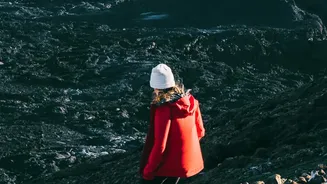
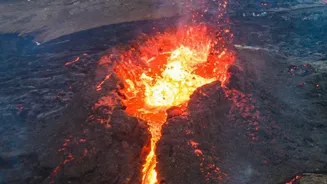
can walk between continents at Þingvellir National Park, witness geysers like Strokkur erupting every few minutes, and bathe in the mineral-rich, geothermally heated waters of the Blue Lagoon. The country is home to numerous volcanoes, and it’s not uncommon for new eruptions to create brand-new tourist attractions, offering guided tours to see fresh lava fields under the watch of experts.
Yellowstone National Park, USA: A Supervolcano's Playground
Yellowstone sits atop a massive caldera, the remnant of a supervolcano eruption from hundreds of thousands of years ago. Today, that immense underground heat engine powers the world's largest collection of hydrothermal features. The park contains an estimated 10,000 geysers, hot springs, mudpots, and fumaroles. While Old Faithful is the most famous, with its predictable eruptions, the entire park is a geothermal wonderland. Grand Prismatic Spring, with its rainbow of vibrant colours created by heat-loving microbes, looks like something from another planet. Boardwalks allow for safe viewing of these incredible, and often bizarre, natural phenomena.
Hawaiʻi Volcanoes National Park, USA: Birthplace of Islands
To visit Hawai'i is to walk upon the slopes of some of the most active volcanoes on Earth. Kīlauea and Mauna Loa, two of the volcanoes within the national park on the Big Island, are constantly reshaping the landscape. The park provides a unique opportunity to witness the creation of new land as molten lava flows into the sea. Depending on current activity, visitors can hike across recent lava flows, peer into the vast Halemaʻumaʻu crater, and see the steam vents that dot the landscape. It is a powerful reminder that the beautiful Hawaiian archipelago is a direct result of millions of years of volcanic activity from a stationary hotspot in the Earth's mantle.
Rotorua, New Zealand: The Sulphur City
Located in the Taupō Volcanic Zone, Rotorua is a city where the Earth's power is an inescapable part of daily life. The distinct smell of sulphur hangs in the air, steam rises from parks and back gardens, and the ground bubbles with geothermal energy. Visitors can explore areas like Te Puia, home to the Pōhutu Geyser, the largest active geyser in the southern hemisphere. You can also see bubbling mud pools, vibrant silica terraces, and learn about how the local Māori people have harnessed this geothermal energy for centuries for cooking, bathing, and heating. The entire city is a living museum of geothermal activity.
The Danakil Depression, Ethiopia: An Alien Landscape on Earth
Often called one of the most alien-looking places on Earth, the Danakil Depression is also one of the hottest and lowest. This is where three tectonic plates are actively pulling apart, creating a landscape of volcanic cones, salt flats, and otherworldly hydrothermal fields. The main attraction is Dallol, where superheated water brings minerals like sulfur and potassium to the surface, creating a spectacular, bubbling canvas of yellow, green, and orange pools. Visiting this region requires a guided tour and a spirit for adventure, as conditions are extreme, but the reward is a view of geological processes that feel truly primordial.
Arenal Volcano, Costa Rica: A Reborn Giant
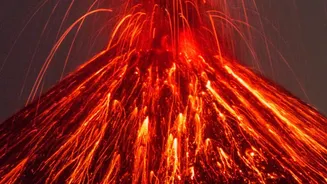
After centuries of dormancy, Arenal Volcano roared back to life in 1968 and remained one of the most consistently active volcanoes in the world for decades. While its explosive eruptions have currently ceased, the area remains a hub of geological energy. The volcano's perfect cone shape dominates the landscape, and the residual geothermal heat fuels numerous natural hot spring resorts in the surrounding rainforest, offering a perfect way to relax after a day of hiking. The region around Arenal is a prime example of how volcanic activity can enrich the soil and create incredibly lush, biodiverse ecosystems that thrive on the volcano's slopes.