

A Vision Floating Above Congestion
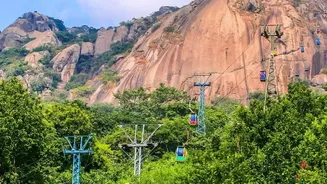
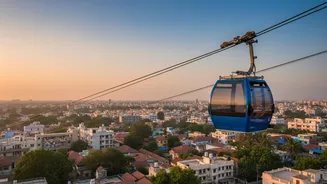
The Kashi Ropeway is a landmark project, set to be India's first urban public transport ropeway. It aims to connect the bustling Varanasi Cantonment railway station to Godaulia Chowk, the gateway to the Kashi Vishwanath Temple and Dashashwamedh Ghat.
Spanning roughly 3.8 kilometres, the system of sleek, ten-seater gondolas will glide above the city's notoriously narrow and congested lanes, slashing a journey of up to an hour to a mere 15-16 minutes. This isn't just a tourist novelty; it's a serious attempt at mass transit, designed to carry up to 3,000 passengers per hour in each direction. The goal is to alleviate the immense pressure on the city’s ancient streets, which struggle under the weight of millions of pilgrims, tourists, and residents. However, a seamless aerial journey is only half the story. The passenger experience begins and ends on the street, and it's here that significant challenges lie.
The First-Mile Challenge: Varanasi Cantt
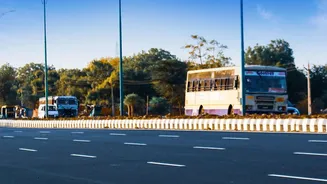
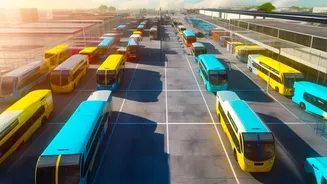
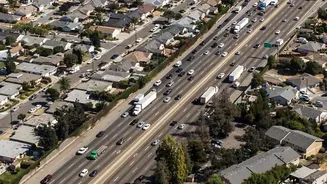
The ropeway's starting point at Varanasi Cantt railway station is a major multimodal hub. This presents both an opportunity and a major hurdle. The station is already a chaotic confluence of trains, buses, auto-rickshaws, and pedestrian traffic. For the ropeway to succeed, its station must integrate seamlessly into this complex environment. This requires more than just a building; it demands intelligent design for passenger flow. Commuters arriving by train need clear, safe, and accessible pathways to the ropeway terminal, without having to navigate a maze of vehicles and vendors. Without dedicated pedestrian corridors, smart signage, and effective traffic management around the station, the time saved in the air could easily be lost in the confusion on the ground. The first few steps of the journey are as critical as the ride itself.
Navigating the Crowded Core
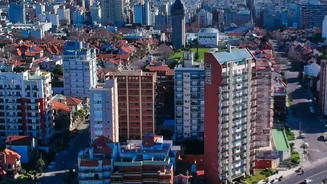
The intermediate stations, such as Kashi Vidyapith and Rath Yatra, are located in densely populated commercial and residential areas. While these stops are essential for serving local commuters, they bring their own set of access problems. Building and integrating stations in such tight urban fabric requires careful planning to avoid creating new bottlenecks. The final and most crucial stop, Godaulia Chowk, is the epicentre of Varanasi's pilgrim traffic. This area is already one of the most congested intersections in the city. The concern is that the ropeway, while reducing traffic on the route, could inadvertently concentrate thousands of passengers per hour into a single point that is ill-equipped to handle the surge. The approach to the Godaulia station must be designed to disperse crowds efficiently and safely towards the Kashi Vishwanath Corridor and the ghats, preventing dangerous overcrowding at the station's exit and entrance.
A Blueprint for Seamless Access
Addressing these challenges requires a holistic approach to station design that extends far beyond the terminal building itself. Planners have noted that one of the biggest reasons similar transit systems fail is poor integration with other transport modes. Success in Varanasi will depend on creating a user-friendly ecosystem around each station. This includes establishing well-lit, barrier-free pedestrian walkways, which are crucial for the elderly and visitors with disabilities. Clear, multilingual signage is essential to guide the diverse mix of tourists and pilgrims. Furthermore, designated zones for auto-rickshaws and cycle-rickshaws must be created away from the immediate station entrances to prevent chaotic pile-ups. Officials have stated that stations are being designed with escalators, elevators, and barrier-free access, which is a positive step. However, the focus must also be on managing the external environment to ensure that reaching the station is as stress-free as the ride itself.