


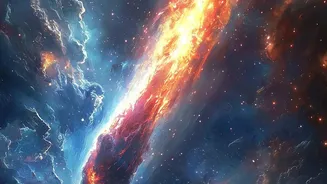

The Science Behind a Meteor's Glow
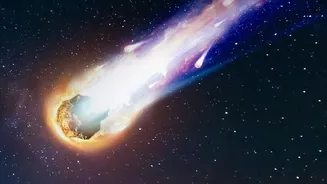
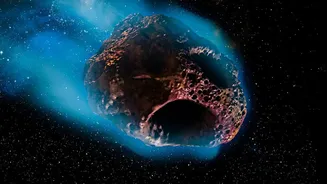
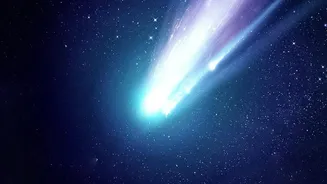
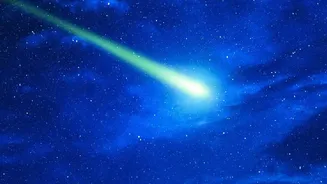
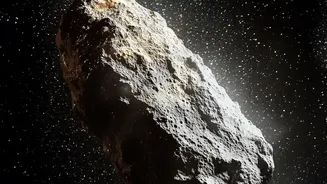
A meteor's colour is not random; it's a direct result of physics and chemistry. When a small piece of space rock, called a meteoroid, enters Earth's atmosphere at incredible speeds—often tens of kilometres per second—the friction is immense. This intense
friction heats the meteoroid and the air around it, causing them to glow. The light comes from two sources: the superheated air and the vaporizing elements within the meteoroid itself. Much like a chemistry flame test, different elements burn with distinct colours when heated to incandescence. The combination of the meteoroid's chemical makeup and its velocity determines the vibrant palette you see from the ground.
Introducing NASA's Colour Clues
To help amateur astronomers and casual skywatchers make sense of these colours, NASA has been leveraging data from its Cameras for Allsky Meteor Surveillance (CAMS) project. This network of cameras automatically tracks meteors to map their paths and origins. While the 'new picture' isn't a single photograph, it represents a collection of data and infographics that visually explain the link between meteor colour and composition. These resources act as a field guide, allowing anyone to translate a meteor's hue into a scientific observation about its elemental ingredients. The project also uses colour to represent meteor speed in its data visualizations, where red indicates fast, head-on meteors and blue represents slower ones catching up to Earth.
A Field Guide to Meteor Hues
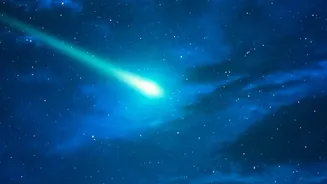
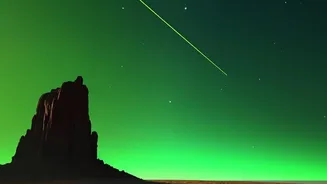
So, what should you be looking for during the next meteor shower? This simple guide, based on NASA's findings and spectroscopic analysis, can help you interpret the streaks you see. An orange-yellow glow is often a tell-tale sign of sodium. If you see a distinct yellow or white flash, you are likely witnessing the presence of iron, a very common element in meteoroids. A beautiful blue-green or teal colour points to magnesium, while some brighter green flashes can indicate nickel. A rarer sight is a violet or purple tinge, which is caused by calcium. Finally, a reddish glow is often associated not with the meteoroid itself, but with the nitrogen and oxygen molecules in Earth's own atmosphere getting superheated by the meteor's passage.
Putting Your New Knowledge to Use
Armed with this knowledge, your next night of stargazing can become a more interactive scientific pursuit. When you see a bright meteor, make a mental note of its colour. Does it change as it streaks across the sky? Some meteors can display multiple colours as different layers of the rock vaporize. You'll also notice that some meteor showers are known for particular colours. For example, the Perseids often produce green meteors due to their composition, while the Geminids, originating from a rocky asteroid, are often bright white or yellow. For the best viewing, find a dark location away from city lights, allow your eyes at least 20 minutes to adapt to the dark, and lie back to take in as much of the sky as possible. You won't just be wishing on a star; you'll be conducting your own atmospheric science experiment.
More Than Just a Pretty Sight
Understanding these colours does more than just add a new layer of enjoyment to a meteor shower. For scientists, a meteor’s colour provides vital clues about its origin and the chemical makeup of our solar system. By analyzing the light, researchers can deduce the composition of the meteoroid's parent body, whether it's a comet or an asteroid. This information helps piece together the history of how planets and other celestial bodies were formed. Every colourful streak you identify is a tiny piece of a cosmic puzzle, a remnant from the formation of our solar system that has traveled billions of miles before putting on its final, brilliant show in our atmosphere.