

From Trillions to Quadrillions
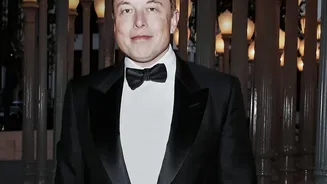
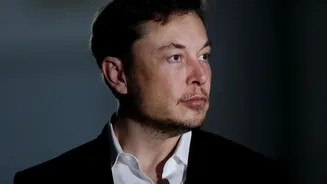
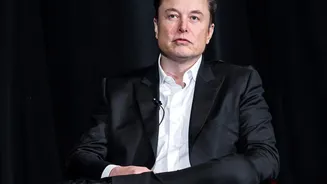
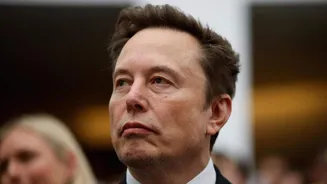
In an October 2026 post on his social media platform X, Elon Musk stated, 'This will sound super crazy, but I see a path to SpaceX being worth orders of magnitude more than the current Earth economy'. This is a significant jump from remarks he reportedly
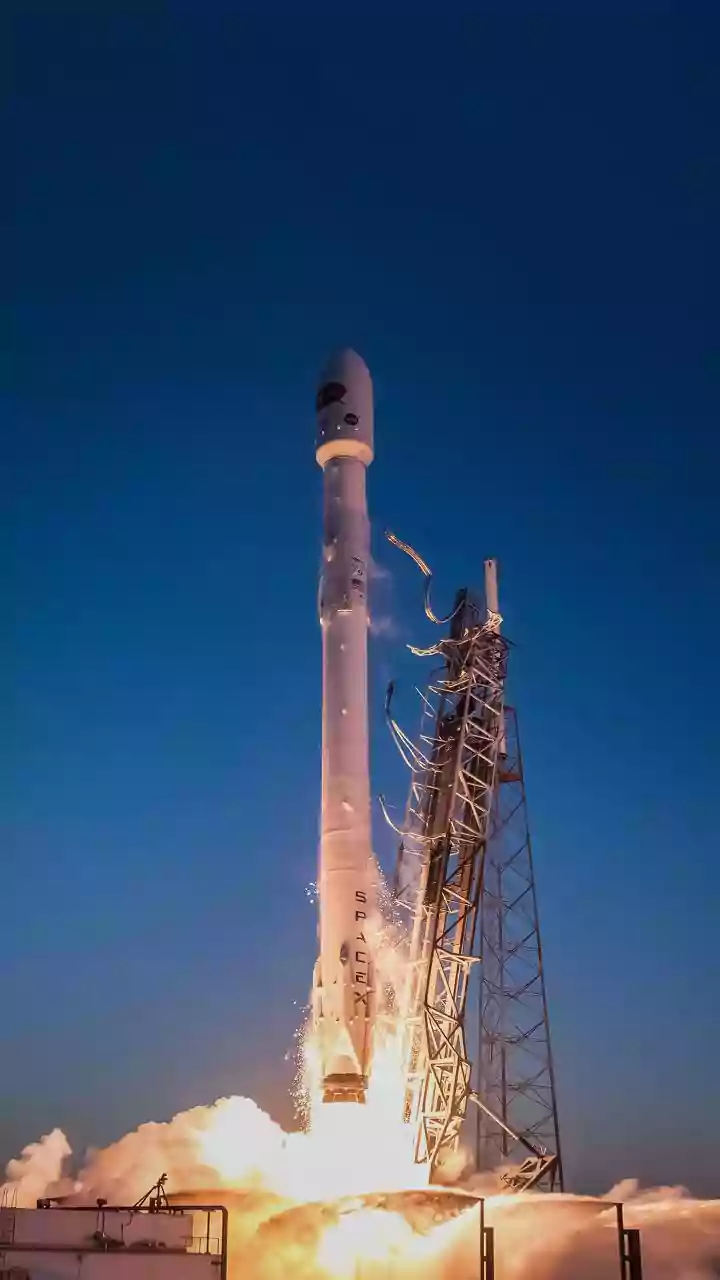
made to investors in July 2026, where he suggested the company could be worth 'More Than the Rest of Earth'. The phrase 'orders of magnitude' implies a value at least 100 times greater. With the global economy projected at roughly $126 trillion for 2026, Musk's vision implies a potential valuation measured in the quadrillions of dollars. To put that in perspective, SpaceX's market capitalization after its June 2026 IPO hovers around $2.2 trillion. While Musk later clarified that 'seeing a path' does not mean it is a certainty, the statement provides a startling look into his long-term vision.
The Current State of Play
Before this astronomical claim, SpaceX had already achieved a colossal valuation. The company went public on June 12, 2026, in the largest IPO in history, pricing its shares at $135 for a valuation approaching $1.8 trillion. Strong investor demand quickly pushed its market cap above $2 trillion. This number itself is a huge leap from earlier private funding rounds. For instance, in mid-2025, the company was valued at around $400 billion, which was up from a $210 billion valuation in mid-2024. The public valuation around $2 trillion reflects immense investor confidence, but it is still a tiny fraction of the multi-quadrillion-dollar future Musk is now outlining. Analysts' 12-month price targets are more grounded, with an average around $220 per share, though some bull cases go as high as $800 per share, which would imply a valuation of roughly $11 trillion.
What Drives the Valuation?
A valuation in the trillions is not based on SpaceX's traditional rocket launch business alone. The primary engine of this valuation is Starlink, its satellite internet constellation. Starlink is currently SpaceX's only profitable segment, accounting for over 60% of total revenue in 2025. With millions of subscribers and expansion into aviation and maritime sectors, investors are valuing it as a globally dominant broadband utility. The second key driver is the company's big bet on artificial intelligence, following the acquisition of Musk's xAI. The plan to integrate AI capabilities with the Starlink network for 'orbital intelligence' has fueled a narrative of massive future growth, even though the AI segment is currently spending heavily on capital expenditures.
The Starship Factor
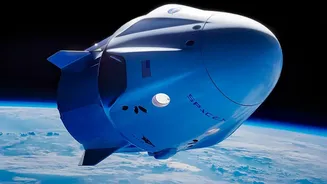
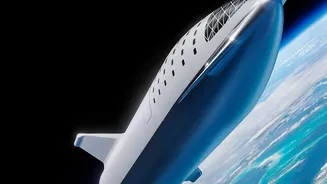
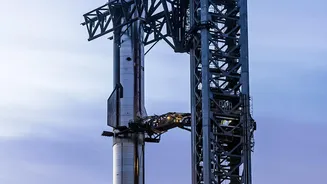
Underpinning the entire long-term vision is Starship, the fully reusable super-heavy launch vehicle. Successful and cheap operation of Starship is a key assumption in the company's loftiest valuation targets. Starship is designed to drastically lower the cost of launching mass to orbit, enabling not only the rapid expansion of the Starlink constellation but also more ambitious ventures. Musk’s ultimate vision of making humanity multi-planetary, starting with Mars, is entirely dependent on Starship. This long-term, high-risk, high-reward project is what allows Musk to talk about creating new space-based industries that could one day form an economy larger than Earth's. The success of upcoming Starship test flights is seen as a critical catalyst for the company's stock.
A Reality Check
While Musk paints a picture of boundless growth, Wall Street analysts remain divided. Skeptics point out that the company's current valuation is already pricing in perfection. Analysts from Morningstar have estimated the company's fair value far below its trading price, suggesting it could be significantly overvalued on conventional metrics. The company’s AI division is burning through billions in capital, and the entire enterprise is exposed to the execution risks of developing revolutionary technology. Analysts note that while the potential for off-planet industries is theoretically enormous, the costs are equally staggering, and any future cash flows should be viewed with extreme caution. Many see Musk's latest statement as 'classic Musk hype and theatre', advising investors to focus on the tangible business fundamentals instead of galaxy-spanning predictions.