





The Core Advice: Go Broad
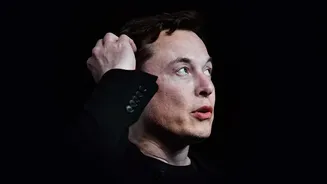
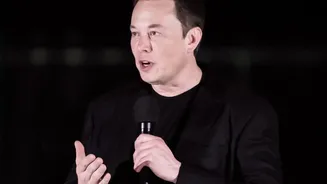
In a world increasingly anxious about artificial intelligence making jobs obsolete, Elon Musk’s career advice for young people is refreshingly simple: get as broad an education as possible. In a recent interview, he urged Gen Z to study across multiple
disciplines, including arts, sciences, and engineering, rather than focusing narrowly on one subject too early. This counsel comes directly from his own experience; Musk himself studied both physics and business. He believes that as AI and robots become more capable of executing specific tasks, the most valuable human skill will be the ability to formulate the right questions and instructions, a task that requires a wide base of knowledge.
The AI Paradox: Why Generalists Win
The conventional wisdom for decades has been to specialize. Find a niche, become the expert, and build a secure career. But Musk's advice points to a paradox in the age of AI. As machines get better at highly specialized, repetitive tasks, the competitive advantage for humans shifts away from mere execution. Instead, value moves toward skills that AI struggles with: creativity, critical judgment, and connecting disparate ideas. A person who understands psychology, history, and economics can frame a problem in a way that someone with only technical skills cannot. Innovation often happens at the intersection of different fields, and it's the generalists who are best equipped to see those connections.
The Human Advantage Is Knowing What to Ask
Musk argues that the future belongs to those who know what to ask of the machines. He describes this as a form of 'prompt engineering' in the physical world, where clear human instruction will be crucial for directing robots and AI systems. As AI tools become easier to use, the challenge isn't just operating them. The bigger skill is knowing what to ask, why it's important, and whether the output is genuinely useful. This requires context that comes from a wide-ranging education. Developing this judgment is becoming a practical requirement in many professions, where workers are needed to review and validate AI-generated output.
Becoming an 'Expert Generalist'
Musk's career is a testament to this philosophy. He has successfully navigated and integrated knowledge from finance, engineering, aerospace, and energy to build groundbreaking companies like Tesla and SpaceX. This approach has been termed the 'expert generalist' model: someone who develops deep expertise in one or two areas but maintains a broad curiosity and knowledge base across many others. This 'T-shaped' skill set provides resilience. While a specialist's niche might be automated or disrupted, a generalist has the adaptability to pivot their skills to new industries and challenges, which is the modern version of job security.
How to Apply This in Your Career
For students and young professionals in India, a system that often encourages early specialization, adopting this mindset requires a conscious effort. It means reading widely outside of your core subject, taking on cross-disciplinary projects, and cultivating hobbies that teach you different ways of thinking. Musk's own learning method involves deconstructing knowledge into its fundamental principles—the 'trunk and big branches' of a semantic tree—before exploring the details, or 'leaves'. This allows for transferring core concepts from one field to another. The goal isn't to be a 'jack of all trades, master of none,' but to build a flexible mental toolkit that allows you to ask better questions and solve problems in a world where answers are increasingly easy to generate.