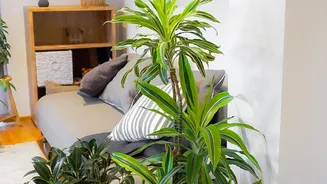





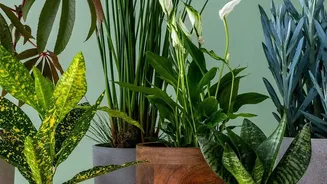
The idea of a home filled with lush greenery doubling as a natural air purifier is appealing. But while we love our leafy friends, the belief that they scrub the air clean is based on a fundamental misunderstanding of some very specific science.
The Myth's Green Roots
For decades,
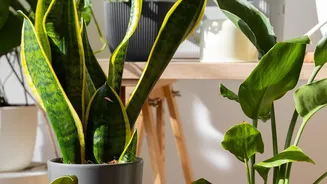
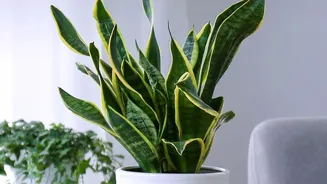
it has been a widely accepted piece of wisdom: houseplants clean the air in our homes. This claim appears everywhere, from home decor blogs to plant tags in nurseries. The central idea is that plants absorb harmful chemicals, known as volatile organic compounds (VOCs), that are emitted from everyday items like paint, furniture, and cleaning products. This belief is so pervasive that many people buy specific plants, such as Snake Plants or Peace Lilies, with the express purpose of improving their home's air quality. The promise is a simple, beautiful, and natural solution to indoor pollution. It's a comforting thought, but it's one that deserves a closer look.
The Famous NASA Study
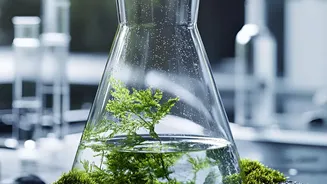
The origin of this belief traces back to a 1989 study from NASA, often called the 'Clean Air Study'. Researchers were looking for ways to purify the air in sealed environments, like a space station. In the study, scientists placed individual houseplants inside small, airtight plexiglass chambers, typically about one cubic metre in size. They then injected specific VOCs, such as benzene and formaldehyde, into these chambers. Over a 24-hour period, they observed that certain common houseplants, like English Ivy and Peace Lilies, were remarkably effective at removing a significant percentage of these chemicals from the sealed boxes. The results were real and scientifically valid for the conditions tested, leading to the conclusion that plants could be a 'life support system' for closed environments.
Why Your Living Room Isn't a Spaceship
The problem is that a typical home or office is nothing like a sealed NASA chamber. Your living room is much larger, and it isn't airtight. Air constantly circulates through windows, doors, cracks, and ventilation systems (HVAC). This process, known as the air exchange rate, removes and dilutes VOCs far more quickly and effectively than a few houseplants ever could. A 2019 review of decades of research on the topic brought this into sharp focus. The researchers calculated that to match the air-cleaning capacity of a building's standard ventilation system, you would need an astonishing number of plants—somewhere between 10 and 1,000 plants per square metre of floor space. In a regular 140-square-metre home, that could mean keeping thousands of plants. While some studies show plants can reduce certain pollutants like nitrogen dioxide by up to 20% in controlled settings, the effect in a larger, ventilated room is significantly smaller.
The Real, Proven Benefits of Houseplants
So, if they aren't effective air purifiers, should you get rid of your plants? Absolutely not. While the air-cleaning claim is largely unsupported in real-world settings, the documented psychological benefits are significant and well-researched. Studies have consistently shown that the presence of indoor plants can reduce stress, anxiety, and blood pressure. Interacting with plants, even just looking at them, can induce a state of physiological and psychological relaxation. In workplace environments, employees are often more productive, creative, and report higher job satisfaction when plants are present. The simple act of caring for a living thing can provide a sense of purpose and fulfillment. Ultimately, plants make our indoor spaces more beautiful, calming, and enjoyable to be in, and that is a powerful benefit in its own right.