




A New 'Probe' Class of Mission
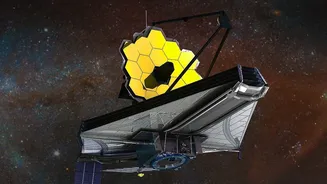
PRIMA's selection is significant because it inaugurates the "Probe Explorers" program, a new category of mission for NASA. For years, the agency has had two main tiers: massive, multi-billion-dollar "flagship" observatories like the James Webb Space Telescope
(JWST) and smaller, more focused "Explorer" missions. The National Academies' 2020 Decadal Survey recommended creating a middle tier to bridge this gap. Probe-class missions are capped at around $1.2 billion, making them ambitious but more affordable and repeatable than flagships. This new structure allows NASA to pursue high-priority science that requires more power than a small explorer can offer, without the decade-spanning budget of a flagship. PRIMA was selected for this debut role after a detailed evaluation of its scientific merit and technical feasibility against another concept, the Advanced X-ray Imaging Satellite (AXIS).
Filling a Critical Wavelength Gap
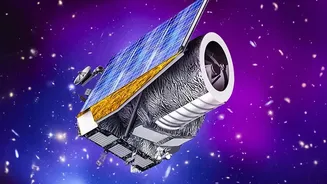
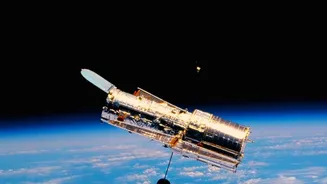
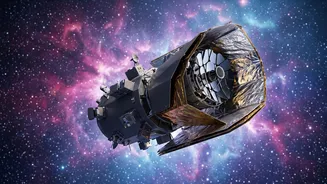
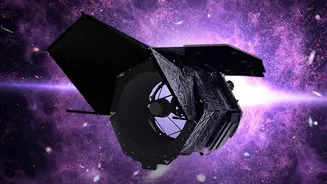
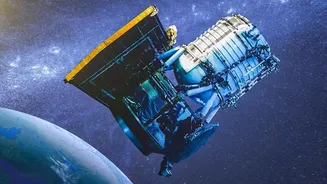
So, why was a far-infrared telescope the first choice? The answer lies in a crucial gap in our current view of the universe. Telescopes like Hubble see visible light, while newer observatories like JWST and the Nancy Grace Roman Space Telescope excel in the near- and mid-infrared. On the other end of the spectrum, ground-based arrays like ALMA capture long radio waves. But in between lies the far-infrared, a range of light that is essential for studying the cool, dusty, and distant universe. This is the light emitted by objects that are too cold to shine in the visible spectrum. The European Space Agency's Herschel Space Observatory and NASA's Spitzer Space Telescope previously covered this area, but their missions have ended, leaving a void in our observational capabilities. PRIMA, with its cryogenically cooled 1.8-meter (5.9-foot) telescope, is designed specifically to fill this gap, offering sensitivity orders of magnitude greater than its predecessors.
Answering Foundational Questions
By peering into the far-infrared, PRIMA will tackle some of the most fundamental questions in astrophysics. Its primary science goals include understanding how stars and planetary systems form, how galaxies and their central supermassive black holes evolve, and how the universe became enriched with dust and heavy elements over cosmic time. One of its most exciting targets is the origin of planets. PRIMA will be able to study the "snowlines" in protoplanetary disks, the regions where molecules like water freeze into solids—a key process in planet formation. This will help scientists quantify the role of water in building new worlds, something even the mighty JWST cannot do because the necessary spectral lines are only visible in the far-infrared. As Nicky Fox, NASA's associate administrator for science, stated, "The PRIMA mission is humanity's next window into the deep universe... to better understand the formation of planets, stars, black holes, and even how water on Earth came to be."
The Technological Edge
The mission’s feasibility rests on groundbreaking detector technology developed over decades by Caltech and NASA's Jet Propulsion Laboratory (JPL), which will manage the mission. These ultrasensitive detectors, known as Microwave Kinetic Inductance Detectors (KIDs), are essential for capturing the faint signals from the early universe. The technology has been refined to the point where it has the exquisite sensitivity required for a space mission. PRIMA's payload will feature two main instruments: an imaging polarimeter (PRIMAger) to map large swaths of the sky and a high-resolution spectrometer (FIRESS) to analyze the chemical composition of cosmic objects. This powerful combination, built on proven yet advanced technology, gave NASA the confidence to select PRIMA for its first Probe-class outing, with a planned launch no earlier than 2033 for a five-year mission.