





The Objects Between Worlds
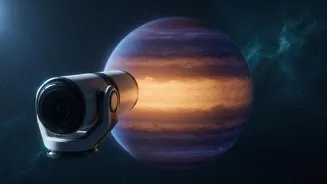
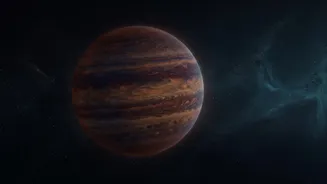
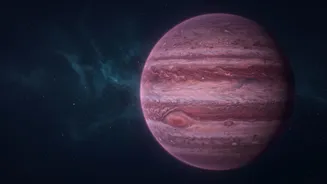
Imagine an object more massive than Jupiter but not quite heavy enough to ignite into a full-blown star. That's a brown dwarf. These celestial bodies exist in a fascinating grey area. They form from collapsing clouds of gas and dust, just like stars,
but they lack the critical mass—about 80 times that of Jupiter—to trigger the sustained hydrogen fusion that makes stars shine. Instead, they can only briefly fuse a heavier form of hydrogen called deuterium. After that initial, short-lived burst, they simply cool down for the rest of their existence, glowing faintly in the infrared spectrum. This dim, cooling nature makes them incredibly difficult to detect with conventional telescopes that rely on visible light, earning them nicknames like 'failed stars'.
Meet SPHEREx: The Cosmic Mapper
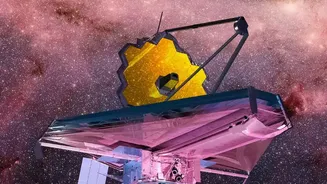
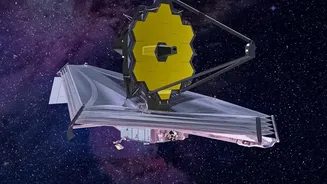
Enter NASA's Spectro-Photometer for the History of the Universe, Epoch of Reionization, and Ices Explorer, or SPHEREx for short. Launched in March 2025, this car-sized observatory is on a 25-month mission to map the entire sky. Unlike targeted telescopes such as the James Webb Space Telescope, which focus on specific, small patches of sky, SPHEREx is a survey mission. Its primary goal is to scan the whole cosmos four times, creating an unprecedented 3D map. This mission has broad scientific objectives, including studying the rapid inflation of the early universe and searching for water and organic molecules—key ingredients for life—in our galaxy. And as a powerful side project, its unique capabilities are perfectly suited for hunting down and characterizing thousands of brown dwarfs.
Why Infrared Is the Key
The secret to seeing a brown dwarf is to look not with our eyes, but with an instrument that can detect heat. Because brown dwarfs are relatively cool and don't produce their own visible light, they radiate most of their energy as infrared light. This is where SPHEREx excels. It surveys the sky in 102 distinct shades of near-infrared light, far more than previous all-sky maps. This technique, called spectroscopy, allows scientists to break down the light from an object into its component colors. Each molecule, like methane or carbon dioxide, absorbs and emits light at specific infrared wavelengths, leaving a unique 'chemical fingerprint' in the spectrum. By reading these fingerprints, astronomers can determine a brown dwarf’s temperature, composition, and even glean details about its cloudy atmosphere.
A Census of Our Cosmic Neighbors
Before SPHEREx, only a few dozen brown dwarfs had been studied in detail, leaving scientists to rely heavily on theoretical models to understand them. Now, the mission is in the process of analyzing thousands, drastically expanding our catalogue of these dim wanderers. By taking a comprehensive census, scientists can better understand how common brown dwarfs are throughout the galaxy. Early results from SPHEREx, analyzing just 37 nearby brown dwarfs, have already confirmed they have chemically rich and complex atmospheres, similar to giant planets like Jupiter. The mission is revealing a menagerie of these objects across their full temperature range, providing crucial real-world data to test and refine atmospheric and evolutionary models.
Unlocking the Secrets of Formation
Studying brown dwarfs isn't just about understanding these specific objects; it's about filling a critical gap in our knowledge of how both stars and planets form. Because they straddle the line between the two, they offer a unique window into the formation process. Do they form like stars, from a collapsing cloud of gas, or more like planets, in a disk of material orbiting a larger star? Understanding their population and characteristics helps refine theories of star formation and provides a more complete picture of the galaxy's mass distribution. Furthermore, studying the weather and cloud patterns on these isolated worlds, which SPHEREx's data will enable, can give us insights into the atmospheric dynamics of giant exoplanets, which are often much harder to observe directly.