








From Caged Tools to Gentle Collaborators
For decades, the story of robotics was written in steel and powered by brute force. Industrial robots, the workhorses of modern manufacturing, are typically powerful, fast, and precise. They are so focused on performance that they are often kept in cages
to protect the human workers around them. Their design was guided by a single principle: efficiency. This traditional approach viewed humans and robots as separate entities, with the robot being a tool to perform a task as quickly and consistently as possible. But this model is being fundamentally re-examined as robots prepare to leave the factory floor and enter our homes, hospitals, and offices.
A New Philosophy of Human-Centric Design
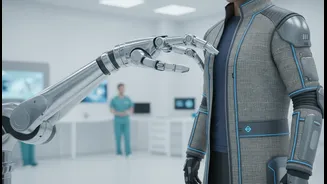
A growing movement in robotics research is flipping the old priorities on their head. Instead of asking how a robot can perform a task with maximum rigidity and power, designers are now asking how it can perform that task in a way that feels comfortable, safe, and even pleasant for humans. This field, known as human-centric robotics, considers the user’s psychological and physical well-being as a key performance metric. It’s a shift from designing a perfect machine to designing a perfect interaction. The goal is to create robots that aren't just tolerated, but actively welcomed into human spaces.
The Engineering of a Perfect Embrace
Perhaps no project better illustrates this shift than HuggieBot. Developed by a team of researchers from institutions including the Max Planck Institute and ETH Zurich, this robot is designed for one purpose: to give good hugs. Now in its third and fourth generations, HuggieBot is soft, warm, and human-sized. It uses sensors to perceive the person it is hugging, adjusting its embrace to their size and letting go when they want to end the hug. The latest versions can even detect and respond to intra-hug gestures like pats and squeezes, creating a more natural and comforting experience. The research has established clear design principles for what makes a robot hug enjoyable, a pursuit that seemed frivolous just a few years ago but has gained relevance in a world increasingly aware of the importance of social connection.
Making Robots Disappear
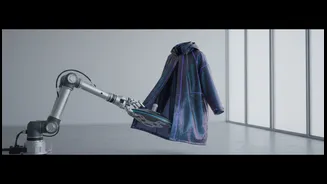
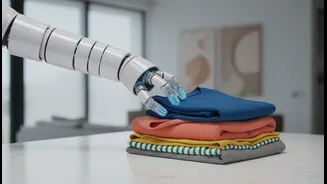
Another aspect of comfort is psychological. Many people are unnerved by the idea of a humanoid robot constantly present in their home. Addressing this, some designers are creating robots that blend in. Weave Robotics, a startup founded by former Apple veterans, has created Isaac 1, a home robot designed to look like a piece of furniture when not in use. It performs its chores, like folding laundry, then retracts and covers its cameras to become an unassuming part of the decor. Similarly, researchers from Japan's Keio University and MIT are developing soft, lighter-than-air floating robots. These silent, gliding companions are designed for gentle interaction, avoiding the intimidating whir of drones and the creepy “uncanny valley” effect of some humanoid designs. Their movements are meant to be expressive and their form soft, making them inherently safe and approachable.
A Growing Need for Companionship
This human-centric approach is finding a critical application in elder care. With aging populations and shortages of caregivers, robots are being developed to provide companionship and support. Robots like ElliQ and Navi are designed not for heavy lifting, but for conversation, cognitive exercises, and monitoring. In one project, a resident at a senior living community spent over an hour discussing politics and religion with a robot named Navi, topics they might not have felt comfortable broaching with a human caregiver. These companion bots are filling a social gap, using patience and perpetual availability to alleviate loneliness and help seniors live independently for longer.
Redefining the Modern Workplace
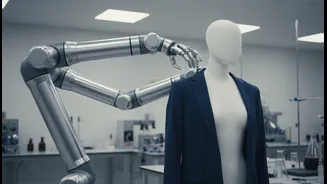
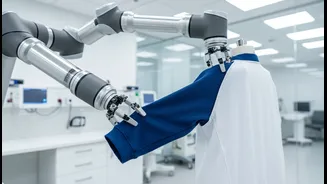
This trend isn't just about personal comfort; it's also transforming the workplace. The rise of “cobots,” or collaborative robots, marks a departure from the caged industrial machines of the past. Companies like BMW and Amazon are deploying robots designed with human ergonomics in mind. These machines work alongside people, taking on physically strenuous and repetitive tasks like heavy lifting or awkward bending. The goal is no longer to replace the human worker, but to augment their capabilities, reduce fatigue and injury, and free them up for tasks that require more complex problem-solving and creativity. It’s a partnership where robotic precision supports human judgment.