




A New Manufacturing Powerhouse in Gujarat
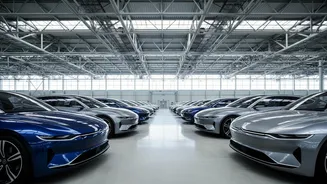
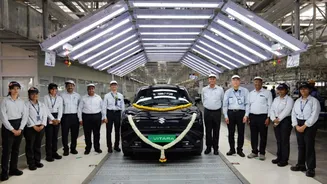
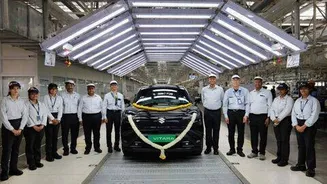
Maruti Suzuki has commenced commercial production at a fourth plant within its Hansalpur manufacturing facility in Gujarat. This new production line, built with an investment of ₹3,900 crore, adds an annual capacity of 250,000 vehicles. This boosts the
total capacity of the Hansalpur facility to one million units per year, making it the largest single-location passenger vehicle plant in India and the first for parent company Suzuki Motor Corporation to reach this milestone globally. With this expansion, Maruti Suzuki's total annual production capacity across all its plants in India now stands at 2.9 million units. This expansion is a critical part of the company’s larger goal of achieving a total production capacity of four million vehicles by 2030.
All Eyes on the eVITARA
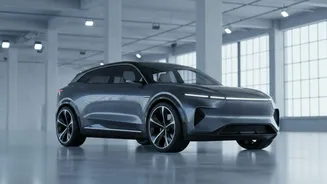
The first model to roll off this new production line is the company's flagship electric SUV, the eVITARA. This five-seater vehicle marks Maruti's serious entry into the mainstream EV market after a period of limited domestic availability. Previously, production constraints meant only around 2,000 units were made per month, with a heavy focus on exports. The eVITARA is built on a global platform shared with Toyota and is designed as a 'born-electric' vehicle, not an adaptation of a petrol model. While full variant details are established, it is offered with different battery and motor configurations, providing a balance of performance and range designed to be competitive in the Indian market. The expansion is set to significantly ramp up the availability of the eVITARA for Indian consumers from September 2026 onwards.
The Strategy Behind the Switch
This move signals a pivotal strategic shift for a company that has been cautious in its approach to electrification, preferring to focus on CNG and hybrid technologies. The massive investment in the Gujarat hub is a clear declaration of its long-term EV ambitions. For years, Maruti's leadership had pointed to limited charging infrastructure and high battery costs as reasons for their measured pace. However, with the EV market gaining traction, led by competitors, the company is now leveraging its greatest strength: manufacturing at scale. The goal is to make its EVs accessible and reliable, mirroring the brand promise that made it a household name. By localizing production, including potential battery manufacturing partnerships, Maruti aims to control costs and compete aggressively on price. The company is targeting 15% of its total sales to come from EVs by the 2031 financial year.
Navigating a Crowded Market
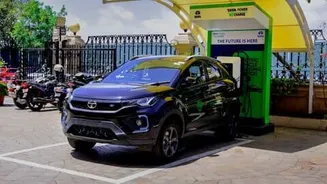
Maruti Suzuki is entering an increasingly competitive EV landscape. Tata Motors currently holds a commanding lead, with Mahindra & Mahindra also having a strong presence. New entrants and established international players are all vying for a piece of India's growing EV market. Despite being a latecomer, Maruti's brand equity, vast dealership network, and reputation for service give it a formidable advantage. The eVITARA has already helped Maruti become the fourth-largest EV brand in India by sales in the first half of 2026, even with limited supplies. The production increase at Gujarat is designed to convert this initial interest into significant market share. The success of the eVITARA will be a crucial test of whether Maruti's trusted formula can be successfully replicated in the electric age, but the company isn't stopping there, with plans for more electric models, including an MPV, in the pipeline.