

A Discovery Far From Shore
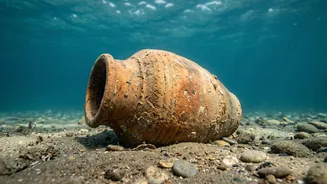
In an accidental discovery, a natural gas company surveying the seabed 90 kilometers off the coast of Israel came across an extraordinary sight: a large cluster of ancient jars. The Israel Antiquities Authority (IAA) was contacted, and what unfolded was the discovery of one
of the oldest deep-sea shipwrecks ever found. Dating back to the 14th or 13th century BCE, during the Late Bronze Age, the cargo lay in a heap on the ocean floor. This find is remarkable not just for its age, but for its location. Previously, the oldest wrecks from this era were found close to land, leading experts to believe ancient mariners always kept the coastline in sight. This ship, however, was found in the open sea, suggesting a far more advanced navigational ability than ever thought possible.
The Secrets of the Canaanite Jars
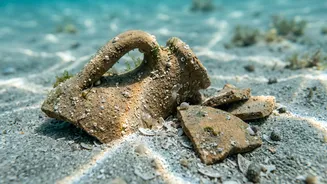
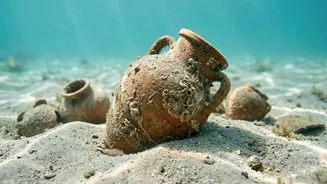
The ship's cargo consisted of hundreds of ceramic storage jars, known as Canaanite amphorae. These were the standard shipping containers of their day, used to transport valuable goods across long distances. Archaeologists believe these particular jars likely held oil, wine, or other agricultural products like fruit from the Levant region. Two of the jars were carefully recovered from the seabed using a specially designed submersible robot. Because the wreck is so deep, it has been shielded from human interference, waves, and currents that often disturb sites in shallower waters. This means the ship and its contents are a pristine time capsule, offering an undisturbed glimpse into the commercial ties of the ancient world.
Rewriting Maritime History
According to Jacob Sharvit, head of the IAA's marine unit, this discovery fundamentally changes the understanding of ancient mariners' skills. The long-held academic belief was that Bronze Age sailors navigated by 'hugging' the coastline, moving from port to port without losing sight of land. The location of this wreck, far out in the open sea, proves they were capable of navigating with no land in sight. From that position, only the horizon is visible in all directions. It strongly suggests these ancient sailors were using celestial navigation—calculating their position by observing the sun and stars. This is a world-class historical revelation, proving that the capabilities for long-distance, open-water trade existed much earlier than previously demonstrated.
A Frozen Moment from the Bronze Age
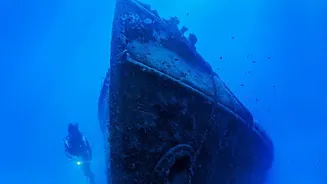
The ship itself, estimated to be about 12 to 14 meters long, seems to have sunk in a crisis, possibly during a storm or an attack by pirates—a known danger during the Late Bronze Age. Only two other cargo-bearing shipwrecks from this period have ever been found in the Mediterranean, both near the Turkish coast and in much shallower water. This deep-water wreck provides a unique research opportunity. The IAA has described it as a moment where 'time has frozen since the moment of disaster'. The muddy bottom may have preserved not only the full cargo but also parts of the wooden ship's hull. Further investigation could reveal more about the ship's construction, its crew, and its final journey.